
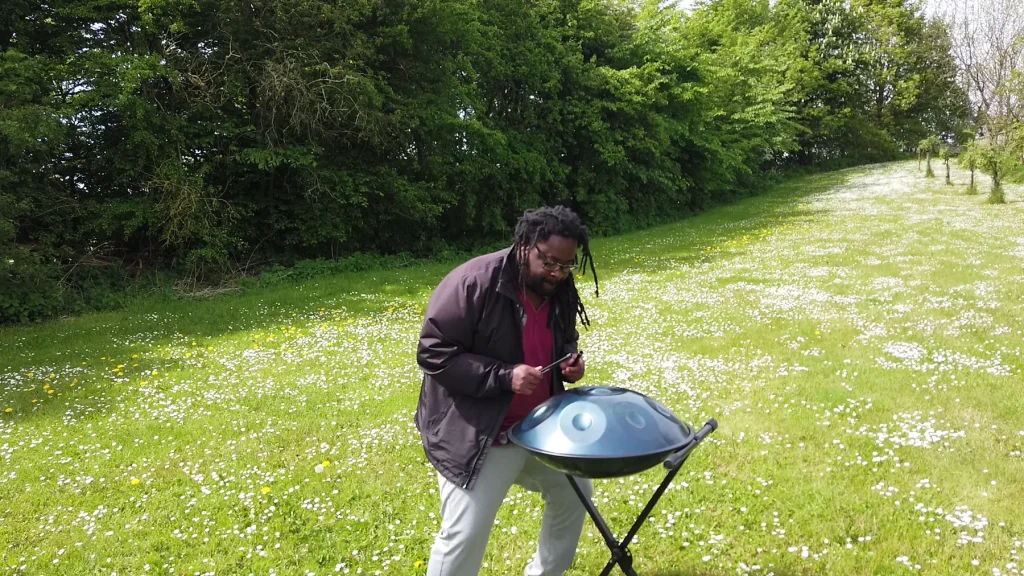
The handpan is a melodic percussion instrument renowned for its soothing notes. Invented in Switzerland in the late 1990s, it quickly gained popularity in France. This success is largely due to its use in meditation, yoga and music therapy.
Cultura has established itself as a leading cultural retailer, offering a range of instruments accessible to the general public. Customers can try these instruments in store before making a purchase decision.
Prices for this type of instrument generally range from €1,000 to €3,000. This guide aims to help readers understand the selection criteria and assess value for money.
Understanding the handpan and the benefits of buying one at Cultura
This fascinating melodic percussion instrument originated in Switzerland in the late 1990s. Its rapid development has made it a popular choice for people seeking gentle sounds. It can produce soothing melodies without requiring complex knowledge of music theory. This simplicity draws many people to the handpan.
The handpan is distinguished by its hammered-steel shell. Each note is carefully tuned, providing long sustain and rich harmonics. These technical characteristics make it a unique instrument, unlike other melodic percussion instruments. Its ability to create relaxing atmospheres makes it a favored tool for meditation and music therapy.
Despite its growing popularity, the handpan remains relatively rare on the market. This is due to the limited number of skilled makers capable of producing quality instruments. This imbalance between supply and demand can sometimes make buying such an instrument difficult.
This is where the Cultura network plays an essential role. Thanks to its physical stores throughout France, such as the one in Franconville, customers can see, touch and try the available models. This shopping experience is invaluable because it gives them an accurate sense of the sound, weight and feel.
Cultura’s current selection of handpans and tongue drums is still modest, but it is expanding. Brands such as Shiver are available in some stores, although opinions on sound quality may vary. It is therefore crucial to compare the models on the shelves with those offered online.
In conclusion, trying an instrument in a store provides a hands-on experience that is often difficult to reproduce online. This makes a visit to a nearby Cultura store worthwhile when making an informed choice.
| Features | Details |
|---|---|
| Origin | Switzerland, late 1990s |
| Material | Hammered steel |
| Tuning | Carefully tuned notes |
| Rarity | Limited number of makers |
| Availability | Cultura stores in France |
| Example model | 8-note Shiver, about €230 |
Manufacturing process and its impact on price
Creating a unique musical instrument requires artisanal expertise. Each handpan is the result of a meticulous process in which the maker must select the appropriate alloy. Two main materials stand out: stainless steel and nitrided steel. Each has specific characteristics that affect not only the sound but also durability and cost.
Choosing the material: stainless steel or nitrided steel
Stainless steel is known for its longevity, with a service life of around 15 years. Its corrosion resistance is more than 63%, making it ideal for humid environments. Nitrided steel, by contrast, is lighter and provides warmer harmonics, but has a service life of around eight years, particularly under demanding conditions.
Craftsmanship, number of notes and precise tuning
The craftsmanship involved in shaping the steel sheet is essential. The quality of the maker’s technique directly influences the instrument’s tonal richness. Shaping the notes, for example, is a delicate step. A 9-note handpan requires less work than a 17-note model, which affects the manufacturing cost.
Precise tuning is also crucial. It ensures that each note resonates at the exact frequency and produces accurate harmonics. This rare expertise distinguishes high-end instruments from counterfeits.
Production time and the scarcity of handpans
A quality handpan can take several months to make. If the heat treatment of nitrided steel is outsourced, this can extend the lead time and increase the cost. The scarcity of skilled makers also contributes to higher prices. Growing demand for these customized instruments creates an imbalance in the market.
In short, the artisanal manufacturing process, the choice of materials and the makers’ expertise justify the high cost of handpans. To learn more about buying a handpan, read this helpful article on buying criteria.
Analysis of handpan prices at Cultura
The cost of a musical instrument can vary considerably depending on several factors. Handpans generally cost between €1,000 and €3,000. This range is influenced by supply and demand in the market. When demand exceeds supply, prices tend to rise.
It is essential to consider the various factors that affect cost. The type of steel used is crucial. Stainless steel and nitrided steel have distinct properties that influence tone and durability. The instrument’s number of notes also plays an important role. For example, a 17-note model will often cost more than a 9-note model.
Price ranges and factors affecting cost
Custom requests, such as specific tuning or a chosen frequency, can also increase the price. Standard models are generally more affordable. Here is an overview of the price ranges:
| Model type | Approximate price |
|---|---|
| Entry-level (9 notes) | €1,000–€1,500 |
| Mid-range (11 to 13 notes) | €1,500–€2,000 |
| High-end (17 notes) | €2,000–€3,000 |
Comparison with the broader market and alternatives
At Cultura, 8-note Shiver tongue drums are sold for around €230. However, some reviews suggest that their sound quality may be disappointing compared with brands such as Moozica, which offer better value for money. Other retailers, such as La Baguetterie, feature recognized brands such as Schlagwerk and Meinl, often at competitive prices.
It is therefore crucial to assess the value for money of the available instruments. The answer to “How much does a good handpan cost?” will depend on its intended use and the importance placed on sound quality. For a first purchase, it is advisable to choose reliable sellers who guarantee a properly tuned instrument.
Finally, after-sales service and a tuning warranty should be factored into the purchase decision. These elements can make all the difference, especially for a first instrument. To learn more about buying a handpan, read this helpful article.
Handpans at Cultura: essential criteria for making the right choice
Choosing a musical instrument can seem complicated, especially for beginners. However, a few key criteria can simplify the process. Here are the factors to consider when selecting a good model.
Recommended number of notes and key
For a young musician, an 11- to 12-note handpan is ideal. This makes it possible to play around 92% of nursery rhymes without too much difficulty. The key of C major is also strongly recommended. It covers 78% of children’s melodies and makes 96% of online tutorials accessible.
- Ideal number of notes: 11 to 12 notes for a good balance.
- Preferred key: C major to avoid complicated transpositions.
Ergonomics and weight suited to each user
Ergonomics are crucial when choosing an instrument. A maximum weight of 1.5 kg is recommended for children under six. The instrument should be no more than 30 cm in diameter so that it is easy to handle.
A simple rule is to allow approximately 1 cm of diameter for each year of age. This ensures that the instrument suits the user’s body and helps prevent fatigue and pain.
- Recommended weight: 1.5 kg maximum for children.
- Maximum diameter: 30 cm for optimal comfort.
Sound quality and manufacturing certifications
The sound quality of a handpan is a decisive factor. A good instrument should sustain for at least eight seconds and have stable tuning. It is advisable to check the tuning with a tuner app.
It is also important to favor instruments that carry manufacturing certifications, such as CE conformity, thereby ensuring the product’s quality and safety.
- Sound-quality criteria: sufficient sustain and no dissonant notes.
- Manufacturing certifications: look for CE conformity to ensure safety.
Finally, reading reviews from other musicians can help identify a good model among the many options on the market. By considering these criteria, you will be better prepared to buy a handpan that meets your needs.
Alternatives to the handpan available at Cultura
There are several interesting alternatives to the handpan worth exploring. These instruments can provide an enriching musical experience while remaining accessible to beginners.
The tongue drum: features, advantages and disadvantages
The tongue drum is often considered the closest alternative to the handpan. Made of steel with cut-out tongues, it is lightweight (around 1.8 kg) and sturdy. This instrument is ideal for children from the age of three and encourages early musical development.
- Advantages: intuitive handling makes it possible to play melodies in just 10 minutes.
- Stable tuning: no costly maintenance is required, making it economical.
- Price: much lower than a handpan, with 8-note Shiver models available for around €230.
However, the tongue drum also has disadvantages. Its tonal palette is less rich than that of the handpan, and the number of notes is often limited on entry-level models.
The kalimba and other melodic instruments for beginners
The kalimba is another affordable option, costing around €25. This pocket-sized instrument develops fine motor skills and makes it possible to play simple melodies with a very gentle learning curve.
Among the other available instruments, the xylophone can be introduced from the age of four and provides a visual representation of the notes. Body percussion is also an excellent way to develop a sense of rhythm in a group.
For anyone considering the future purchase of a handpan, starting with a tongue drum can be a good idea. It helps develop a sense of rhythm and build confidence before moving on to an instrument with richer timbres.
Finally, it is advisable to consider alternative brands such as Moozica, Kudout or Sonodrum. These brands offer better value for money than some models available in stores and receive positive reviews for sound quality and durability.
Buying a used handpan: precautions and practical advice
The used musical-instrument market has grown in recent years, creating some interesting opportunities. Used handpans are increasingly common on peer-to-peer resale websites. Some models may even cost less than €500. However, heightened vigilance is crucial to avoid unpleasant surprises.
An honest seller will readily provide a test video. This helps prove that the instrument is properly tuned. Conversely, be wary of offers presenting a handpan as new at a very low price. This may indicate a counterfeit or a decorative object with no musical value.
Before buying a used instrument, take the following precautions:
- Request a test video: this demonstrates the accuracy of each note.
- Check its condition: make sure the shell has no corrosion or deformation.
- Choose transparent sellers: an enthusiast will share the instrument’s history.
Watch for warning signs! An unusually low price for a handpan presented as new, a lack of detailed photos or a refusal to send an audio recording are all red flags. Some sellers may also be unable to specify the instrument’s scale and maker.
It is also important to factor in the hidden cost of a poorly tuned handpan. Professional retuning can cost around €150, potentially wiping out the financial advantage of buying used if the instrument is in poor condition.
To find quality used handpans, favor specialist forums and musicians’ groups. Authorized dealers that provide a tuning warranty for second-hand instruments are also good options.
Finally, trying one in a store remains the safest way to buy a handpan. Buying used is a good idea only if you can test the instrument in person or obtain solid guarantees from the seller.
Accessories, maintenance and advice for extending your handpan’s life
Protecting and maintaining a musical instrument is essential to ensure its longevity and performance. The right accessories and a regular maintenance routine can make all the difference. Here are some recommendations for caring for your instrument.
Essential mallets, cases and protection
To play comfortably and protect your instrument, it is important to choose the right accessories. Here are several essentials:
- Ergonomic mallets: sized to suit the hands, they make playing easier and reduce fatigue.
- IP54 cases: with at least 2 cm of padding, they protect your instrument during transport.
- Anti-vibration pads: they stabilize the instrument while it is played, improving the musical experience.
- Temperature-controlled cases: they maintain a constant temperature and preserve sound quality.
Material-specific care and tuning management
Proper maintenance depends on the material used to make your instrument. Here are some specific tips:
- Stainless steel: apply Phoenix oil once a month to preserve its shine and prevent corrosion.
- Nitrided steel: occasionally use beeswax to condition the metal and retain its warm harmonics.
- Cleaning procedure: a dry microfiber cloth removes fingerprints and moisture, reducing corrosion by 63%.
It is also crucial to manage your instrument’s humidity and temperature. Maintain a humidity level of 40% to 60%. Avoid direct sunlight, do not store the instrument in a damp bag, and keep it away from powerful heaters.
To ensure that your instrument stays in tune, check its tuning every three months. Use a tuner app to detect any drift early. This will help you avoid costly repairs.
Finally, remember that professional retuning costs around €150. It may be necessary, especially for nitrided-steel instruments exposed to significant climate variations.
Involving young musicians in these maintenance routines can turn these tasks into an educational experience. It strengthens their bond with the instrument and encourages sustainable playing habits over the years.
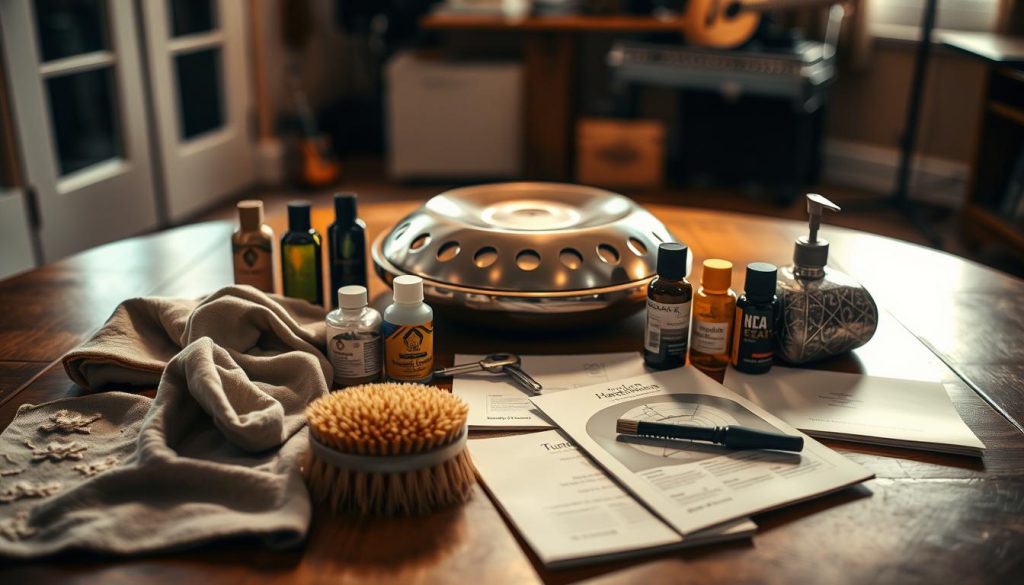
| Accessory type | Function |
|---|---|
| Ergonomic mallets | Make playing easier and reduce fatigue |
| IP54 cases | Protect the instrument during transport |
| Anti-vibration pads | Stabilize the instrument while it is played |
| Temperature-controlled cases | Maintain a constant temperature |
| Phoenix oil | Preserves the shine of stainless steel |
| Beeswax | Conditions nitrided steel |
Conclusion: making the right choice for a handpan at Cultura
In conclusion, choosing the right musical instrument is essential. Favor the key of C major with 11 to 12 notes for a rich and accessible musical experience. This makes it possible to play most nursery rhymes and improvise easily.
The choice of material is also crucial. Stainless steel offers exceptional durability, while nitrided steel provides warmer tones. Remember to try the instrument in a store to assess its weight and comfort.
For beginners, starting with a tongue drum can be an excellent idea. It provides an introduction to melodic percussion without requiring too large an investment. Remember to budget for accessories and maintenance as well, to preserve your instrument’s sound quality.
Finally, compare Cultura’s offers with those of other specialist retailers to obtain the best value for money. A good instrument is an investment in a lasting and fulfilling musical experience.