
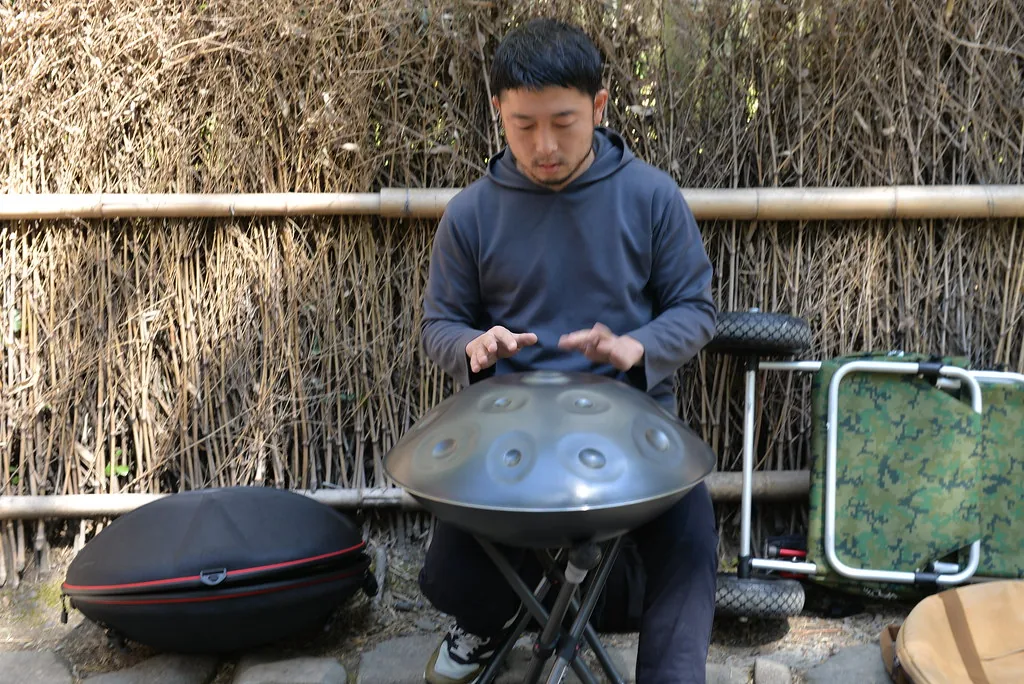
Music enthusiasts often ask one question: what is the difference between a handpan and a hang drum? These two instruments are often confused, but there are important distinctions to understand.
The Hang is the original instrument, created by the Swiss company PANArt in 2000. By contrast, the term handpan has become a generic name for all similar instruments made by other craftspeople around the world.
It is crucial to understand this distinction because the original Hang is no longer produced and can only be found on the second-hand market, often at high prices. Other names also exist, including pantam, tongue drum, and Spacedrum, adding to the complexity of this field.
This guide is designed to help beginners and experienced musicians understand these nuances. They will then be able to make an informed choice based on their musical aspirations and budget.
Introduction to melodic percussion: handpan and hang drum
Melodic percussion instruments play a prominent role in today’s music world. Instruments such as the handpan and Hang offer a unique sonic palette. Unlike traditional drums, they produce precise notes, combining rhythm and harmony.
The handpan is a hand-hammered metal shell shaped like a turtle shell, created by Felix Rohner and Sabina Schärer in 2000. The tongue drum, also known as the Hang, is distinguished by its cut-out metal tongues. This instrument was invented in 2007 by Dennis Havlena in the United States.
These two instruments share a common inspiration drawn from the steel drum and ethnic percussion. They occupy a growing place in contemporary music, offering an alternative to traditional instruments.
- These melodic percussion instruments can play complete melodies, making them particularly popular in new age music, jazz, and sound meditation.
- This article takes an in-depth look at the world of the handpan and the Hang, two fascinating instruments that captivate music lovers around the world.
- Here, we provide a general introduction to these melodic percussion instruments, explaining their shared origin and evolution into modern forms.
- The music produced by these instruments is characterized by deep resonance and immediate accessibility, even for beginners.
- The handpan and its predecessor, the Hang, represent a revolution in percussion, combining acoustic precision with an intuitive playing experience.
The Hang®: the original instrument and its history
Since its introduction, the Hang® has captivated music lovers with its unique approach. This instrument was designed to create melodic sounds with the hands, offering an unparalleled sensory experience.
Created by Felix Rohner and Sabina Schärer in 2000
In 2000, Felix Rohner and Sabina Schärer founded PANArt in Bern, Switzerland. Their vision led them to create a revolutionary instrument: the Hang. The name “Hang” means “hand” in the Bernese dialect, highlighting how the instrument is played.
Inspired by the Caribbean steel drum, they sought to design an instrument that could be played directly by hand, without mallets. The result was a steel instrument consisting of two welded domes with hand-hammered playing areas.
Unique features of the Hang®
The Hang stands out through several unique features:
- A structure made from two welded steel domes.
- Playing areas carefully tuned to a pentatonic scale.
- A harmonically rich sound that appeals to musicians around the world.
This combination makes it possible to produce harmonious notes with simple finger strikes, providing immediate accessibility, even for beginners.
The end of PANArt production and its impact on the market
Over the years, PANArt gradually reduced production of the Hang before stopping it altogether. Before that decision, approximately 400 instruments left the workshop each year. Today, second-hand instruments command very high prices, often exceeding €5,000, and are difficult to find.
The end of production had a considerable impact on the market, creating unmet demand. This prompted many craftspeople around the world to develop their own versions of the instrument.
It is important to note that the term “hang drum” is technically inaccurate. PANArt has always rejected this name because the Hang is not a drum but a melodic instrument in its own right.
The handpan: an evolution and a generic term
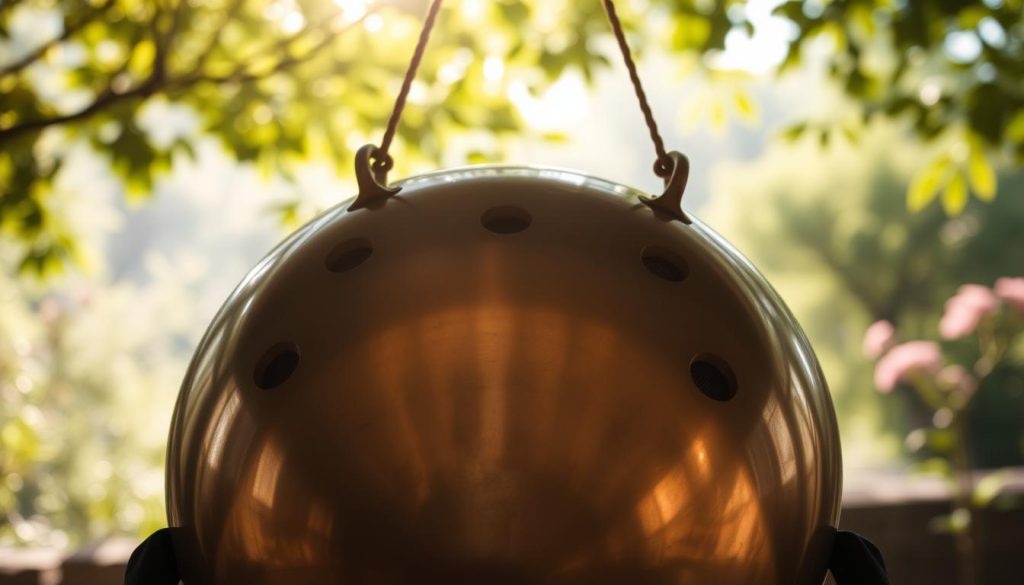
Following the resounding success of the Hang, a new instrument emerged on the music scene: the handpan. Coined around 2007, this term refers to a variety of instruments inspired by PANArt’s original model. Craftspeople around the world began creating their own versions, enriching the musical landscape.
The emergence of the term from 2007 onward
After production of the Hang ended, the term handpan became established as a generic name. It groups together all similar instruments without infringing PANArt’s trademark. The musical community was therefore able to recognize and appreciate these varied creations.
Typical handpan structure and design
A handpan generally consists of two joined metal domes. The upper surface has a central area called the ding, surrounded by 7 to 9 harmonic notes. This circular arrangement is carefully designed to ensure perfect harmony.
Each note is tuned with three harmonics: the fundamental, octave, and fifth. This gives the instrument a unique sonic richness that captivates listeners with its resonance.
Variety of materials and their influence on sound
Handpan makers use various materials to create their instruments. The most common include:
- Nitrided steel
- Stainless steel
- Raw steel
Each type of steel produces a slightly different timbre, influencing the instrument’s sound and durability. A handpan’s hammered surface requires meticulous tuning performed by hand by skilled craftspeople. This explains the variations in price and quality among the different models available on the market.
The domed, turtle-shell-like shape is not merely aesthetic. It plays a crucial role in sound projection and playing ergonomics, making the instrument both musical and sculptural.
| Features | Description |
|---|---|
| Structure | Two joined metal domes |
| Notes | 7 to 9 harmonic notes |
| Harmonics | Fundamental, octave, fifth |
| Materials | Nitrided steel, stainless steel, raw steel |
| Tuning | Performed by hand by craftspeople |
| Shape | Domed, resembling a turtle shell |
Related instruments: pantam, tongue drum, and Spacedrum
The variety of melodic percussion instruments continues to grow, making it essential to understand the nuances between them. Among these instruments, the pantam, tongue drum, and Spacedrum stand out through their unique characteristics.
The pantam: a regional synonym originating in Israel
The term pantam originated in Israel, where it was used for instruments inspired by the original model. The word “Hang” was difficult to pronounce in Hebrew, leading to this phonetic adaptation. In 2014, instrument maker Victor Levinson popularized the term for his own creations.
Today, some makers, including Ayasa and Yishama, use the name pantam for their instruments, creating a terminological distinction without any significant technical difference.
The tongue drum: comparison and major distinctions
The tongue drum is often confused with the handpan, but it is a fundamentally different instrument. Unlike the handpan, which has hammered playing areas, the tongue drum consists of tongues cut into the metal. This affects its sound, which is simpler but equally soothing.
The main difference lies in their construction. A handpan is entirely handcrafted, with each note tuned individually, whereas a tongue drum is often manufactured industrially from recycled steel, which explains the price difference.
The Spacedrum: a French brand and the second-hand market
The Spacedrum is an iconic brand on the French market, created in 2011 by Metal Sounds. This model played a key role in making melodic percussion instruments more widely accessible before the company ceased trading.
Spacedrums are now available only on the second-hand market. They are highly sought after for their sound quality, particularly the nitrided-steel models. It is essential to check the tuning before making a purchase.
| Instrument | Features | Origin |
|---|---|---|
| Pantam | Phonetic adaptation of “Hang” | Israel |
| Tongue drum | Cut-out tongues, simple sound | Worldwide |
| Spacedrum | French brand, sought-after sound quality | France |
Construction and materials: from nitrided steel to stainless steel
Creating melodic percussion instruments involves distinct manufacturing techniques. Each instrument, whether a handpan or a tongue drum, has its own material and production-method requirements.
Hand-hammering the handpan
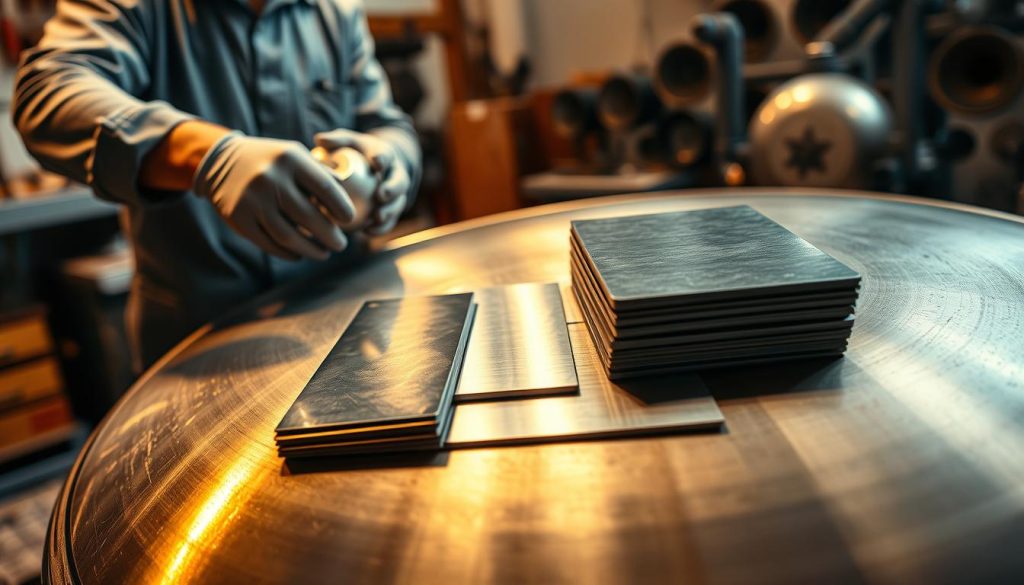
Making a handpan requires expertise that takes at least two years to acquire. Craftspeople hammer a sheet of nitrided steel by hand to sculpt harmonious notes. This artisanal technique explains why some models require several months of work.
Handpan makers favor nitrided steel for its corrosion resistance and ability to produce rich harmonics. Stainless steel, meanwhile, is growing in popularity thanks to its greater durability and easy maintenance.
Every handpan is unique, which is reflected in the significant price differences between entry-level models and instruments made by renowned craftspeople. In addition, a handpan’s surface is extremely sensitive to impacts and high temperatures. Prolonged exposure to temperatures above 40°C or a simple fall can permanently knock the instrument out of tune, requiring costly retuning.
Mechanical cutting of the tongue drum
By contrast, tongue drum production relies on mechanically laser-cutting tongues into steel that is 3 to 5 mm thick. This industrial process enables rapid mass production and significantly more affordable prices.
The materials used for tongue drums often include recycled steel. Their one-piece construction makes them extremely resistant to impacts, allowing them to withstand a one-meter fall onto concrete without damage.
Strength, durability, and impact on price
The difference in durability between the two instruments is notable. On average, a handpan comes with a five-year manufacturer’s warranty, while tongue drum makers offer warranties of up to ten years thanks to the strength of their designs.
The impact on price is considerable: labor accounts for approximately 75% of the final price of a handcrafted handpan. By contrast, industrial tongue drum production makes it possible to offer quality instruments at much lower prices.
Sounds and scales: comparing acoustic characteristics
Exploring the sounds and scales of percussion instruments reveals fascinating nuances. Each instrument offers a unique listening experience through its resonance and acoustic characteristics.
Handpan resonance, sustain, and harmonic richness
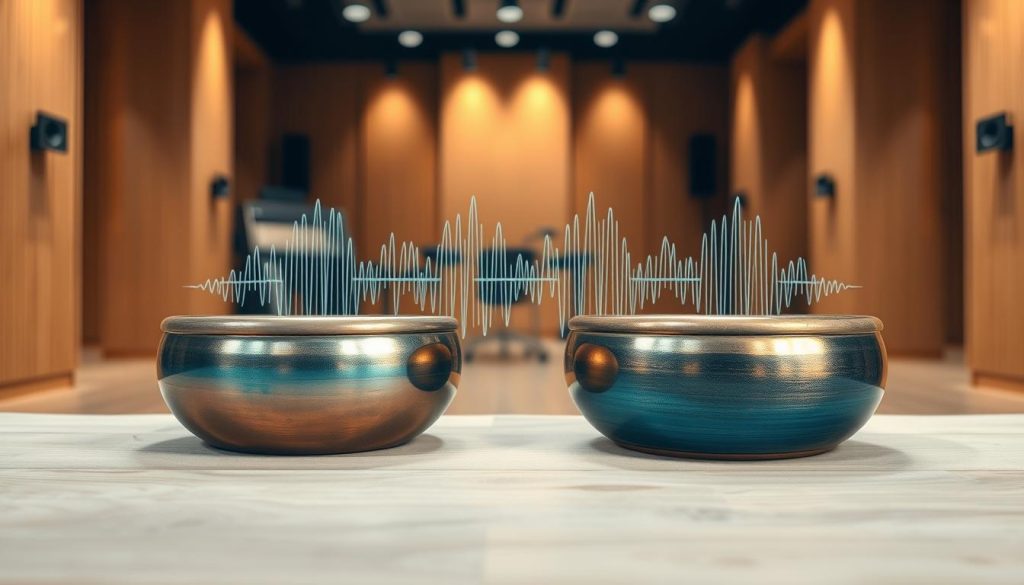
Resonance is one of the handpan’s most distinctive characteristics. The instrument produces an average sustain of 12 seconds, creating floating melodies. Its crystalline timbre is particularly well suited to outdoor performances.
Each handpan note is carefully tuned with three distinct harmonics: the fundamental, octave, and fifth. This attention to detail produces incomparable sonic richness, making the instrument a popular choice among professional musicians.
The tongue drum’s simpler sounds and relaxing notes
By contrast, the tongue drum offers a longer resonance of up to 18 seconds. This makes it ideal for producing sustained notes in sound therapy and meditation. The instrument’s simpler sounds create a soothing atmosphere that is perfect for relaxation.
The difference in sound between the two instruments is explained by their construction. The handpan’s hammered shell radiates sound outward, while the tongue drum’s metal tongues vibrate lengthwise, producing gentler notes.
Types of scales and their musical implications
The scales available for handpans are predominantly in D minor, accounting for 89% of models. This key encourages emotional improvisation and expressive compositions, particularly in jazz and new age music.
By contrast, 43% of tongue drums favor the more universal C major scale. This allows beginners to play intuitive melodies without prior musical knowledge.
Thanks to precise tuning and the variety of scales offered by handpan makers, musicians can choose an instrument perfectly suited to their musical style, from meditative sounds to avant-garde compositions.
The handpan’s harmonic richness makes it an instrument of choice for stage performances and professional recordings, while the tongue drum’s simpler sounds excel in relaxation and early music education settings.
| Characteristic | Handpan | Tongue drum |
|---|---|---|
| Sustain | 12 seconds | 18 seconds |
| Harmonics | Fundamental, octave, fifth | Simple notes |
| Main scale | D minor (89%) | C major (43%) |
| Use | Jazz, new age music | Meditation, music therapy |
Ergonomics, playing, and techniques: mastering these instruments
Mastering melodic percussion instruments relies on key factors such as ergonomics, playing techniques, and accessibility. Understanding these aspects allows musicians to get the most from their instrument.
Design, shape, and handling
The handpan’s design, with its domed shape inspired by turtle shells, offers natural handling. Its average diameter of 53 cm makes it a substantial yet well-balanced instrument.
The handpan’s upper surface is designed for fluid finger playing. Each note is positioned ergonomically around the central dome, facilitating rapid sequences and complex improvisations.
By contrast, the tongue drum uses laser-cut tongues, giving it a more angular shape. Its smaller size, ranging from 25 to 40 cm, makes it easy to handle and transport.
Playing techniques specific to the handpan
Handpan playing techniques are numerous and varied. There are officially 15, ranging from delicate tapping to more forceful rhythmic strikes. Each technique harnesses the instrument’s natural harmonics, enriching the music it produces.
For professional musicians, this diversity enables nuanced musical expression and captivating stage performances. Although the playing techniques are more complex, they open up endless interpretive possibilities.
Accessibility and learning curve of both instruments
The learning curves of the two instruments are radically different. On average, it takes approximately 6 months to master the handpan, allowing time to develop tactile sensitivity and coordination between both hands.
By contrast, the tongue drum has only 3 main techniques, allowing beginners to play pleasant melodies in just 2 weeks. This makes it immediately accessible, even to people with no musical experience.
The choice between these two instruments therefore depends largely on the desired level of commitment. The tongue drum offers immediate gratification, while the handpan invites in-depth musical exploration.
| Instrument | Weight | Playing techniques | Learning time |
|---|---|---|---|
| Handpan | 5.8 kg | 15 techniques | 6 months |
| Tongue drum | 3.2 kg | 3 techniques | 2 weeks |

Handpan or hang drum: what are the differences?
The distinction between the terms handpan and hang drum is often a source of confusion. Although these names refer to similar instruments, they have different implications in the music world. The Hang, created by PANArt in 2000, is the original instrument, and its production has ended. By contrast, the term handpan has become a generic name for all similar instruments made by other craftspeople.
Terminological differences and common perceptions
Terminological differences are at the heart of many discussions within the musical community. Hang® is a registered trademark, while the term handpan has been adopted by other makers. In practice, the name used matters little because musicians understand the type of instrument being discussed.
What truly matters is the instrument’s quality and suitability for your skill level. Terms such as pantam, a regional synonym, are also used for the same type of instrument. The choice of term therefore often depends on the context and region.
Technical points distinguishing the instruments and their names
The technical points that distinguish these instruments primarily concern tuning, materials, and manufacturing methods. Each craftsperson contributes their own sonic signature, creating diversity among the available models. For example, a handpan generally consists of two metal domes with a central area and several harmonic notes, whereas a tongue drum consists of tongues cut into the metal.
Manufacturing differences also affect the price. A new handpan can cost between €600 and €3,000, while a tongue drum is much more affordable, with prices ranging from €50 to €400. This allows everyone to find an instrument suited to their budget.
Impact on the community and music market
The handpan market has grown significantly since production of the original Hang ended. Today, there are approximately 240 festivals dedicated to this instrument around the world, reflecting the passion it inspires. The tongue drum, meanwhile, attracts a large community, with approximately 28,000 members in dedicated Facebook groups.
The second-hand market plays a crucial role for historic instruments such as the Hang and Spacedrum. Prices can soar for rare, well-maintained models. This article emphasizes that the distinction between handpan and hang drum is primarily a matter of history and terminology, and that the most important thing is the joy of playing.
| Instrument | Price (new) | Community | Festivals |
|---|---|---|---|
| Handpan | €600 to €3,000 | Vibrant | 240 |
| Tongue drum | €50 to €400 | 28,000 members | – |
Conclusion: two complementary instruments for unique sonic worlds
In conclusion, modern music is rich in fascinating instruments, each offering a unique experience. The two instruments discussed here complement each other perfectly. The first appeals through its acoustic precision and harmonic richness. The second stands out through its immediate accessibility, making it ideal for meditation.
Build quality, whether involving nitrided steel or stainless steel, influences price and durability. Experienced musicians will appreciate the musical depth, while beginners will find an ideal starting point. The community of enthusiasts grows every day, supported by festivals and workshops.
Whatever your skill level, there is an instrument suited to your musical aspirations. Explore these sonic worlds at concerts or workshops to discover the one that resonates with you.