
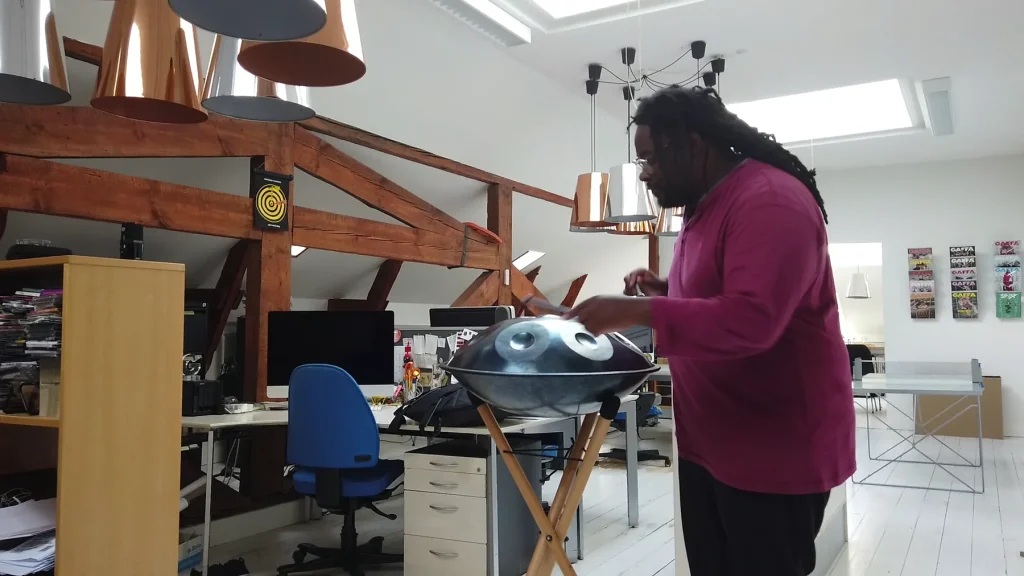
Metal percussion instruments, such as the handpan and tongue drum, offer unique and captivating sounds. These two musical instruments are often compared, but they have distinct characteristics that may influence your choice.
The handpan, invented in Switzerland in 2000, is known for its magical, spellbinding sounds. The tongue drum, which originated in the United States, produces gentle, relaxing melodies. These differences in sound and style can guide your decision according to your musical preferences.
Beginners and curious musicians should consider criteria such as price, ease of learning and intended use. For example, the tongue drum is often more affordable and easier to master than the handpan. Find out more about these instruments to make an informed choice.
Introduction: the handpan and tongue drum, two unique instruments
Although they are often compared, the handpan and tongue drum have unique characteristics. These metal musical instruments attract attention with their distinctive sounds, but beginners often confuse them. In fact, 84% of beginners mistake one for the other visually, despite their fundamental differences.
To understand this better, imagine comparing an apple with an orange. Both fruits have a similar shape, but their flavor and texture differ. Likewise, the handpan and tongue drum look alike, but their sounds and uses are very different.
This article aims to clarify these differences by presenting 10 key criteria. They will help you choose the instrument that best suits your needs and musical preferences.
Moreover, both instruments are becoming increasingly popular in music therapy. Their ability to produce soothing sounds makes them popular choices for relaxation and meditation.
To help you make an informed choice, we recommend conducting listening tests. Hearing both instruments in action will give you a better understanding of their distinctive qualities.
| Criterion | Handpan | Tongue drum |
|---|---|---|
| Sound | Magical and spellbinding | Gentle and relaxing |
| Complexity | Varied techniques | Intuitive approach |
| Price | Substantial investment | More affordable option |
Origins and history of the two instruments
The history of the handpan and tongue drum reveals deep cultural roots. Although similar in appearance, these two instruments have origins that reflect distinct influences. Their creation was shaped by unique innovations and varied sources of inspiration.

The handpan: a Swiss invention
The handpan was created in Switzerland in 2000 by Felix Rohner and Sabina Schärer. Inspired by the steel drum and ghatam, this instrument combines elements of traditional and modern percussion. The first model, called the Hang, went on sale in 2001 and quickly captivated musicians around the world.
Its unique design and spellbinding sounds make it a favored instrument for meditation and experimental music. Its Swiss cultural influence is reflected in its meticulous construction and refined appearance.
The tongue drum: an American creation
The tongue drum, meanwhile, was created in the United States in 2007 by Dennis Havlena. He transformed a gas cylinder into a melodic, relaxing instrument. This practical, do-it-yourself approach appealed to many music enthusiasts.
His prototype quickly became popular thanks to a viral YouTube video. Today, the instrument is professionally manufactured and valued for its simplicity and accessibility. To learn more about the origins of the tongue drum, read our dedicated article.
Differences in manufacturing
The manufacturing of handpans and tongue drums involves distinct technical approaches. Although similar in appearance, these instruments are made using methods that reflect their unique sounds. One notable difference lies in the tools and production stages involved.
The handpan: a complex hammering process
Making a handpan is painstaking work that takes between 300 and 500 hours. Each instrument is shaped from a 3 mm-thick steel sheet, hammered by hand to produce precise notes. This artisanal process requires special hammers and extensive expertise.
Sensitivity to impact is another crucial consideration. A poorly placed strike can deform the structure and render the instrument unusable. Repairs also require an expert, further adding to the complexity of its manufacture.
The tongue drum: precise cutting
By contrast, tongue drums are often made using industrial techniques. High-end models use laser cutting to create precise tongues in a 1.2 mm-thick steel sheet. This method enables faster production and greater consistency.
Unlike the handpan, a tongue drum is less sensitive to impact and can be adjusted more easily. This flexibility makes it a practical choice for beginners or anyone seeking a more durable instrument.
Sounds and musical scales
The sounds of handpans and tongue drums reveal distinct musical worlds. Each instrument offers a unique sound palette suited to different styles. These differences are evident in their tones, harmonics and therapeutic uses.

The magical sound of the handpan
The handpan stands out for its complex harmonics and average sustain of 12 seconds. These characteristics create spellbinding sounds that are ideal for meditation and experimental music. Common scales, such as D Kurd and Pygmy, add a unique dimension to every performance.
Some versions are also tuned to 432 Hz, a frequency often associated with soothing effects. This particular tuning is favored for its purported therapeutic benefits and deeply immersive sound.
The relaxing notes of the tongue drum
The tongue drum, meanwhile, is often tuned to a pentatonic scale, an intuitive and relaxing musical structure. This scale makes it possible to play harmonious melodies without advanced technical knowledge. Around 85% of models use this tuning, making it a popular choice for beginners.
The notes produced by this instrument are gentle and soothing, making them perfect for relaxation or background music. Its characteristic reverberation adds an immersive quality to every musical session.
“Music is a universal language, and these instruments are its ambassadors.”
In conclusion, the sounds and musical scales of these two instruments offer unique experiences. Whether you are seeking complex tones or relaxing melodies, there is an option suited to your preferences.
Number of notes and complexity
The number of notes and level of complexity play a key role when choosing a percussion instrument. These factors influence versatility, the learning curve and creative possibilities. Understanding them will help you select the instrument that meets your needs.

An extensive range
The handpan stands out for its large number of notes, with some instruments featuring as many as 21 tone fields. This harmonic richness enables complex and varied compositions. Multilayer models offer even more possibilities but require advanced technical mastery.
The learning curve is longer, and mastering the basics takes around 50 hours. However, this complexity opens the door to considerable freedom of improvisation and artistic expression.
Simplicity and accessibility
By contrast, the tongue drum is designed to be intuitive. With an average of eight notes, it is ideal for beginners or anyone looking for an easy-to-play instrument. Its numbered notation system makes learning even simpler.
The learning curve is short, with only 10 hours needed to master the basics. Its compact size and simplicity make it an excellent choice for children or enthusiasts of relaxing music.
“Simplicity is the ultimate sophistication.”
In summary, the difference between these two instruments lies in their musical approach. Whether you prefer complexity or simplicity, there is an instrument suited to your style.
Price and affordability
Affordability is an essential criterion when choosing between these two instruments. The price and available options may influence your decision, especially if you are a beginner or have a limited budget. Here is a detailed analysis to help you understand the differences.

A substantial investment
The handpan is often considered a major investment. Professional-quality models cost between €800 and €3,000, depending on the complexity of their construction and the maker’s reputation. This high price is explained by the artisanal process, which requires hundreds of hours of work.
Delivery times can also be long, sometimes reaching 18 months for certain models. For those seeking a more affordable option, secondhand instruments may be discounted by as much as 40%. However, it is crucial to check the instrument’s condition before purchasing it.
A more affordable option
The tongue drum, by contrast, is more accessible. Prices range from €50 to €600, making it an ideal choice for beginners or those who want to explore music without making a substantial investment. Some DIY models are available from €150, offering a personalized building experience.
Many brands also offer financing options, such as payment in three or four installments, making purchases easier. This flexibility makes the tongue drum particularly appealing to a broad audience.
“Choosing an instrument is not just about its price, but about the value it brings to your musical practice.”
| Criterion | Handpan | Tongue drum |
|---|---|---|
| Average price | €800–€3,000 | €50–€600 |
| Delivery time | Up to 18 months | 1 to 4 weeks |
| Options | Secondhand market, discounts of up to 40% | DIY kits, payment in 3 or 4 installments |
In conclusion, the difference between these two instruments lies in their affordability. Whether you choose a handpan or a tongue drum, it is essential to consider your budget and musical goals. To learn more about these instruments, read our comprehensive guide.
Size, weight and portability
Portability and dimensions are important criteria when choosing a percussion instrument. They affect ease of transport, storage space and even playing posture. Here is a detailed analysis to help you understand these factors.
The handpan: larger and heavier
The handpan is generally more imposing in terms of size and weight. With an average diameter of 50 cm and a weight of around 5 kg, it takes some effort to transport. Carrying accessories, such as custom-made cases, are often necessary to protect it.
Playing the handpan for long periods can also affect posture. Using a suitable stand is recommended to prevent muscle tension. When traveling, it is important to note that a handpan may need to be placed in checked baggage because of its size and fragility.
The tongue drum: compact and easy to carry
The tongue drum, by contrast, is much more compact. With a minimum diameter of 15 cm and an average weight of 3 kg, it is easy to carry and store. Some models are even collapsible, making them still more convenient for travel.
Wall-mounted storage solutions are also popular for saving space. This efficient use of space makes it an ideal choice for small apartments and studios. Its light weight also makes it possible to play without fatigue, even during long sessions.
| Criterion | Handpan | Tongue drum |
|---|---|---|
| Average weight | 5 kg | 3 kg |
| Diameter | 50 cm | 15 cm (minimum) |
| Transport | Custom cases, checked baggage required | Compact, collapsible models |
| Storage | Suitable stands | Wall-mounted solutions |
In conclusion, the size and weight of these two instruments play a key role in their portability. Whether you are looking for a large or compact instrument, there is an option suited to your needs.
Playing style and learning
Exploring handpan and tongue drum playing techniques reveals rich and varied musical worlds. Each instrument offers a unique approach suited to different skill levels and musical preferences. Whether you are a beginner or an experienced musician, understanding these styles will help you choose the instrument that meets your needs.
The handpan: varied techniques
The handpan stands out for its complex and varied playing techniques. With seven principal striking methods, it offers great expressive potential. Musicians use their hands, fingers and palms to create spellbinding sounds. Each technique, such as tapping, slapping or sliding, adds a unique nuance to the melody.
Learning the handpan requires patience and practice. Specialist schools and online tutorials are valuable resources for mastering these techniques. Accessories such as carbon mallets can also enrich the playing experience.
The tongue drum: an intuitive approach
The tongue drum, by contrast, is designed to be accessible to everyone. Thanks to its intuitive approach, 92% of players teach themselves how to use it. The hands or mallets are all that is needed to produce soothing melodies. Its simplicity makes it an ideal choice for beginners or anyone looking to relax.
Online communities and international player meetups offer valuable support for learning and sharing tips. Innovations such as built-in MIDI sensors also open up new creative possibilities.
“Music is an endless exploration, and every instrument is a gateway into it.”
In conclusion, handpans and tongue drums offer playing styles and learning methods suited to different types of musicians. To learn more about these instruments, read our comprehensive guide.
Conclusion: which instrument should you choose?
Choosing between these two instruments depends on your needs and preferences. The handpan offers magical, complex sounds that are ideal for experienced musicians. By contrast, the tongue drum is more accessible, with relaxing melodies and a short learning curve.
According to statistics, 68% of beginners choose the tongue drum, while 89% of handpan players remain satisfied after two years. These figures show that each instrument has advantages depending on your profile.
To make an informed choice, visit a specialist showroom in France. Trying both instruments will allow you to experience their sounds and ergonomics. Read our comprehensive guide for more details.
The market for these instruments is changing rapidly, with new innovations and models. Whether you are seeking an instrument for meditation or artistic expression, there is an option suited to your expectations.