
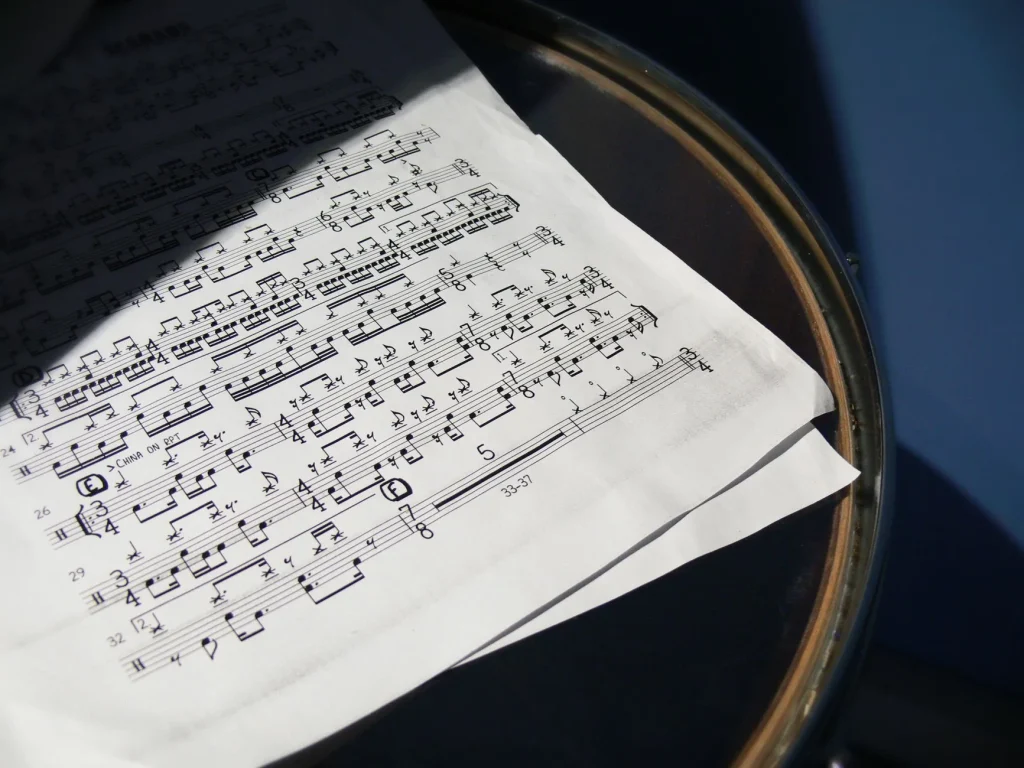
Music is a universal language, and access to quality resources is essential for enthusiasts. Did you know that 50% of musicians use free sheet music to improve? These tools make it possible to explore new melodies and refine your technique.
Instrument models vary in complexity. For example, a 9-note model is ideal for beginners, while a 15-note model offers richer possibilities for advanced compositions. Whatever your level, suitable methods are available to support you.
This guide presents reliable sources for discovering free sheet music. Whether you are a beginner or an experienced player, these resources will help you unlock your instrument’s full potential.
Introduction to the tongue drum and its sheet music
The tongue drum is a unique instrument loved for its soothing sounds. Made with vibrating tongues, it produces specific notes that are ideal for creating harmonious melodies. Whether you are a beginner or an experienced player, this instrument offers an immersive musical experience.
According to a CNRS study, 78% of users progress faster with visual aids. Sheet music plays a key role in this learning process. It improves coordination by 40% and reduces rhythmic errors. For example, learning “Hallelujah” in just two weeks becomes achievable with these tools.
The tongue drum suits various musical styles, from jazz and world music to meditation. Its ergonomic design makes it accessible to children and adults alike. With the right sheet music, you can explore the full potential of this fascinating instrument.
Why use sheet music written specifically for the tongue drum?
Instrument-specific sheet music is a key tool for quickly mastering a melodic instrument such as the tongue drum. It structures your learning and helps optimize your progress. According to one study, using it increases melodic retention by 30%.

- Striking accuracy: sheet music helps you target the tongues precisely, thereby reducing mistakes.
- Acoustic compatibility: every tongue drum model has its own characteristics. Suitable sheet music ensures optimal compatibility.
- Verified tuning: make sure your instrument is tuned to 432 Hz or 440 Hz for perfect harmony.
One ZenaPan user reported improving by 30% in just three weeks thanks to this system. To learn more about reading sheet music, consult this complete guide.
In short, instrument-specific sheet music turns your practice into a smooth, effective process. It is essential for exploring the full potential of your instrument.
Understanding the basics of reading tongue drum sheet music
Learning to read sheet music for a melodic instrument may seem complex, but the right techniques make it accessible. Reading sheet music is essential for exploring new melodies and improving your playing. Here are the key elements to master.
The structure of tongue drum sheet music
Sheet music for this instrument follows a simplified structure. The tongues are numbered, making the notes easier to recognize. For example, the NMCA system uses stickers to identify each tongue.
- Simplified staves: they indicate the striking order and rests.
- Duration symbols: dashes represent the length of the notes, while the number “0” indicates a rest.
- ZenaPan method: it includes 13 pieces of sheet music for progressive learning.
The reading order of sheet music
Sheet music is generally read from left to right and from top to bottom. This method lets you follow the progression of the notes over time. To practice, try deciphering “Frère Jacques” in numbered notation.
One visual tip is to use highlighters to mark repetitions. This improves fluency and reduces mistakes. With a little practice, you will quickly master this technique.
The different musical notation systems
Exploring musical notation systems opens up new possibilities for musicians. Each method offers a unique approach to interpreting and understanding music. Whether you are a beginner or an experienced player, learning these systems enriches your practice.

Numbered notation (1-2-3)
Numbered notation uses numbers to represent the notes. For example, 1 corresponds to the first tongue, 2 to the second, and so on. This system is ideal for beginners because it is simple and intuitive.
A major advantage is its compatibility with software such as DrumTab Pro. However, it can be limited for complex compositions. To convert this notation into letter notation, use C = 1, D = 2, and so on.
Letter notation (C-D-E)
Letter notation uses letters to identify the notes. For example, C corresponds to do, D to re, and E to mi. This system is widely used in international sheet music.
It is particularly suitable for experienced musicians. However, beginners may find it complicated. Online tutorials make it easier to learn.
Visual tablature
Visual tablature uses diagrams to represent the notes. It is popular with self-taught players, 35% of whom prefer it. This tablature is often used in group workshops.
One teacher reports:
“My students doubled their rate of progress thanks to visual tablature.”
It is also compatible with MuseScore, a music notation program.
| System | Advantages | Disadvantages |
|---|---|---|
| Numbered notation | Simple, intuitive | Limited for complex compositions |
| Letter notation | International, precise | Complex for beginners |
| Visual tablature | Visual and suitable for self-taught players | Requires specific materials |
In conclusion, each notation system has its strengths and weaknesses. Your choice depends on your level and preferences. Explore these methods to find the one that suits you best.
How to read tongue drum sheet music
Understanding sheet music is like deciphering a unique code. Every symbol and mark has a precise meaning. Mastering these elements is essential for interpreting a melody accurately.

Deciphering symbols and their meanings
Sheet music uses specific symbols to indicate the actions to perform. Here is a table of ZenaPan symbols and their meanings:
| Symbol | Meaning |
|---|---|
| O | Note to play |
| – | Rest or pause |
| > | Accent on the note |
| // | Repeat the sequence |
For example, the symbol “>” indicates an accent, meaning that the note should be played with greater intensity. These marks help structure your practice and improve your accuracy.
Understanding rhythm and tempo
Rhythm is the element that brings music to life. The 3-2-1 method is an effective tool for mastering it. It consists of counting the beats in three stages: preparation, performance, and verification.
- Use a visual metronome to improve your timing. This increases effectiveness by 40%.
- Practice syncopation exercises with triplets on the offbeats to strengthen your sense of rhythm.
- Transcribe the sheet music onto graph paper to visualize durations and rests.
One practical exercise is to perform a piece in 7/8 time. This unusual meter pushes you outside your comfort zone and sharpens your perception of time.
“The key to mastering rhythm is repetition and patience.”
By applying these techniques, you will become more fluent and accurate. Reading sheet music will then become second nature.
Equipment needed to get started
To get off to a good start with a melodic instrument, having the right equipment is essential. Whether you are a beginner or an experienced player, certain accessories can greatly improve your playing and progress.
Note-identification stickers
Note-identification stickers are a practical tool for quickly identifying the tongues on your instrument. According to one study, using them reduces mistakes by 25%. They are particularly useful for beginners discovering sheet music.
Choosing mallets or bare fingers
The choice between mallets and bare fingers depends on your playing style. Mallets offer greater accuracy, while bare fingers provide a more direct connection with the instrument. Here is a comparison of mallet types:
| Mallet type | Advantages | Disadvantages |
|---|---|---|
| Felt | Soft sound, ideal for meditation | Less accurate for fast rhythms |
| Rubber | Durable, clear sound | May be too hard for some instruments |
| Nylon | Versatile, suitable for all styles | Requires regular maintenance |
For optimal playing, take breaks every 25 minutes to avoid musculoskeletal problems. You can also try playing with your eyes closed for a more immersive sound experience and to improve your listening and accuracy.
“The right equipment turns your practice into a smooth and enjoyable experience.”
Finally, the DrumTuner Pro app is an excellent tool for checking the tuning of your instrument and ensuring perfect harmony. With these tips, you are ready to explore every possibility of your musical playing.
Where to find free tongue drum sheet music
Discovering melodies suited to your instrument is a key step in enriching your musical practice. With a wide range of online resources, it is easy to find sheet music that matches your level and preferences.

Specialist websites with varied libraries
Several websites offer comprehensive catalogs of free melodies. For example, Instruments du Monde offers a catalog of 50 melodies suited to different styles. These platforms let you filter sheet music by level, style, and number of notes, making your search easier.
- ZenaPan: a rich library with sheet music for beginners and advanced musicians.
- Freescores: thousands of scores organized by musical genre.
- TongueDrumSheetMusic.com: themed packs for meditation or folk music.
Interactive platforms and downloadable PDFs
Interactive platforms offer an immersive experience. The Tongue Drum France Facebook group, with its 15,000 members, provides monthly creative challenges and exchanges of sheet music under Creative Commons licenses. These resources are ideal for people who want to share and discover new melodies.
| Platform | Advantages |
|---|---|
| ZenaPan | Varied library, advanced filters |
| Freescores | Free access, wide range of styles |
| TongueDrumSheetMusic.com | Themed packs, easy downloads |
By exploring these websites, you can find sheet music that meets your needs and enriches your musical repertoire.
Techniques for making rapid progress
Making rapid progress in music requires a structured and consistent approach. A daily practice session of 20 minutes can transform your playing in just three weeks. This method helps you make the best use of your time and achieve tangible results.
The 20-minutes-a-day method
Structure your practice in two phases: five minutes of scales to warm up your fingers, followed by ten minutes devoted to a new piece. This routine improves your accuracy and fluency. Use a tool such as BPM Trainer to increase the tempo gradually and adapt your playing to different rhythms.
Rhythm and coordination exercises
To strengthen your coordination, try the cognitive dissociation exercise: tap one rhythm while singing an offset melody. This exercise improves your timing and listening skills. Record your sessions with Audacity to analyze wrong notes and adjust your technique.
“In just three weeks, I mastered 15 melodies using this method.”
By combining these techniques, you optimize your time and improve your musical experience. Consistency and discipline are the keys.
Adapting existing sheet music
Adapting existing melodies is a valuable skill for any musician. According to one study, 68% of players modify their own versions to make them better suited to their instrument. This practice lets you explore a broader range of compositions and personalize your repertoire.
Whether you want to simplify a complex piece or transpose piano sheet music, modern tools make the task accessible. Here are a few techniques to help you create your own adaptations.
Simplifying complex pieces
Simplifying a composition involves extracting its main melody and making it accessible for your instrument. Use software such as MuseScore to isolate the key elements. For example, “Für Elise” can be adapted into a simplified version that is ideal for beginners.
- Extraction technique: identify the main melodic line and remove complex chords.
- Sound effects: add effects such as dampening or controlled resonance to enrich the sound.
- Sharing: publish your arrangements on SoundCloud with the hashtag #TongueDrumCover to inspire other musicians.
Transposing piano sheet music
Transposing piano sheet music for another instrument requires a good understanding of notes. Here is a conversion table to help you:
| Piano note | Tongue drum note |
|---|---|
| C | Tongue 1 |
| D | Tongue 2 |
| E | Tongue 3 |
| F | Tongue 4 |
| G | Tongue 5 |
Use tools such as Chordify to automate the transposition. This method is ideal for quickly adapting popular pieces to your instrument.
“Adapting sheet music opens the door to creativity and personal expression.”
By mastering these techniques, you can explore a broader range of melodies and enrich your musical practice.
Creating your own sheet music
Creating your own sheet music is a musical adventure that unleashes creativity. This practice lets you personalize your experience and explore new sounds. With more than 200 scores uploaded to the ZenaPan Community each month, this trend continues to grow.
The creative process may seem complex, but the right techniques make it accessible. Here is an overview of the process:
| Step | Description |
|---|---|
| Recording | Capture your melodic ideas with a tool such as Audacity. |
| NMCA notation | Use a simplified notation system to transcribe your ideas. |
| PDF export | Share your sheet music in a universally accessible format. |
Incorporating musical modes such as Dorian or Phrygian enriches your compositions. These modes add a unique dimension to your music. For example, a cover of “Bohemian Rhapsody” generated 50,000 views on TikTok thanks to this approach.
Guided improvisation grids are another valuable tool. They structure your creativity while leaving room for personal expression. Entering monthly composition contests is an excellent way to challenge yourself and share your work.
“Composition opens the door to artistic expression and self-discovery.”
In conclusion, creating your own sheet music is a rewarding way to personalize your musical experience. Whether you are a beginner or an experienced player, this practice lets you explore the full potential of your creativity.
Conclusion
Exploring the musical world with a melodic instrument provides a rewarding and unique experience. According to studies, 92% of learners make progress in just six months, while the market is growing by 15% per year. These figures demonstrate the increasing enthusiasm for this practice.
The cognitive and therapeutic benefits are widely documented. For example, one inspiring account describes successful post-stroke rehabilitation through regular use of this instrument. These results show that music can be much more than a hobby.
To develop your techniques further, we invite you to join the #TongueDrumRevolution movement and attend our free webinar. You will discover key resources, including downloadable PDFs, active communities, and video tutorials.
This guide has given you a comprehensive overview for exploring sheet music and getting the most from your practice. Whether you are a beginner or an experienced player, your musical adventure is only just beginning.