

Drums are a versatile and exciting musical instrument, offering a rich listening experience and great satisfaction to those who play them. If you are a parent and your child shows an interest in drums, you may be wondering: at what age should I enroll them in drum lessons?
There is no single answer to this question, as the decision depends on several factors, including your child’s age, maturity, musical preferences, and previous learning experience. However, many experts agree that children can start learning drums from the age of 6, with lessons suited to their stage of development.
In fact, recent studies have shown that learning drums at a young age can have significant benefits for children’s brain and physical development. Learning to play drums can help children develop their coordination, concentration, memory, and discipline. It can also help stimulate their creativity and self-esteem.
Drum Lessons for Children
Drum lessons for children are becoming increasingly popular with parents who want to introduce their children to music from an early age. Learning drums is an excellent way to develop a child’s creativity and musical skills.
Many music studios offer introductory drum lessons for young beginners. These lessons are specially designed for children and use age-appropriate teaching methods.
Drum lessons for young people are also available at many cultural centers and music schools. These lessons teach children the basics of drumming while allowing them to discover their passion for music.
It is important to find drum lessons suited to the child’s age to ensure an enjoyable and effective learning experience. Drum lessons for children should be fun and stimulating, while giving students an opportunity to express themselves freely.
Introduction to Drumming
An introduction to drumming is an excellent way to introduce children to music. Children can begin learning basic drum rudiments from the age of 5, although this depends on their physical and mental development.
Learning drums helps children develop their coordination, concentration, and fine motor skills. It can also stimulate their creativity and self-confidence.
Drumming for Young People
Drum lessons for young people are designed for children aged 6 to 12. These lessons allow children to learn the basics of drumming in a fun and interactive way.
Teaching is adapted to the child’s age, and lessons are given in small groups so that every student can receive individual attention. Drum lessons for young people are also an excellent way for children to meet other young people who share the same musical interests.
In summary, drum lessons for children are an excellent way to introduce children to music and develop their creativity and musical skills. Parents can find lessons suited to their child’s age at many music studios, cultural centers, and music schools.
Learning Drums for Beginners
Learning drums is a rewarding experience for beginners of all ages. However, it is important to determine the right time to start. According to experts, the best age to start playing drums is between 6 and 10.
Young children often have smaller hands and less-developed coordination. It is therefore important to find a teacher who can adapt lessons to their stage of development. Children of this age are advised to begin with simple exercises focused on coordination and rhythm.
For beginners of all ages, it is important to find a qualified teacher who can effectively teach basic techniques and skills. A good drum teacher can help beginners develop their own style and approach to the instrument.
Ultimately, the right time to start learning drums may vary from one person to another. If you or your child are interested in drums, do not hesitate to consult a teacher and ask about the best time to begin.

“Drums are a wonderful instrument that can be learned at any age. If you are passionate about music and prepared to work hard, you can certainly learn to play drums, regardless of your age.”
Child-Friendly Drum Lessons
Learning drums can offer children many benefits, but it is crucial to choose lessons suited to their age and level of experience. Drum lessons for children should be specially designed to meet their particular needs and sustain their interest in music.
For an introduction to music for children, their ability to concentrate and level of coordination must be taken into account. Younger children may need more playful instruction to stimulate their interest, while older children may be ready to learn more advanced techniques.
Musical instruments for children should also be suited to their age and size. Drum kits specially designed for children, with appropriately sized shells and cymbals, can be the ideal solution, allowing them to play comfortably and safely.
| Criteria for Children’s Drum Lessons | Explanations |
|---|---|
| Lessons suited to their age | Children should receive instruction designed around their level of maturity and learning ability. Children’s lessons should be fun and appropriately adapted to help keep them motivated. |
| Lessons suited to their level of coordination | Children need lessons focused on coordination and the development of fine motor skills to improve their drumming technique. |
| Lessons with experienced teachers | Teachers should be qualified to teach drums to children and familiar with age-appropriate teaching techniques to ensure a successful introduction to drumming. |
Child-friendly drum lessons can provide an introduction to music and musical instruments while helping children develop their confidence and creativity. With suitable lessons, children can gain experience and a passion for drums that will remain with them throughout their lives.
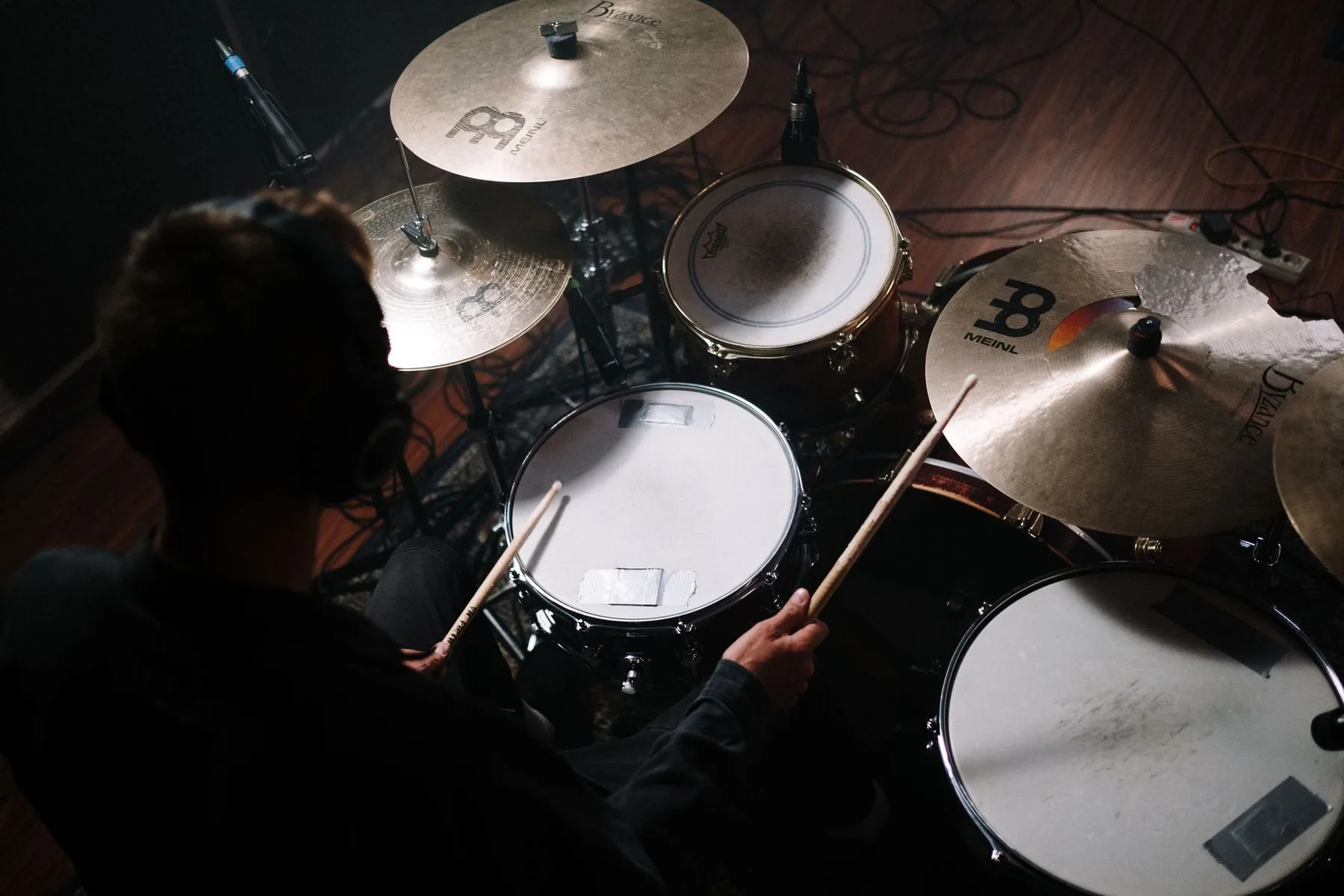
The Benefits of Learning Drums from an Early Age
The University of Melbourne’s Department of Psychology conducted a study showing that children who learn drums achieve better academic results, are more disciplined, and have greater self-confidence. But what is the optimal age to start learning drums?
According to music education experts, children can begin playing drums from the age of 4. By this age, they are mature enough to follow simple instructions, develop their hand-eye coordination, and remain focused on a task for a period of time.
However, it is important to note that every child is different. Some may be ready to begin learning drums earlier, while others may need to wait a little longer. Parents should consult music education professionals to determine the optimal age for their child.
| Benefits of Starting Drums at an Early Age |
|---|
| Cognitive development and fine motor skills |
| Improved musical creativity |
| Development of self-confidence and discipline |
In addition to these benefits, learning drums from an early age can also help children understand mathematical concepts more effectively. Rhythm is an essential element of music, and children must use mathematics to understand different notes and measures. Learning drums can therefore strengthen children’s mathematical skills.
It is important to choose drum lessons suited to the child’s age and abilities, as well as qualified and experienced teachers who can help beginners develop the skills they need to reach their full potential. Drum lessons for children are an excellent way for young people to start learning drums because they are designed to be fun, stimulating, and interactive.
In conclusion, starting to learn drums at an early age can provide children with many educational and personal benefits. It is important to choose lessons and teachers suited to the child’s age and abilities to ensure that learning drums is a rewarding and enjoyable experience.
Expert Recommendations for Effective Training
For beginning drummers, it is essential to follow a training program suited to their level. Here are some expert recommendations for effective training:
- Set realistic goals. It is important to set progressive goals in order to measure progress and stay motivated.
- Practice regularly. Regular practice is recommended for making rapid progress. It helps develop dexterity and gain greater mastery of the instrument.
- Seek professional advice. Guidance from a qualified teacher helps correct technical errors and develop essential skills.
- Nurture your passion for music. Learning drums requires discipline and patience. To stay motivated, it is important to nurture your passion for music and enjoy practicing.
By following these recommendations, beginners can make rapid progress and acquire the skills needed to become good drummers. It is also important to remember that learning drums is an ongoing process requiring practice, patience, and commitment.
“Learning drums requires discipline and patience.”
Conclusion
In this article, we have explored the benefits of learning drums for children and the best age to begin. By starting to play drums at an early age, children can develop their musical and cognitive abilities while improving their creativity, discipline, and concentration.
For effective training, it is advisable to look for child-friendly drum lessons with age-appropriate teaching methods and qualified teachers. It is also important to set realistic goals and establish a regular practice routine.
We encourage parents to explore the opportunities that learning drums can offer their children and to seek additional resources to learn more about this fascinating subject.