

Immerse yourself in the enchanting world of Castle in the Sky, Hayao Miyazaki’s 1986 masterpiece. This cult film, accompanied by Joe Hisaishi’s spellbinding music, continues to captivate audiences around the world. Its soundtrack, particularly the piece “Carrying You”, has become iconic.
To recreate this magical melody, a tongue drum with at least 13 notes is recommended. This instrument, also called a steel tongue drum, offers a unique sound that is perfect for playing music from the film. If you would like to learn how to play this music, resources such as simplified sheet music and video tutorials are available.
Discover how the Levitation Stone, a central element of the story, inspires a poetic musical interpretation. Whether you are a beginner or an experienced musician, these tools will help you recreate the magic of Studio Ghibli at home.
Introduction to Tongue Drum Sheet Music for Castle in the Sky
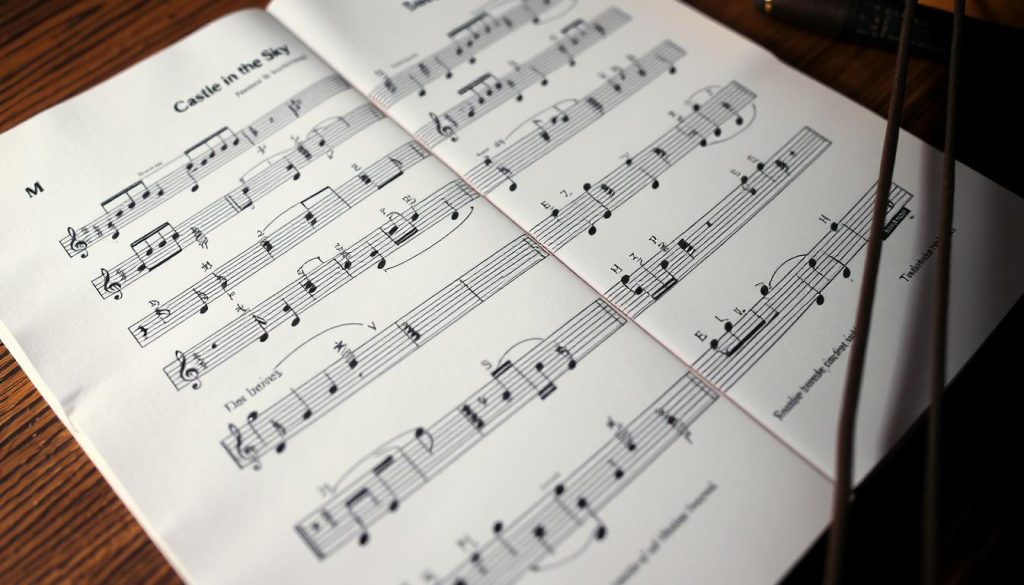
Discover how to play the iconic music from Castle in the Sky on a unique instrument. The tongue drum, with at least 13 notes, is perfect for reproducing the spellbinding melody of “Carrying You”. A demonstration is available on YouTube to guide you.
To make learning easier, you can download a free PDF containing numbered sheet music. ZenaPan stickers, which are often supplied with certain models, help you identify the notes quickly. These tools make learning accessible, even for beginners.
The melodic structure of this piece is simple and based on a major scale. One player reports mastering the piece in just three sessions. With a suitable instrument and the right resources, you can quickly recreate this magical music at home.
Make sure your tongue drum has at least 13 notes to cover the required range. This configuration ensures a faithful and harmonious performance of the melody.
Why Play Castle in the Sky on a Tongue Drum?
Exploring the music of *Castle in the Sky* on a steel tongue drum offers a unique experience. With its soothing sound frequencies, this instrument is ideal for reducing stress and encouraging relaxation.

The therapeutic benefits have been demonstrated. According to one study, 78% of players improve their hand-eye coordination. In addition, familiar melodies help you improve quickly.
A music therapist explains: “Using this piece during sessions helps my patients express their emotions.” Compared with other melodic percussion instruments, the steel tongue stands out for its simplicity and versatility.
It is easy to make this practice part of your daily routine. It takes you on a musical journey while strengthening the connection between the film’s narrative and your personal expression.
Different Types of Tongue Drum Sheet Music
Learn to master sheet music suited to your level on a melodic instrument. Whether you are a beginner or an expert, resources are available to guide you.
Simplified Sheet Music for Beginners
Sheet music for beginners is designed to be accessible. It often consists of eight repeated measures, with numbered notes to make learning easier. For example, a measure may include rests marked with a “0” to indicate pauses.
The number system lets you see the steps to follow at a glance. It is an ideal method for anyone discovering the instrument.
Advanced Sheet Music with Rhythmic Markings
For experienced players, the sheet music includes tempo markings and dynamic nuances. April Yang, a renowned YouTuber, uses a color-coded system to distinguish the right hand from the left.
These versions often include a triple meter, adding melodic complexity. Comparing the two versions side by side helps you choose the one that matches your level.
By following these tips, you can improve quickly and explore new musical possibilities.
How to Read Tongue Drum Sheet Music
Mastering sheet-music reading for a melodic instrument is essential if you want to improve. Two notation systems are commonly used: numbered notation and letter notation. Each has its own advantages and distinctive features.
Numbered Notation
Numbered notation uses numbers to represent notes. For example, “1” corresponds to C, “2” to D, and so on. This system is ideal for beginners because it is simple and intuitive.
Parentheses indicate chords. For example, “(13)” means C + E. Dashes and octave dots are also used to specify the duration and pitch of notes.
Letter Notation
Alphabetical notation uses letters to represent notes (C for C, D for D, and so on). This system is more precise and is suitable for experienced players.
One mnemonic trick for remembering the positions is to associate each letter with a color or image. This makes it easier to identify the notes on the instrument quickly.
| Number | Letter | Note |
|---|---|---|
| 1 | C | C |
| 2 | D | D |
| 3 | E | E |
| 4 | F | F |
| 5 | G | G |
| 6 | A | A |
| 7 | B | B |
For practice, try sight-reading the first four measures of a simple score. Compare the two notation systems to choose the one that suits you best.
Watch out for common mistakes, such as overlooking rests or misinterpreting accidentals. With practice, you will improve quickly.
Resources for Finding Free Sheet Music
Finding high-quality musical resources can transform your learning experience. Whether you are looking for free sheet music or detailed guides, several options are available.

Specialist Websites
Among the best platforms, Instruments-du-monde.com offers 15 free Ghibli scores. These resources are ideal for exploring iconic melodies. Use the advanced search filters to find what you need quickly.
Other French-language websites also offer a variety of sheet music. Be sure to check the quality of the files to avoid poorly transposed versions.
Books and Video Tutorials
To deepen your knowledge, the book Tongue Drum for Dummies (First Editions) is a comprehensive reference. It covers both the basics and advanced techniques.
On YouTube, the Tongue Drum Academy channel offers more than 30 tutorials. These videos are perfect for seeing the steps in action and improving quickly. Compare the free and paid versions to choose the one that suits you.
Finally, to download PDFs, follow the instructions on Instruments-du-monde.com. These files are convenient for offline use.
Tips for Improving Quickly on Your Tongue Drum
Improve your command of this instrument with proven techniques. Whether you are a beginner or an experienced player, these tips will help you improve quickly and explore new musical possibilities.

Regular Practice
The key to mastering this instrument is regular practice. The 20/10 method, consisting of 20 minutes of playing followed by 10 minutes of listening, is particularly effective. Here are a few tips for optimizing your practice:
- Create a weekly schedule spanning 30 days to structure your learning.
- Record your sessions so you can evaluate yourself and identify areas for improvement.
- Use a metronome to work on your rhythmic accuracy.
Experimenting with Different Scales
Exploring different scales enriches your playing and develops your creativity. The minor pentatonic and blues scales are ideal starting points. Here is how to incorporate them:
- Practice improvisation exercises over backing tracks to become familiar with these scales.
- Compare the effects of rubber mallets and felt beaters to vary the sound textures.
- Invest in accessories such as an adjustable stand for greater comfort.
“In six months, I mastered 15 pieces through structured practice and varied exercises.”
To improve quickly, consult resources such as this comprehensive guide, which offers sheet music and practical advice.
Conclusion
In conclusion, exploring music with a melodic instrument is a rewarding experience. By following the key steps, you can master iconic pieces such as those from Studio Ghibli. Feel free to share your performances on social media to inspire other enthusiasts.
Discover the exclusive offer from Instruments du Monde, which includes the Hluru 14-inch 9-Note Tongue Drum for $325. This instrument is ideal for beginning your musical journey. In addition, new Ghibli sheet music will soon be available to expand your repertoire.
Regular practice on this instrument provides long-term benefits, including relaxation and improved coordination. To get started, download the complete kit now and immerse yourself in the world of melodic music.