
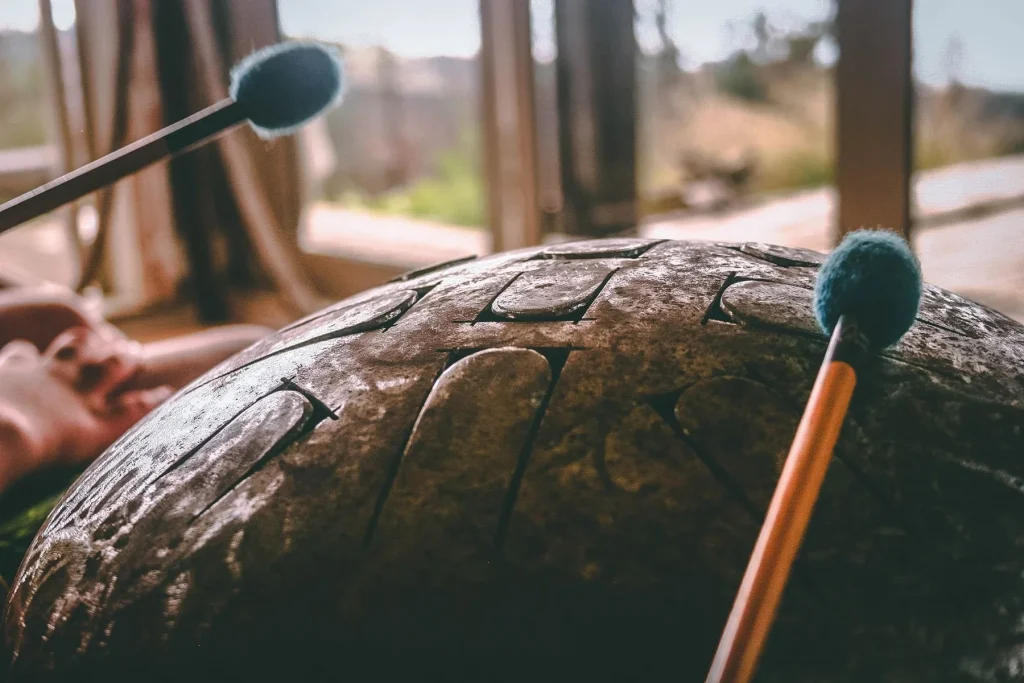
The debate surrounding the tuning frequencies of musical instruments, particularly the handpan, is fascinating. Two main frequencies emerge: 432 Hz and 440 Hz. This article aims to provide a factual analysis of the differences between these two options. We will explore perceptions, historical origins, and the available scientific data.
Tuning frequency, which corresponds to the A above middle C, is often surrounded by myths. Yet it is essential to understand that these choices are not mystical. They are technical and deserve careful consideration before purchasing an instrument.
We will answer common questions such as: is 432 Hz genuinely more relaxing? Is it compatible with other instruments? The audible difference between these two tunings is often subtle, making the choice more nuanced than it may appear.
Understanding a handpan’s tuning frequency
Understanding tuning frequencies is essential for every musician. The hertz (Hz) is the unit that measures the number of oscillations per second in a sound wave. The greater the number of cycles, the higher the sound is perceived by the human ear. This concept is crucial because it directly influences our musical experience.
In practice, setting a reference frequency gives an absolute pitch to the entire scale. Concert pitch, which corresponds to the A above middle C (A4), serves as the fundamental reference for tuning instruments. As soon as this reference changes, all the other notes are recalculated proportionally. For example, a C is tuned to approximately 261.6 Hz when A is 440 Hz, while the same C drops to approximately 256.9 Hz when A is set to 432 Hz.
Definition of the hertz and the role of concert pitch (A above middle C)
The hertz is a unit of measurement that connects the frequency of a sound wave to our auditory perception. A higher frequency is therefore perceived as a higher-pitched sound. Concert pitch, meanwhile, is crucial to tuning every instrument, including the handpan. It determines the central pitch, and the perception of all the other notes depends on this initial choice.
Difference between 432 Hz and 440 Hz tuning
The difference between 432 Hz tuning and 440 Hz tuning changes neither the instrument’s timbre nor its manufacturing quality. It affects only the absolute pitch of the notes. At 432 Hz, this creates a slightly deeper or rounder impression. The musical intervals and overall key remain identical regardless of the chosen reference pitch.
Practical impact on pitch and notes
Handpan notes sit comfortably within the human hearing range, which extends from 16 Hz to 20,000 Hz. This means that both 432 Hz and 440 Hz tunings are perfectly audible and pleasant to the ear. In addition, the choice of reference frequency determines whether the instrument can be played with other instruments. This is particularly important for ensemble playing.
| Note | Frequency at 440 Hz | Frequency at 432 Hz |
|---|---|---|
| C | 261.6 Hz | 256.9 Hz |
| D | 293.7 Hz | 288.0 Hz |
| E | 329.6 Hz | 323.0 Hz |
| F | 349.2 Hz | 343.0 Hz |
| G | 392.0 Hz | 386.0 Hz |
| A | 440.0 Hz | 432.0 Hz |
| B | 493.9 Hz | 486.0 Hz |
To learn more about choosing instrument frequencies, see this article about handpan frequencies.
Historical origins and standardization of 432 Hz and 440 Hz frequencies
Over the centuries, the reference pitch for A was never universal. Variations in tuning frequency arose from the absence of standards, local traditions, and the constraints of different instruments. Very different values were therefore recorded. These included approximately 466 Hz for Renaissance music in the 16th century, approximately 392 Hz for some French Baroque practices in the 18th century, and approximately 415 Hz for performances of works by Johann Sebastian Bach.
Historical variations in concert pitch before standardization
Before a standard was established, concert pitch underwent many variations. Every period and region had its own tuning practices. These differences reflect the diversity of musical styles and instruments in use. The lack of standardization allowed music to evolve in rich ways, but it also created difficulties for musicians who wanted to play together.
Verdi’s A at 432 Hz and its cultural significance
In 1884, the Italian composer Giuseppe Verdi supported adopting A at 432 Hz as Italy’s national reference. This initiative sought to unify Italian orchestras and preserve a sound aesthetic regarded as warmer. This frequency is also associated with ancient musical traditions, particularly in India, where instruments such as the sitar are often tuned to a base frequency of 136 Hz. Raising that frequency by octaves leads to A at 432 Hz, which has been used for centuries in meditation and yoga.
Establishment of the 440 Hz international standard (ISO 16:1975)
The need for agreement among countries led to the standardization of A at 440 Hz in 1939. Although French and Italian delegations challenged the decision, it was reaffirmed in 1953 and formally established through ISO 16:1975. The purpose of the standard was to ensure consistency among orchestras and instrument manufacturers, allowing musicians worldwide to play together in harmony.
It is worth noting that some variations persist despite this standardization. German orchestras, for example, often use 443 Hz, while Italian orchestras choose 442 Hz. Baroque ensembles also frequently tune their historical instruments to 415 Hz. These choices show that the tuning-frequency debate remains alive and is still shaped by cultural and aesthetic considerations.
In conclusion, standardization at 440 Hz represents a practical compromise rather than proof of acoustic superiority. The renewed interest in 432 Hz within some communities forms part of a long tradition of questioning the “right” frequency. To learn more about tuning frequencies, see this article about handpan frequencies.
432 Hz handpan: effects, benefits, and limitations — differences and auditory sensations
The discussion of tuning frequencies in music reveals fascinating nuances. In particular, the perception of the frequency difference between 432 Hz and 440 Hz deserves careful attention. Although small, this difference affects the listening experience of musicians and audiences.
Auditory perception of frequency variations
The difference between these two frequencies is only 8 Hz at the reference A, or approximately one-third of a semitone. This is a subtle variation that most listeners do not immediately detect when hearing a piece in isolation. An instrument tuned to 432 Hz is often described as rounder and warmer.
By contrast, an instrument tuned to 440 Hz gives an impression of clarity and definition. These sensations are often subjective and depend on each listener’s ear.
A subtle difference in solo listening, more noticeable in comparison
During an A/B listening test in which the same melodies are played successively at both frequencies, the difference in pitch is perceived more clearly. Musicians with absolute pitch may identify the tuning frequency immediately. Most listeners, however, have relative pitch and compare sounds rather than recognizing their exact pitch.
Visually, it is impossible to distinguish an instrument tuned to 432 Hz from one tuned to 440 Hz. Their size, shape, and material remain identical. Only a tuner or the manufacturer’s label can indicate the exact frequency.
Influence on musical practice and connection with sound
Many musicians report a more intimate and meditative connection with an instrument tuned to 432 Hz. They use terms such as “heart frequency” and “soothing vibrations,” making it a symbol of relaxation and calm. This frequency is often sought for practices such as meditation.
However, the listening experience varies according to the location, time, and state of mind. The same melody may sound different outdoors, in a room, or through headphones. Listener fatigue and attention can also influence perception.
Finally, the instrument’s timbre and manufacturing quality, particularly the type of steel and its finish, have a much greater effect on its sound than the 8 Hz difference in tuning. Two instruments tuned to the same frequency can create very different sensations depending on how they were made.
| Note | Frequency at 440 Hz | Frequency at 432 Hz |
|---|---|---|
| C | 261.6 Hz | 256.9 Hz |
| D | 293.7 Hz | 288.0 Hz |
| E | 329.6 Hz | 323.0 Hz |
| F | 349.2 Hz | 343.0 Hz |
| G | 392.0 Hz | 386.0 Hz |
| A | 440.0 Hz | 432.0 Hz |
| B | 493.9 Hz | 486.0 Hz |
To deepen your understanding of instrument-frequency choices, see this article about tuning frequencies.
Scientific data on the effects of music at 432 Hz
Scientific research into the effects of musical frequencies, particularly 432 Hz, is still developing. Studies conducted so far provide nuanced findings that deserve close examination.
Studies of emotional arousal and EEG activity
A German study published in “Musik & Marken” in May 2022 involved 54 participants. They listened to six 30-second musical excerpts, each presented in both a 432 Hz and a 440 Hz version. The blind A/B comparison protocol found that perceived arousal was higher on average for music at 432 Hz. This result runs counter to the common belief that this frequency is invariably more relaxing.
In addition, a Serbian study led by Professor Branislav R. Tanasic in July 2022 used electroencephalography (EEG) to measure brain activity. A slight increase in activity was observed in the left prefrontal cortex, an area associated with positive emotional responses. However, the measured differences remain very subtle.
Methodological limitations and critical interpretation of the results
The conclusions of these studies must be interpreted cautiously. Several methodological limitations hinder the generalization of their results:
- The modest sample sizes, with only 54 participants in the German study.
- The short duration of the musical excerpts, which did not exceed 30 seconds.
- Expectation bias, recording quality, listening volume, and musical familiarity may influence the results.
Distinguishing scientific evidence from subjective experiences
It is crucial to distinguish scientific evidence from subjective experiences. These studies show that some people may prefer music at 432 Hz, but they do not prove the existence of a generalizable therapeutic effect. The fact that some listeners report a positive experience with this frequency does not mean that it has universal healing properties.
In conclusion, current science can neither categorically confirm nor refute specific effects of the 432 Hz frequency. The choice of tuning should therefore be based on practical criteria and personal preferences rather than unvalidated scientific claims. To learn more about tuning frequencies, see this article about handpan frequencies.
Misconceptions and myths surrounding the 432 Hz frequency
Popular beliefs surrounding tuning frequency in music are often misunderstood. Many people claim that this frequency has special properties, but it is essential to examine those claims critically.
Common claims and the lack of a scientific basis
Several claims about the 432 Hz frequency circulate online. These include links to human DNA, harmonization with light, and an alleged ability to heal the body and mind. Such appealing ideas often lack a scientific basis.
How to identify false evidence and unverified testimonials
To distinguish fact from fiction, it is crucial to check the sources. The absence of an identified author, experimental protocol, or verifiable raw data is a warning sign. Vague wording and spectacular images with no evidentiary value should also arouse suspicion.
The importance of remaining critical without disparaging personal preferences
It is important to criticize myths without disparaging people who enjoy music tuned to this frequency. Many find comfort in the sound of an instrument tuned to 432 Hz, and that appreciation is entirely legitimate. The choice of a tuning frequency may be motivated simply by a listening preference.
In conclusion, although misconceptions circulate about the 432 Hz frequency, it is essential to distinguish personal preferences from scientific claims. A critical perspective can enrich our understanding of music and its effects.

Benefits of a handpan tuned to 440 Hz for ensemble playing
The tuning of a musical instrument plays a crucial role in the dynamics of ensemble performances. In France, the 440 Hz reference is widely adopted, making it easier for musicians to play together.
First, an instrument tuned to 440 Hz is compatible with most other musical instruments. Pianos, guitars, violins, and wind instruments are all calibrated to this standard frequency. This ensures immediate harmony without prior adjustment.
Next, this standard saves valuable time during rehearsals, jam sessions, and recordings. With an instrument tuned to 440 Hz, tuning is quick and the harmony remains stable. It also simplifies teaching in conservatories by preventing confusion for students’ ears.
In a recording studio, compatibility with professional equipment and standard scores is a major advantage. It avoids multiple takes and lengthy adjustments, thereby reducing costs and frustration.
It is also important to note that 440 Hz is the reference for musicians playing in groups in France. Most scores and teaching resources are designed for this frequency. This makes it easier to incorporate the instrument into any type of musical ensemble.
For beginners, starting with an instrument tuned to 440 Hz makes it easy to play along with recordings, online tutorials, and other musicians. This accelerates progress and musical development.
Finally, in an acoustic group, 440 Hz enables quick tuning and stable harmony. By contrast, mixing 432 Hz and 440 Hz can generate audible beats that make the tuning discrepancy noticeable. This harms the harmony and prevents musicians from blending into the ensemble.
In conclusion, if your musical plans involve meeting and playing with other musicians, choosing an instrument tuned to 440 Hz remains the safest option. You can still explore other tuning choices later in a solo setting.
Limitations and constraints of handpans tuned to 432 Hz
Choosing an instrument tuned to a specific frequency such as this one presents difficulties. Beyond the character of the sound, the real issues are ensemble use and model availability. A collection of instruments tuned predominantly to 440 Hz can isolate a player who chooses a different reference.
Possible isolation in ensemble playing
Compatibility is essential in the world of music. The vast majority of rehearsals, jam sessions, workshops, and group classes in France use instruments tuned to 440 Hz. This makes participating with an instrument tuned to 432 Hz technically problematic. Audible beats and tuning discrepancies can harm the overall harmony.
Limited availability of models and keys at 432 Hz
Another major challenge concerns model availability. Handpan makers focus their production on the dominant demand, namely instruments tuned to 440 Hz. This means that certain scales, note counts, or finishes are rarer or even unavailable in 432 Hz versions. This situation limits the choices available to musicians who wish to explore this frequency.
Difficulties and costs of changing the tuning after purchase
Changing an instrument’s tuning is not a simple task. Retuning a handpan is a complex and costly operation that risks compromising the instrument’s structural integrity. Most makers do not offer this service, and many musicians prefer to buy a second instrument rather than attempt an uncertain modification. It is therefore crucial to think carefully before choosing this frequency.
In conclusion, although 432 Hz may suit solo, meditative, or relaxation-focused playing, it imposes significant limitations as soon as the musician plans to play with other instruments. Anyone intending to participate in group classes or record professionally must consider compatibility when making a choice. Many people who chose 432 Hz have expressed regrets, often finding themselves excluded from rewarding musical encounters.
For more information about choosing instrument frequencies, see this article about handpan frequencies.

Practical advice for choosing between 432 Hz and 440 Hz according to your use in France
When choosing a tuning frequency for your instrument, it is essential to think about your everyday use. Start with a fundamental distinction: do you play alone or in a group? This criterion can greatly simplify your decision.
Choosing for solo players and group musicians
If you play solo, for example for meditation or relaxation, the 432 Hz frequency may be an interesting artistic option. In this context, personal experience and your connection with the sound are paramount. The international standard matters less here.
By contrast, if you play with other musicians, it is crucial to choose an instrument tuned to 440 Hz. This ensures ensemble harmony and avoids the unpleasant beats that can occur during musical sessions.
Using an A/B listening test to refine your preference
A simple listening test can help you refine your preference. Play the same melody at the same volume on two differently tuned instruments. Alternate between them without looking at the label. Note your sensations, particularly the emotions you feel and how comfortable each version is to hear.
The importance of musical compatibility and learning
Beginners are advised to choose an instrument tuned to 440 Hz. Most tutorials, lessons, and jam sessions are based on this frequency. This makes learning easier and avoids frustration caused by incompatibility.
If you mainly record alone, choose according to your personal taste. But if you frequently meet other musicians, choose an instrument tuned to 440 Hz to ensure a rewarding musical experience.
Specialist stores such as Instruments du Monde offer a broad selection of models available at 440 Hz and 432 Hz. Before buying, check the retailer’s reputation to ensure you receive high-quality after-sales service.
In conclusion, the best tuning choice is the one that matches your actual use. Take time to consider your musical needs before making your decision.
Conclusion
To conclude, it is essential to consider tuning choices and their practical implications. Everything starts with the reference A: changing this reference shifts every note and alters the perceived pitch. This article has highlighted three aspects: measurable facts, personal interpretations, and unfounded myths.
440 Hz remains the most reliable option for musicians who want to play together, record, or access a wide range of instruments. By contrast, 432 Hz may offer a more intimate and relaxing experience for solo players. Scientific studies show limited and non-universal effects that are often influenced by subjective perceptions.
It is advisable to perform an A/B listening test before purchasing so that your choice reflects your actual playing. Whether you choose 440 Hz or 432 Hz, your instrument should enrich your time, your mind, and your musical projects. To explore the topic further, see this article on the benefits of the frequency 432.