

The handpan is a percussion instrument that originated in Switzerland in 2000. Created by Felix Rohner and Sabina Schärer, it quickly captivated people around the world. Thanks to its unique sound, this instrument has become essential in relaxation music.
Each handpan note results from a complex harmony. It consists of a fundamental tone, a harmonic octave and a compound fifth. This structure produces a captivating sound that resonates deeply within the mind and body. The handpan’s soothing vibrations invite meditation and contemplation.
In just a few decades, this instrument has established itself as a worldwide phenomenon. It can be found at festivals, yoga sessions and concerts. Its accessibility makes it a popular choice for beginners and experienced musicians alike.
The fascinating origins and history of the handpan
The origins of this captivating instrument can be traced to a variety of influences. Two main sources inspired the creation of the handpan: the Indian ghatam and the Caribbean steel drum. Both instruments played a key role in shaping the unique sound we know today.
Musical influences: from the ghatam to the steel drum
The ghatam is an earthenware pot used in traditional Indian music. This instrument has provided rhythmic accompaniment for centuries. Its percussive philosophy had a profound influence on the handpan’s creators.
On the other side of the world, the steel drum also influenced the handpan’s design. With its gentle, rhythmic tones, it provided the technical foundation on which craftspeople built their vision of a new hand-played instrument.
Its birth in Switzerland: Felix Rohner and Sabina Schärer create the Hang
In the late 1990s, in Bern, Switzerland, Felix Rohner and Sabina Schärer, the founders of PANArt Hangbau AG, worked with percussionist Reto Weber. Together, they brought the Hang, a revolutionary instrument, to life. The idea was simple but daring: to play a steel drum with the hands, without using mallets.
The name “Hang” comes from the Bernese German word meaning “hand,” emphasizing the intimate connection between the musician and this instrument.
From the Hang to the handpan: its evolution and the end of PANArt production
Over the years, the Hang evolved into the handpan. PANArt designed several generations of instruments to improve their sound quality and playability. In 2013, however, the company decided to stop producing the Hang and focus on other creations, such as the Gubal and HangBal.
Paradoxically, this decision paved the way for new makers. Many craftspeople began producing handpans, making the instrument more accessible while preserving the quality offered by nitrided-steel construction.
To learn more about the musical influences and evolution of this instrument, read this detailed article about the origins of the handpan.
Handpan music: why is its sound so fascinating?
The instrument’s acoustic architecture reveals fascinating secrets. Every detail helps create a unique sound experience. The handpan’s physical structure consists of two carefully bonded nitrided-steel shells. One side features a central note, while the other has an opening called the “gu” through which sound can escape.
The small indentations, or dimples, are hollow circles corresponding to the instrument’s notes. The smaller the circle, the higher the note. Conversely, a larger circle produces a lower note. This distinctive note layout enables a wide variety of musical expression.
The distinctive notes and dimples
When a dimple is tapped, it produces a perfect chord. This chord consists of three distinct frequencies that harmonize naturally. The fundamental, harmonic octave and octave fifth combine to produce a mesmerizing sound. Such harmonic richness is rarely matched among percussion instruments.
The harmonic frequencies at the heart of its mesmerizing sound
Harmonic frequencies play a crucial role in the handpan’s sonic signature. The octave and the fifth combine to generate a fascinating resonance. Thanks to this precise tuning, the instrument produces sounds that touch the soul.
Each note resonates for a long time, creating an immersive listening experience. Each handpan’s particular scale, often based on minor harmonies, influences its musical color. This gives the instrument an Eastern quality that enriches every performance.
Handpan vibrations and their soothing effects
The vibrations emitted by this instrument touch the soul deeply. They are far more than simple sounds: they create a unique connection with our inner selves. The frequencies generated by the handpan are particularly harmonious and encourage relaxation.
The connection between sound and well-being is fascinating. Each note on this instrument consists of three frequencies: a fundamental tone, a harmonic octave and a compound fifth. These elements unite to produce vibrations that evoke positive sensations.
The relationship between sound, frequency and well-being
Sound is a vibration in the air that travels to our ears, much like a wave moving across a lake. The handpan generates sound waves that interact positively with our minds.
Some vibrations, such as those produced by this instrument, have been shown to induce deep relaxation. Other sounds, by contrast, can create an inexplicable sense of discomfort.
Why certain frequencies feel relaxing
The particular frequencies emitted by the handpan feel naturally relaxing. The instrument’s ideal frequency ratios correspond to harmonies that our brains perceive as soothing.
Unlike some other instruments, the handpan produces pleasing sounds even when played by a beginner. Each note is a perfect chord in itself, making relaxation easier.
The notes’ prolonged resonance creates a continuous envelope of sound that encourages relaxation and mental escape. The listening experience is unique, immediately offering beneficial vibrations that affect our emotional state.
These soothing effects are used in therapeutic settings to help people regain a sense of inner calm. Harmonic frequencies can slow the heart rate and quiet mental activity.
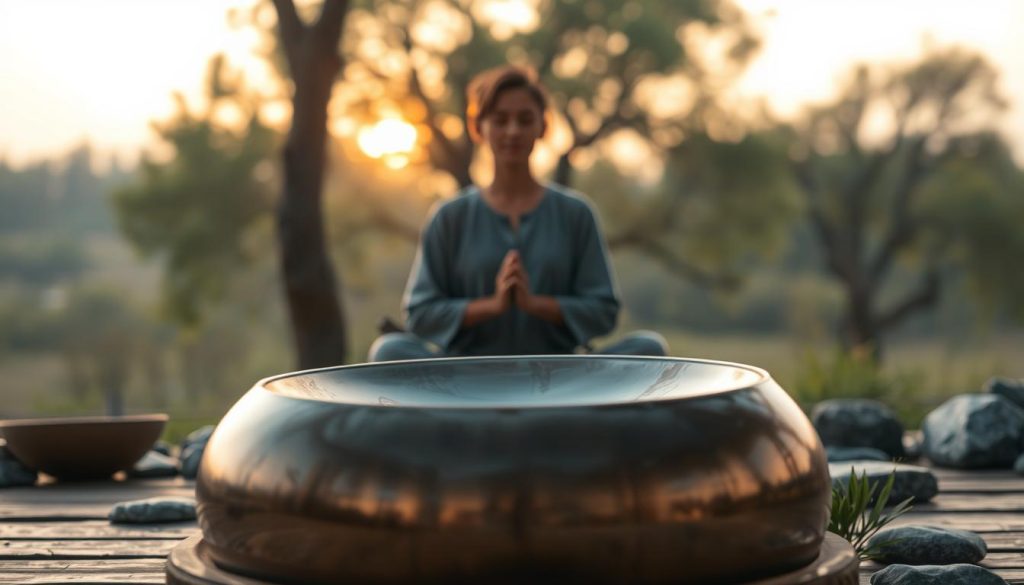
The handpan as an instrument for relaxation and meditation
Among musical instruments, this instrument has earned a special place as a tool for relaxation and meditation. Its mesmerizing melody and soothing sound make it ideal for well-being practices. It is frequently used in settings ranging from yoga classes to music-therapy sessions.
Use in music therapy and meditation sessions
The handpan has become a staple of music therapy. It is often paired with other instruments, such as the tongue drum and kalimba. Its unique ability to induce deep relaxation supports therapeutic work through sound.
Many centers offer guided meditation sessions. The harmonious sounds of this instrument create an auditory environment conducive to introspection. Participants can enter an altered state of awareness that promotes inner peace.
Sound experiences for finding inner peace
Playing the handpan, even as a beginner, is a form of active meditation. The concentration needed to alternate the hands and produce harmonious notes helps draw the mind away from stressful thoughts. This anchors the player in the present moment.
Relaxation sessions using this instrument are often held at wellness centers. An experienced musician creates an immersive sound journey that guides participants into a state of deep relaxation. Tension accumulated in the body and mind is then released gradually.
Here are a few comments from practitioners:
- “Listening to the handpan helps me find inner peace quickly.”
- “Everyday worries disappear as the crystalline notes unfold.”
- “This instrument creates a cocoon of sonic well-being.”
The handpan is especially effective for meditation. Its sounds are never harsh, because every note is a perfect chord. This makes it easier to let go and release intrusive thoughts.
When playing the handpan mindfully, the player focuses on the vibration of each note. This practice transforms music into a genuine meditation ritual accessible to everyone.
| Use | Effects |
|---|---|
| Music therapy | Induces deep relaxation |
| Meditation sessions | Encourages introspection and inner peace |
| Active relaxation | Reduces stress and intrusive thoughts |
| Sound journeys | Releases accumulated tension |
To learn more about using the handpan for relaxation, read this article about the gentle side of the handpan.
How to play the handpan: techniques and first melodies
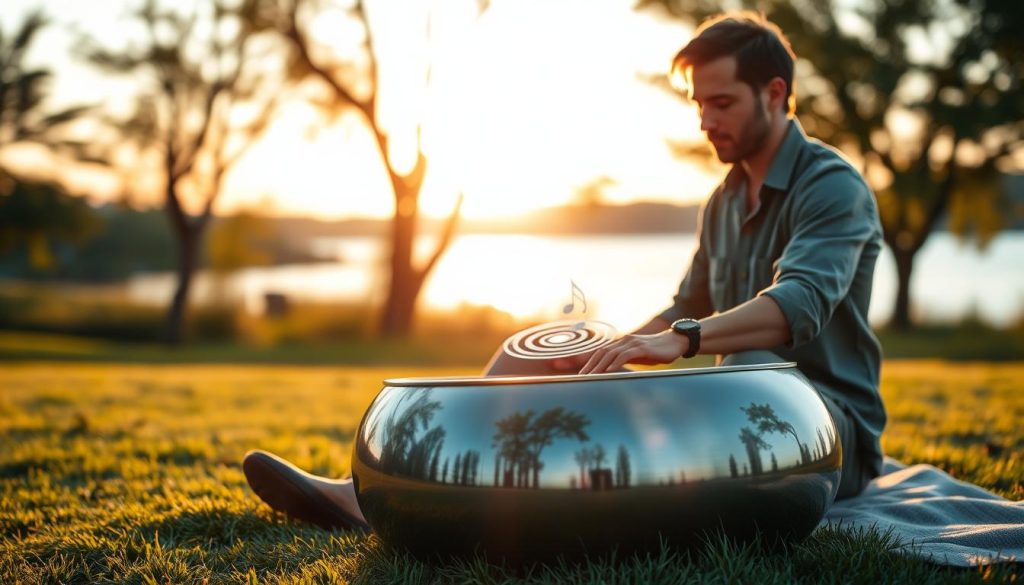
Playing this percussion instrument is a rewarding experience. Whether you are a beginner or an accomplished musician, the handpan offers an accessible approach to music. It resembles a steel drum that produces melodic notes when struck with the thumb or other parts of the hand.
To begin, it is essential to master a few basic movements. Lightly tapping the dimples produces harmonious sounds. Each note resonates differently depending on how it is struck. The lightness of the touch directly affects the sound quality and harmonic richness of every note.
Basic movements: tapping and alternating hands
Begin by alternating your hands. Strike a note on the left, then one on the right, and continue in this way. This technique promotes natural coordination. It makes it possible to create fluid melodic sequences with seemingly little effort. It is a fundamental skill that helps you become more comfortable over time.
As you play, you can also explore the edges of the dimples. This produces a softer, more intimate sound. It is an advanced technique that enriches your playing and expands your tonal palette.
Creating melodies from specific scales
Each instrument has a unique scale, often based on minor harmonies. To create your first melodies, explore the relationships between the available notes. The D Kurd scale, for example, is popular with beginners because it has a meditative, introspective character.
With regular practice, you will discover your own musical language. Listening is also crucial. Listen to recordings by recognized players to compare tones and styles. This will help you identify your sonic preferences.
Quentin Kayser, who has played the handpan for nearly twelve years, explains: “The handpan’s magic lies in its ability to express the music within.” His journey illustrates how learning develops through practice and exploration.
Structure your practice sessions to make effective progress. Devote time to freely exploring sounds, repeating rhythmic patterns and improvising. These activities will help you develop your style and confidence.
| Technique | Description |
|---|---|
| Tapping | Use the thumb or other parts of the hand to produce sounds. |
| Alternating hands | Strike a note on the left and then on the right to create fluid melodies. |
| Exploring scales | Discover the relationships between notes to compose melodies. |
| Edge touch | Produce a softer sound by playing near the edge of the dimples. |
To deepen your understanding of how to choose your instrument, read this article about the criteria to check beforehand.
Handpan making: materials, quality and artisanal methods
Creating this instrument relies on precise artisanal techniques. Nitrided steel is one of the key materials. It is a steel alloy that has undergone a special treatment. The process adds nitrogen to the steel’s surface layer, altering its mechanical properties. This makes it possible to create accurate, stable notes, which are essential to the instrument’s sound quality.
The role of nitrided steel and manufacturing techniques
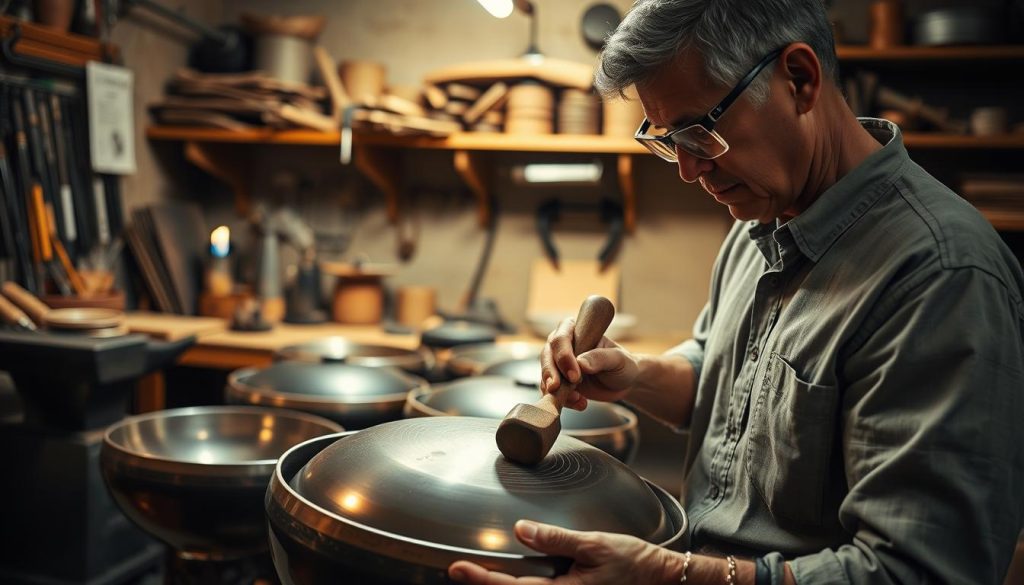
The two nitrided-steel sheets are carefully assembled and hand-hammered by specialized craftspeople. This meticulous work can take several weeks. Each note is created with particular care, ensuring a unique sound experience. Artisanal expertise is therefore crucial to the instrument’s harmonic richness.
Some important stages in the artisanal production of a handpan include:
- Shaping the nitrided-steel shells.
- Carefully hammering each dimple.
- Precisely tuning the notes to ensure perfect harmony.
Quality criteria and their impact on sound
Build quality has a direct impact on a handpan’s sound. A high-quality instrument can be identified by several criteria:
- Accurate tuning.
- Stable notes over time.
- Rich harmonics.
- Prolonged resonance.
- Sonic balance among the different dimples.
Superior-quality nitrided steel combined with precise hammering produces crystalline notes. This provides long resonance and a satisfying playing experience. Moreover, artisanal work remains irreplaceable. It is the maker’s expert hand that gives the instrument its soul and unique sonic personality.
Handpan makers select their nitrided steel carefully. This material allows notes to remain in tune for years, even with intensive use. Each instrument thus becomes a work of art, born of meticulous, passionate labor.
| Quality criteria | Impact on sound |
|---|---|
| Tuning accuracy | Ensures perfect harmony among the notes |
| Note stability | Maintains sound quality over time |
| Harmonic richness | Enriches the listening experience |
| Prolonged resonance | Creates an immersive atmosphere |
| Sonic balance | Ensures harmony among the different dimples |
To learn more about artisanal methods and instrument quality, read this article about artisanal handpan making.
The handpan market: makers, prices and wider availability
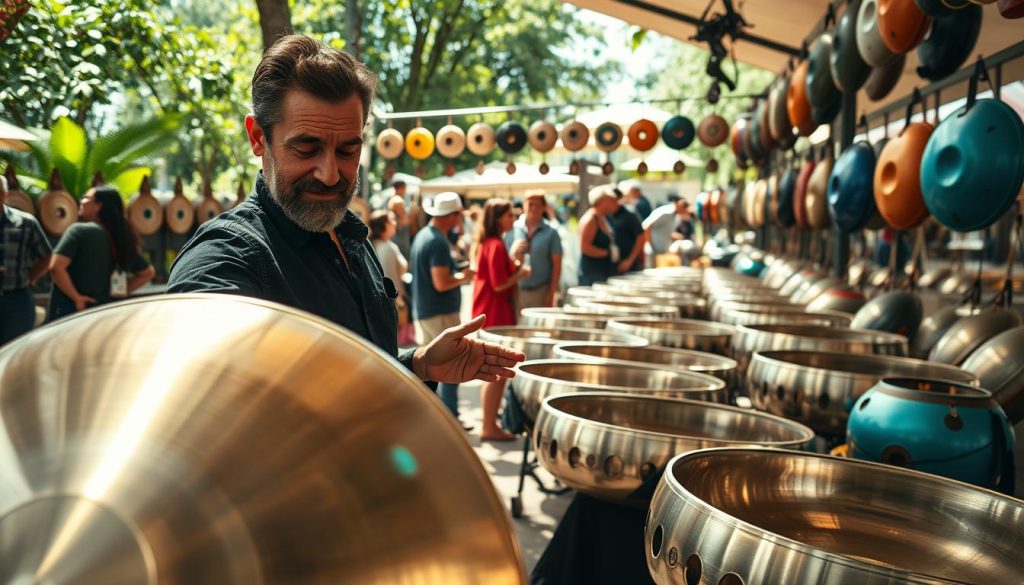
In recent years, the percussion-instrument market has changed significantly. After PANArt stopped production in 2013, new makers emerged. Brands such as Meinl, Metal Sounds and Sela transformed the landscape surrounding this instrument. They have made the handpan more accessible while maintaining high quality standards.
The price of a handpan remains relatively high. Entry-level models generally cost between €1,000 and €1,500. This reflects the complexity of the artisanal manufacturing process. Working the metal and creating the notes require exceptional expertise.
Prices vary depending on the instrument’s characteristics. Nine-note handpans, for example, are available from €999. Eleven-note models sell for around €1,399, while thirteen-note instruments can cost €1,899 or more.
Here is an overview of the different price ranges:
| Model type | Approximate price |
|---|---|
| 9 notes | From €999 |
| 11 notes | About €1,399 |
| 13 notes | Up to €1,899 |
Choosing a handpan depends on several criteria. The number of notes, the quality of the nitrided steel and the maker’s reputation are key factors. It is essential to consider your budget and musical needs to make the right choice.
Specialist retailers such as Handpan-Store play a crucial role. They offer artisan-made instruments with hand-hammered notes. These stores also provide personalized service to help every musician find the instrument best suited to them.
It is also important to examine the difference between an artisan-made handpan and a mass-produced instrument. Artisanal models often offer better tuning, richer harmonics and greater durability. This can justify a larger investment for discerning musicians.
The handpan’s wider availability, driven by the growing number of makers and online stores, has enabled increasing numbers of musicians to access this once-obscure instrument. It has also helped preserve the artisanal excellence for which the handpan is renowned.
The handpan in modern music and its many uses
In contemporary music, this percussion instrument stands out through its growing presence. Whether at tribal-music festivals or intimate concerts, the handpan attracts attention. Its unique sound and crystalline notes add a touch of magic to every performance.
Appearing at festivals, concerts and in chamber music
The handpan is especially popular at tribal-music festivals. Its mesmerizing melodies blend perfectly with the festive atmosphere. This instrument also fits into many kinds of ensembles, from acoustic duos to world-music groups.
In chamber music, its delicate sound creates moments of great emotional intensity. Away from large stages, it invites contemplation and silence, allowing listeners to connect deeply with the musical experience.
It can also be heard in documentary film soundtracks. Its ability to evoke travel and introspection makes it a popular choice for accompanying images of nature and discovery.
Use in yoga and other wellness practices
The handpan plays a central role in yoga and other wellness disciplines. Its soothing vibrations help practitioners connect with their breathing and release tension. In relaxation classes, this instrument promotes mindful presence.
In parks, musicians generously share their melodies with passersby. These serene moments add a touch of magic to everyday life and transform the atmosphere of group relaxation sessions.
Here is an overview of the handpan’s different uses:
- Featured at tribal-music festivals.
- Used in chamber music to create intense moments.
- Included in documentary film soundtracks.
- Plays a central role in yoga and wellness practices.
- Transforms the atmosphere of group relaxation sessions.
- Included in a variety of ensembles, from acoustic duos to world-music groups.
In short, the handpan has become an essential instrument in modern music. Its celestial-saucer shape and sounds that invite an inner journey make it a valuable companion for any practice intended to harmonize body and mind.
| Use | Effects |
|---|---|
| Tribal-music festivals | Creates a festive, mesmerizing atmosphere |
| Chamber music | Creates moments of emotional intensity |
| Film soundtracks | Evokes travel and introspection |
| Yoga practices | Encourages relaxation and self-connection |
| Relaxation sessions | Transforms the atmosphere and brings serenity |
To explore more of this instrument’s nuances and compare it with others, read this article about the differences between the handpan and the tongue drum.
Conclusion
This new instrument, born in Switzerland in the early 2000s, has captivated the entire world. Its artisanal nitrided-steel construction quality ensures mesmerizing sounds and deep vibrations. In less than a quarter of a century, it has become an essential tool for meditation, relaxation and musical performance.
Accessible to beginners and seasoned musicians alike, this instrument enables intuitive sound exploration. Every carefully produced note offers a unique experience, making each session a moment of grace. Whether you listen to recordings or attend a concert, the handpan invites you to discover its many facets.
Finally, remember that this instrument’s magic lies in the opportunity to express your own inner music. For anyone wishing to learn more about costs and choices, a budget guide is available to help you through the process.