
Welcome to this ultimate guide to buying a fascinating instrument. Whether you are a beginner or a curious musician, this article is for you. With its spellbinding tone, the handpan deserves special attention when you make a purchase.
Unlike other instruments, the handpan does not offer a chromatic scale. It uses a single scale, making your choice crucial. This decision can seem confusing, especially for people considering their first purchase.
This guide covers all the essential aspects. You will learn how to understand the instrument, assess its quality, and choose its scale, number of notes, and material. We will also direct you toward reliable purchasing channels.
It is important to take the time to learn before investing. Every instrument has its own sonic personality. The enthusiast community and makers will be valuable allies throughout the process.
A good choice depends on objective quality criteria as well as your emotions. We will preview the sections ahead to ensure that the information provided is comprehensive. Buying a handpan is both a financial and an emotional investment. This guide is intended to help you avoid common mistakes.
We invite you to read each section carefully. This will help you make an informed decision and find the instrument that truly suits you.
Introduction to the handpan and its world
The handpan is a captivating instrument that has won over many people around the world. Its distinctive metal saucer shape and use of a single scale make it an instrument in its own right. Each note is carefully positioned to provide a rich, immersive musical experience.
What is a handpan?
Developed by a worldwide community, this instrument is often called a pantam. It draws inspiration from the steelpans of Trinidad and Tobago. The name handpan is preferred because it evokes playing with the hands. The name “Hang,” however, is reserved for creations by PANArt, the instrument’s pioneers.
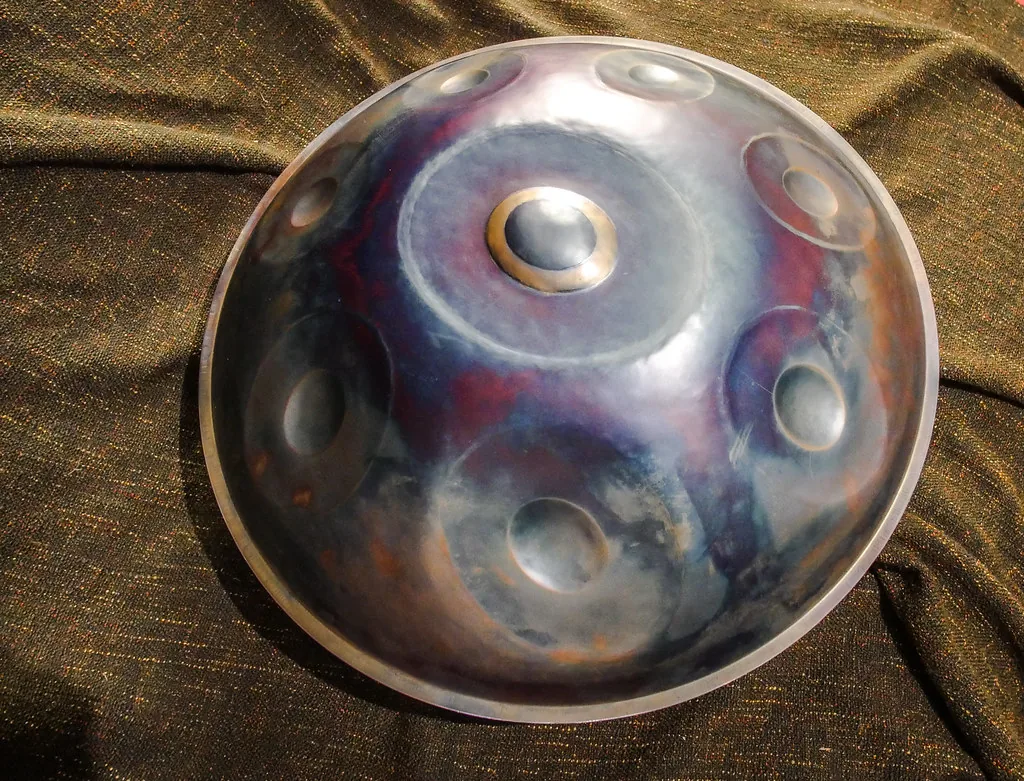
The handpan consists of tone fields corresponding to the raised areas on its surface. Each field produces a distinct note. At the center is the ding, the fundamental note, surrounded by shoulder tones that add harmonics to the melody. The gu is the opening beneath the instrument and provides better resonance.
The handpan community in France and worldwide
The handpan community is active and inclusive. In France, groups such as the French Handpan Connection on Facebook bring enthusiasts together. Numerous festivals and gatherings allow players to meet, exchange ideas, and share their love of the instrument.
This community includes makers, professional musicians, enthusiasts, and event organizers. Everyone helps enrich this musical ecosystem. People who join the community discover a welcoming environment where advice and resources are easy to find.
Essential vocabulary for understanding the instrument
To understand the handpan world, it is crucial to become familiar with its technical vocabulary. Here are several essential terms:
| Term | Definition |
|---|---|
| dimple | Indentation in the middle of a note |
| ding | Central note of the instrument |
| gu | Opening beneath the instrument |
| bottom notes | Notes on the lower shell |
| shoulder tones | High harmonics tuned within the central note |
| maker/tuner | Handpan maker |
Understanding these terms will make it easier to communicate with makers and other players. It will also help you avoid misunderstandings when purchasing your instrument. Becoming familiar with technical vocabulary is an important step toward making an informed choice.
Ultimately, immersing yourself in the handpan world and engaging with its community enriches the musical experience. It helps you avoid impulse purchases and make sound decisions. To learn more about this fascinating instrument, feel free to read our dedicated article.
Understanding how a handpan is made and works
Immersing yourself in the handpan world requires an understanding of how it is made. This fascinating instrument is the result of meticulous work carried out in three key stages.
The key stages of handcrafted production
The first stage is shaping the steel shell. The shell then undergoes manual tuning, during which each note is carefully adjusted with a hammer. This process can take several hours and requires considerable expertise.
Finally, finishing the tone is crucial. It reveals the maker’s level of expertise. Good finishing produces a balanced instrument rich in harmonics.
Why do some handpans look alike?
It is common to see similar-looking handpans. This is often due to the use of commercially available preformed shells. Although this makes production easier, it also standardizes the appearance of the instruments.
The maker’s impact on final quality
The choice of maker plays a decisive role in the handpan’s quality. An experienced craftsperson invests a great deal of time in tuning and finishing. This produces an instrument that not only sounds good but is also enjoyable to play.
It is essential to note that tuning is performed entirely by hand. This craftsmanship largely explains the price of a quality handpan. In addition, the alignment of the shoulder tones is an essential criterion for the instrument’s overall sound quality.
Industrial production, by contrast, is often focused on volume and neglects this finishing stage. This can result in handpans that are less enjoyable to play and less durable.
Makers such as Shellopan are recognized for the quality of their craftsmanship. Their instruments are often cited as benchmarks within the community.
In conclusion, understanding the manufacturing process helps you assess a handpan’s quality more effectively. This will allow you to make an informed decision when making your next purchase.
| Stage | Description |
|---|---|
| Shaping | Creation of the steel shell, the instrument’s foundation. |
| Tuning | Manual adjustment of the notes with a hammer, requiring hours of work. |
| Finishing | Work on the tone and alignment of the shoulder tones. |
Handpan quality criteria: what you absolutely need to know
When exploring the handpan world, it is crucial to understand the criteria that determine an instrument’s quality. Several factors play a fundamental role in the playing experience. These criteria are essential for ensuring that every note resonates clearly and beautifully.
Tuning: the key to playing enjoyment
Tuning is unquestionably the most important criterion. An out-of-tune handpan, no matter how beautifully made, will provide no playing enjoyment. Each note must have three components: the fundamental, the octave, and the fifth above the octave. To check their accuracy, use a tuner or listen carefully to each note when trying the instrument.
Sustain: the duration and richness of notes
Sustain is how long a note continues to resonate after being struck. Sustain that is too short requires advanced percussive technique, while sustain that is too long can create a “wall of sound.” Nitrided-steel instruments generally have sustain suited to melodic and percussive playing, making them ideal for most players.
Timbre and sound dynamics
A good handpan produces a warm, rounded sound with few metallic resonances. Sound dynamics are also important: they allow you to play softly or loudly without distortion. A quality instrument should offer a broad dynamic range to accommodate different playing styles.
Note isolation and crosstalk
Crosstalk refers to interference between notes. A good handpan should minimize this phenomenon. Some sympathetic resonances, such as the octave or fifth, can nevertheless add character to the instrument as long as they form a harmonious chord.
Sound balance and harmonic accuracy
Sound balance is essential. Every note should have the same quality of timbre, sustain, and projection. Harmonic accuracy—the tuning of the fundamental, octave, and fifth—is also crucial for producing a stable, rich sound.
Here is a summary of the quality criteria for a handpan:
| Criterion | Description |
|---|---|
| Tuning | Essential for playing enjoyment; every note must be in tune. |
| Sustain | How long the notes resonate; a balanced duration is preferable. |
| Timbre | A warm, rounded sound with few metallic resonances. |
| Crosstalk | Interference between notes that should be minimized. |
| Sound balance | Consistent quality across all notes. |
| Harmonic accuracy | Correct tuning of fundamentals and harmonics. |
By considering these criteria, you will be better prepared to recognize a good instrument. This is particularly important for avoiding disappointment with a first purchase, when your ear is not yet trained.
How do you choose the ideal musical scale for your handpan?
The musical scale is a fundamental factor to consider when buying an instrument. Unlike a chromatic piano, a handpan is tuned to a single scale. This defines all of the instrument’s melodic and harmonic possibilities.
What is a scale, and why is it important?
A scale is a set of notes arranged in a particular order. It directly influences the style of music you can play. Each handpan has one scale, and hundreds of different scales exist. Makers often give them poetic names.
Listen and feel: develop your ear and preferences
Developing your ear is essential when choosing the right scale. Listen to numerous demonstration videos on YouTube. Artists such as David Kuckhermann and Shellopan offer performances that may inspire you. Write down the scales that move you emotionally, then check the descriptions for the notes they contain.
Major and minor scales and modes from around the world
Major scales are often joyful and bright, while minor scales tend to evoke more melancholy and introspective emotions. Modes from around the world, including Middle Eastern, Celtic, and blues scales, add distinctive colors to your playing. These variations enrich the musical experience.
The most common scales for a first instrument
Beginners are advised to try different scales. Some of the most common are:
| Scale | Central note |
|---|---|
| AmaRa | C# or D |
| Kurd | D |
| Integral | D |
| Magic Voyage | F |
| AnnaZiska | C# or D |
| Equinox | E |
| Pygmy | F |
These scales are known for being easy to “tame” and well suited to musical exploration.
How the scale influences emotions and musical style
The chosen scale strongly influences the emotions you wish to convey. For example, a minor scale encourages meditation and introspection. Conversely, a Middle Eastern scale such as Ragadesh immediately evokes distinctive sounds but may confine your playing to an overly specific style.
Be cautious with strongly characterized Middle Eastern scales such as Hijaz or Romanian. Although spellbinding, they may limit your creativity in the long term and make it difficult to play with other musicians.
To refine your choice, begin by selecting the scales that speak to you. Listen to them again later and seek out different interpretations by various players and makers. This will help you discover every facet of each scale.
Finally, remember that choosing a scale is also a matter of personal feeling. There is no single “best” scale, only the one that most closely matches your sensibilities and musical tastes.
For more information about choosing your instrument, read this article for further guidance.

Number of notes: its impact on playing and sound quality
Choosing the number of notes on a handpan greatly influences the playing experience. Notes are counted in two ways: some people include the ding, the central note, while others do not. The instrument may therefore be described as having 8 notes or 7+1. To prevent confusion, use “X+1” notation—for example, 8+1 for 8 notes around the circle plus the ding.
Note notation: X + 1, including the central ding
“X+1” notation clarifies the number of notes and helps prevent misunderstandings with the maker. For example, an 8+1 handpan has 8 notes around the circle plus the central ding. This precision is crucial when purchasing an instrument.
Advantages and disadvantages of high and low note counts
A large number of notes has advantages. It offers more harmonic and melodic possibilities, enriching composition. However, it also has disadvantages. The more notes an instrument has, the greater the risk of imperfect tuning. High notes may lack volume, and sound interference may occur.
Conversely, fewer notes may improve sound quality. Instruments with fewer notes are often easier to tune. However, this limits the harmonic possibilities, and playing may become repetitive over time.
Recommendations for a first purchase
For a first purchase, choose a handpan with at least 8 notes around the circle—8+1—and no more than 9+1. This configuration offers the best balance of potential and quality. Experienced makers often produce quality instruments with 10+1 notes or more. For a reasonable budget, however, prioritize quality over quantity.
It is also important to discuss the notation being used clearly with the maker. This prevents misunderstandings about the number of notes ordered. Finally, remember that the number of notes also affects the handpan’s price. Investing in a high-quality 8+1 instrument is often wiser than buying a mediocre 12+1.
In conclusion, your chosen number of notes should balance your musical ambitions, your budget, and the importance you place on the instrument’s overall sound quality.
| Criterion | Description |
|---|---|
| Notation | X+1 (e.g. 8+1) to prevent confusion. |
| Advantages of a high note count | More harmonic and melodic possibilities. |
| Disadvantages of a high note count | Risk of imperfect tuning and sound interference. |
| Advantages of a low note count | Better sound quality and easier tuning. |
| Disadvantages of a low note count | Limited harmonic possibilities and a risk of boredom. |
| Recommendation | At least 8 notes around the circle (8+1) for a first purchase. |
Choosing the material: nitrided steel or stainless steel?
The material used is a key consideration when choosing an instrument. Two materials stand out in handpan production: nitrided steel and stainless steel. Each has distinctive characteristics that influence sound, durability, and playing feel.
Characteristics of nitrided steel
Nitrided steel is the original material used to make handpans. It is mild steel hardened through thermal and chemical treatment. This technique gives it:
- A broad playing dynamic, allowing you to explore a wide range of sounds.
- A cascading decay, allowing the notes to breathe and creating a warm tone.
- A highly regarded sound among musicians seeking to express deep emotions.
Characteristics of stainless steel
Stainless steel is increasingly used by modern makers. Common types include 430 and 441 stainless steel, as well as the well-known ember steel. Its main characteristics are:
- A more compressed sound, providing long, linear sustain.
- A more restrained dynamic, even when played hard, making it ideal for gentle or meditative playing.
- Corrosion resistance, requiring less maintenance.
Effects on sound, durability, and playing
Choosing between these two materials has significant consequences:
- Nitrided steel gives you an open, expressive timbre that is perfect for rich melodies.
- Stainless steel, by contrast, produces a softer, more muted sound that is ideal for creating an enveloping atmosphere.
- In terms of durability, stainless steel is more resistant to moisture, while well-maintained nitrided steel remains robust.
- For playing, nitrided steel requires a more precise touch, whereas stainless steel is more forgiving, making it easier for beginners to learn.
The material also influences the handpan’s price. Stainless steel may be slightly more expensive because of its anticorrosion properties and greater durability. If possible, try both materials before buying because their feel and sound response differ greatly and depend on personal preference.
In conclusion, neither material is inherently “better.” Your choice should depend on your playing style, whether you will play indoors or outdoors, and the feel you are seeking.
Where and how can you buy a handpan with confidence?
Buying a handpan may seem complicated, but there are ways to do it confidently. Whether you choose a new or used instrument, it is essential to learn as much as possible and follow a few practical tips.
Buying new: choosing makers and points to watch
Several options are available when buying new. You can buy directly from a recognized artisan maker, from a specialist retailer, or at a dedicated event where several makers exhibit their instruments.
Be wary of market pitfalls, however. Some dropshipping websites offer decorative objects that resemble handpans but are unplayable. Some influencers also make low-cost instruments without guaranteeing their quality. Do your research and remain vigilant.
Buying used: advice and pitfalls to avoid
Buying used requires extra vigilance. Check the tuning by requesting a recent video. Confirm the identity of the original maker and check for corrosion or dents. Favor transactions with trusted members of the community.
Trying an instrument in a store or at the maker’s workshop: why it matters
Trying a handpan in a store or at the maker’s workshop is crucial. Listening in person reveals qualities and flaws that online videos cannot convey. Its tactile feel is essential for assessing dynamics and playing comfort.
Research the maker. Read community reviews, check how long the maker has been active, and listen to demonstrations of their instruments. Also ensure that they provide after-sales retuning services.
Regarding price, it is important to know the typical ranges for a good handpan, whether new or used. Very low prices often indicate poor quality or a scam. Ask the seller every necessary question before buying: the exact scale, material, number of notes, tuning frequency, warranty terms, and future retuning options.
Finally, take your time when trying an instrument. Move to another room to test the acoustics, play softly and loudly, and listen to each note individually. Do not rush into buying an instrument simply because you immediately fall in love with it without analyzing all the quality criteria.
In conclusion, buying a handpan is a significant investment that deserves patience and vigilance. Prioritizing quality and seller reliability is the key to a successful purchase.
Practical advice for testing and selecting your handpan
Trying an instrument before buying it is essential to making the right choice. It allows you to assess its sonic characteristics and ensure that it meets your expectations.
Listen to as many different instruments and styles as possible before deciding. Use online videos, but also attend handpan gatherings or festivals to hear more instruments live.
Listen to multiple instruments and styles
Broadening your musical horizons is fundamental. Every instrument has its own timbre and character. By listening to different styles, you will refine your preferences and become better able to identify what moves you.
Try the handpan in real-life conditions
Playing the instrument yourself allows you to assess its response to touch, dynamics, and playing comfort. This personal connection cannot be perceived through a recording.
For an effective trial, find a quiet room. Play each note individually at different intensities. Listen to the sustain and test note sequences. Take all the time you need without feeling pressured by the seller.
Consider your emotions and feelings
It is crucial to ask yourself questions while trying the instrument. Do I like its timbre? Is the instrument stable and balanced? Is its dynamic range broad enough to add nuance to my playing? Are there any noises or resonances that annoy me?
Crosstalk is another factor to consider. Play one note and listen for other notes that activate unpleasantly. Assess whether these interactions will remain tolerable over time.
Finally, your emotional connection with the instrument is decisive. It is what will make you want to play and improve. Do not rush into buying an instrument because of an immediate infatuation. Take time to think, try the instrument again on another day if possible, and compare it with other models.
In conclusion, selecting a handpan combines rational analysis with personal intuition. The time spent testing and comparing is a valuable investment in finding the ideal instrument.
Personal criteria for buying a handpan: a guide to choosing the right one
Choosing a musical instrument is a personal and subjective experience. With a handpan, several criteria must be considered for a successful purchase. These criteria are often influenced by your tastes, musical expectations, and budget.
Define your musical and aesthetic expectations
Before making a purchase, it is essential to define what you expect from your instrument. What style of music do you want to play? Do you prefer a warm, rounded sound or something brighter and more crystalline?
These preferences will guide your decisions. For example, if you enjoy meditative melodies, a muted sound may suit you. Conversely, if you want to play more dynamic rhythms, a ding with long resonance may be more appropriate.
Assess your budget and value for money
Budget is a decisive factor when choosing an instrument. A good handcrafted handpan is an investment. It is better to wait and save for a quality model than to choose a low-end instrument that may quickly disappoint you.
Prices vary considerably. A quality handpan may cost between 800 and 3,000 euros, depending on the maker and materials used. This cost reflects the hours of craftsmanship, the maker’s expertise, and the after-sales service.
Choose between tonal diversity and tuning quality
Another dilemma is the choice between tonal diversity and tuning quality. The more notes an instrument has, the more harmonic possibilities it can offer. However, this may also increase the risk of imperfect tuning.
For a first handpan, it is generally advisable to prioritize sound quality over the number of notes. An instrument with 8 notes around the circle—8+1—is often a good choice. This offers good value while ensuring an enjoyable playing experience.
It is also important to consider the instrument’s appearance. A handpan you find beautiful will be more motivating to play and display. Finally, remember that choosing your first handpan is not an irreversible decision. Many musicians acquire several instruments over time.
The tuning frequency must also be considered. The 440 Hz and 432 Hz standards affect your ability to play with other musicians. The most common standard is 440 Hz, while 432 Hz is often preferred for its purported calming qualities.
Ultimately, personal criteria are just as important as technical ones. The best handpan is the one that inspires you and matches your musical identity.
Caring for your handpan to preserve its quality
Keeping your instrument in good condition is essential for preserving its sound quality and extending its lifespan. Proper maintenance ensures that every note resonates clearly and beautifully. Here are a few practical tips for caring for your handpan.
Material maintenance and corrosion prevention
Your instrument’s material directly affects its maintenance. If you own a nitrided-steel model, it is crucial to apply protective oil regularly. This prevents corrosion, especially after playing with sweaty hands or in a humid environment.
Stainless-steel models are easier to maintain. Gentle cleaning with a microfiber cloth is recommended to preserve their appearance and prevent scratches.
Avoid abrasive or chemical products. Use a soft, dry cloth or one lightly dampened with a suitable product recommended by the maker.
Suitable storage and transportation
Proper storage is equally important. Keep the instrument in a hard case or padded bag, away from moisture and temperature fluctuations. Avoid leaving it exposed to dust or direct sunlight.
When transporting it, use a quality bag with suitable straps. Never stack heavy objects on the instrument, and handle it carefully by holding the edges. This prevents changes to the tuning and protects the handpan’s rim.
Retuning and after-sales service
With time and use, a handpan may drift slightly out of tune. It is therefore important to know whether the maker offers after-sales service or whether a skilled tuner is available nearby. An instrument whose maker cannot be identified is often difficult to resell.
The gu, or opening beneath the instrument, provides access to the interior for retuning. In addition, the rim made of sheet metal, brass, or another material protects the instrument during handling and softens high harmonics while playing.
In summary, a well-maintained handpan retains its sound quality and value over time. Regular, careful maintenance may even improve it over the years. Caring for your instrument is a simple but essential practice for preserving the pleasure of playing and protecting your investment.
Your future with your handpan: progress and complementary instruments
A musical journey with an instrument is a fascinating adventure. With a handpan, it becomes even more rewarding. This intuitive instrument allows rapid progress and gives every player a unique experience.
Learn and develop your playing
It is essential to explore the available learning resources. Online tutorials, lessons with professionals, and introductory workshops are excellent ways to improve your technique. Regular practice plays a key role in developing your musical expression.
Over time, your playing will evolve naturally. Your first intuitive melodies will give way to more structured compositions. You will also master dynamic nuances and touch, enriching your musical experience.
Build a collection of complementary scales
Many players choose to acquire several instruments with complementary scales. For example, a meditative minor scale can be paired with a more rhythmic and percussive scale. This broadens your musical possibilities and enriches your repertoire.
Excellent makers produce instruments on which the difference between 8+1 and 10+1 notes is often imperceptible. This makes it easier to acquire a second instrument and allows you to explore new musical worlds without difficulty.
Participate in the community and events
Participating in the handpan community is a valuable experience. Gatherings, festivals, and jam sessions offer ideal opportunities to share your passion. Online groups such as the French Handpan Connection are also invaluable resources for learning from other players and discovering new instruments.
Events also provide an opportunity to try handpans made by different makers. This helps you consider buying a second instrument confidently and with full knowledge of your options.
Ultimately, progress in your playing is a continual source of satisfaction. Because the handpan is so intuitive, even non-musicians can quickly create beautiful melodies. Remember that buying your first instrument is only the beginning of a rewarding musical journey.
Think of your handpan as a lifelong musical companion. It will evolve with you and accompany your discoveries, encounters, and personal fulfillment through music.
Conclusion
Ultimately, buying an instrument is a process combining passion and careful thought. This guide has highlighted the importance of understanding the handpan world. You have learned about the essential quality criteria and the factors to consider when choosing the scale, number of notes, and material.
Remember that every decision is personal. There is no “best” instrument, only the one that resonates with you. Take the time to listen, test, and compare. Patience is the key to finding an instrument that will provide years of musical enjoyment.
The handpan community is a valuable resource. Feel free to ask questions, request opinions, and attend events. This will enrich your experience and refine your preferences.
Ultimately, the handpan is an intuitive and accessible instrument. Choose one that inspires you and awakens your emotions. Investing in a quality model is always wise because it ensures durability and satisfaction.
Share your experiences, questions, or favorite discoveries in the comments. Join the community to keep learning and exchanging ideas about your passion.