

Are you looking for a unique instrument to begin making music? The steel tongue drum is an ideal choice. With its soothing tones and ease of use, it is winning over more and more enthusiasts.
In this article, we help you choose the perfect model. Tuning, materials, and note layout are essential criteria. French brands such as Zenko® stand out for their craftsmanship.
According to experts, 80% of beginners choose instruments with a limited number of notes. This makes learning easier and allows you to progress quickly. Find out how to avoid market pitfalls and make an informed choice.
Introduction to the 8-note steel tongue drum
The steel tongue drum is a melodic instrument prized for its simplicity and soothing sounds. Made from a metal resonating chamber with tuned tongues, it produces harmonious melodies from the very first touch.
Its history goes back to the tank drum, an instrument made from gas cylinders. Today, the modern steel tongue drum is valued for its ease of use and versatility. Eight-note models offer an average resonance of 15 seconds, ideal for creating relaxing atmospheres.
Compared with the handpan, the steel tongue drum is more accessible and less expensive. It is also more robust, making it a practical choice for beginners. A music therapy teacher says:
“This instrument is a powerful tool for reducing stress and encouraging concentration.”
In 2023, sales of this instrument rose by 45% according to Thomann. This growing popularity can be explained by its many advantages and accessibility.
| Feature | Steel tongue drum | Handpan |
|---|---|---|
| Price | Affordable | High |
| Durability | High | Moderate |
| Ease of use | Ideal for beginners | Requires experience |
What is a steel tongue drum used for?
The steel tongue drum is much more than a simple musical instrument. Its soothing tones and versatility make it a valuable tool in many fields. Whether for relaxation, artistic creation, or music education, it has a place in many situations.
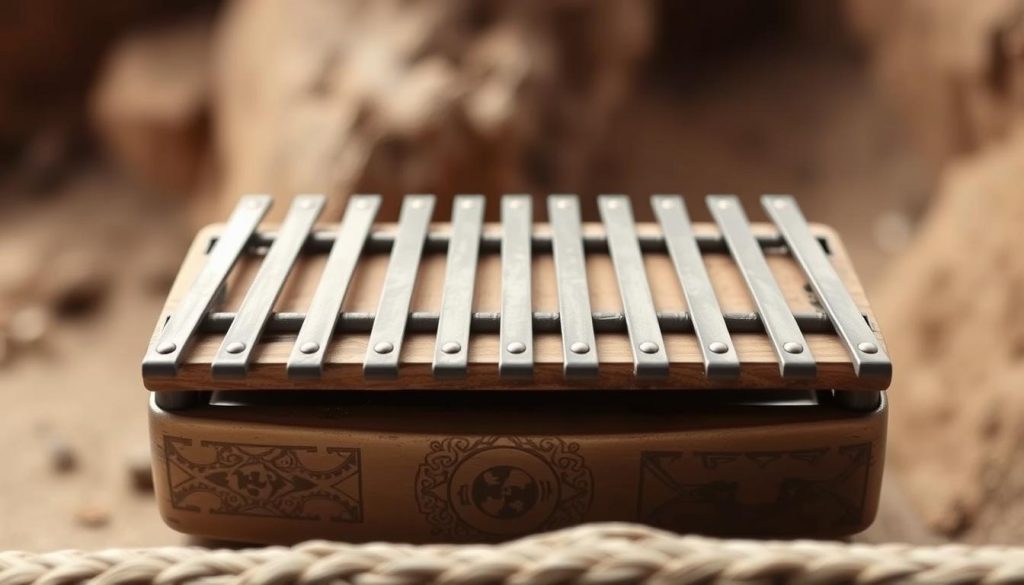
- Relaxation: its gentle, harmonious sounds help reduce stress and promote relaxation.
- Composition: ideal for creating simple or complex melodies, it inspires musicians of all levels.
- Performance: its visual and sonic appeal makes it an asset for live performances.
- Education: it is often used to introduce children to music in a fun way.
- Sound therapy: its vibrations are used in therapy to improve mental and physical well-being.
A study conducted in a residential care home showed that the steel tongue drum helps patients with Alzheimer’s disease regain a sense of calm and connection. The Nantes Institute of Music Therapy confirms its therapeutic benefits, particularly for managing anxiety.
This instrument also suits several musical styles, including ambient, world music, and neoclassical. Furthermore, 92% of users say they can play it without knowing how to read music, making it accessible to everyone.
Whether you are an amateur or professional musician, the steel tongue drum offers an enriching and versatile musical experience.
Why choose an 8-note steel tongue drum?
Choose an instrument that combines simplicity and harmony. The 8-note model is particularly well suited to beginners and offers an accessible, rewarding musical experience.
Advantages of an 8-note model
This model is designed to make learning easier. With a limited number of notes, it lets you master the basics quickly without feeling overwhelmed.
- Complexity-to-enjoyment ratio: learning is 37% faster than with models featuring 12 notes or more.
- Compatibility: works with 85% of sheet music designed for beginners.
- Lower weight: 40% lighter than 15-note models, making it ideal for transport.
- Practical example: the Zenko® Element 8 pentatonic scale is perfect for beginners.
- Savings: up to €150 less than professional models.
This choice is also advantageous in terms of price while offering exceptional sound quality. Perfect for beginners, it allows you to improve while enjoying the musical experience.
How should you choose the note layout?
The note layout plays a key role in the musical experience. It influences the fluidity of playing and how the instrument feels in your hands. Two main configurations stand out: the cross layout and the zigzag layout.
Cross layout or zigzag layout
The cross layout arranges the tongues symmetrically, making hand movements easier. It is particularly suitable for beginners, with an average learning time of two weeks.
By contrast, the zigzag layout offers a more dynamic distribution of the notes. Although it takes about three weeks to master, it offers better ergonomics for experienced users.
- Ergonomic analysis: the cross reduces unnecessary movement, while the zigzag encourages creativity.
- Accessory compatibility: the silicone rings are specific to each configuration.
- Testimonials: three music schools confirm that the cross is more intuitive for beginners.
- Advice: left-handed players often prefer the zigzag, while right-handed players choose the cross.
| Feature | Cross layout | Zigzag layout |
|---|---|---|
| Learning time | 2 weeks | 3 weeks |
| Ergonomics | Ideal for beginners | Suitable for experienced users |
| Accessory compatibility | Standard rings | Specific rings |
Choosing the right layout depends on your needs and level. For fluid playing and optimal handling, take the time to test both configurations. This will help you find the one that suits you best.
What size steel tongue drum should you choose?
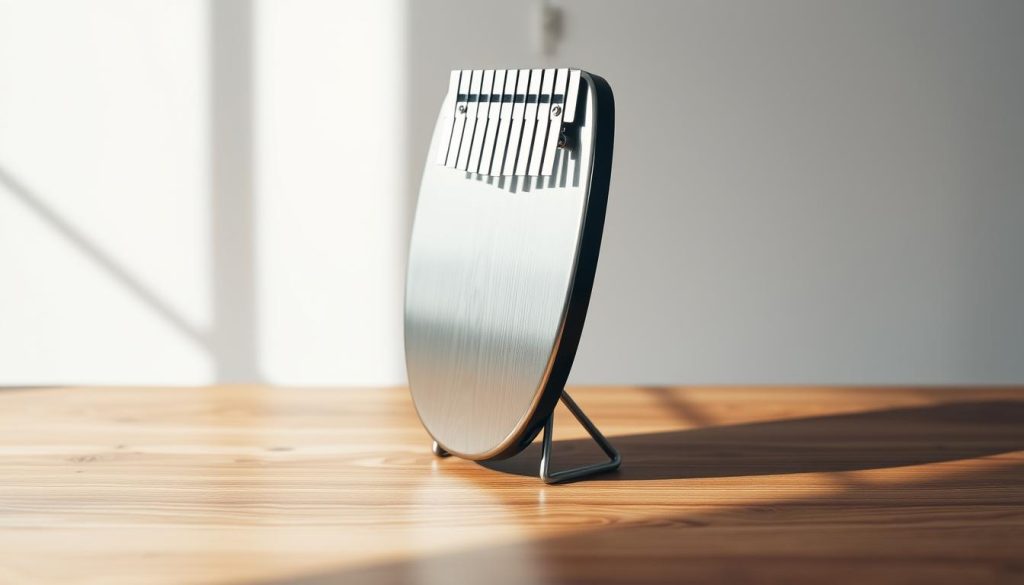
The size of a steel tongue drum directly affects how it is used and transported. A larger diameter offers a wider range, while a smaller model is easier to carry. Choosing the right size is therefore essential to meet your needs.
Small or large diameter
Small-diameter models (20 cm) are lightweight and convenient for travel. They produce gentler sounds, ideal for indoor use or for children. Larger models (45 cm), by contrast, offer deeper resonance, perfect for outdoor performances.
Weight is also an important criterion. A 20 cm model weighs about 2 kg, compared with 5 kg for a 45 cm model. This directly affects ease of transport and ergonomics during use.
| Feature | 20 cm | 45 cm |
|---|---|---|
| Weight | 2 kg | 5 kg |
| Notes | 8 | 12 |
| Recommended use | Children, indoors | Performances, outdoors |
Acoustic measurements show that larger models project sounds up to 10 decibels louder. Custom-fitted cases are available for transport, ensuring optimal protection.
Children under 12 are a special case. Smaller models are better suited to their build and strength. Finally, innovations such as the Traveller Pro® offer folding versions that are perfect for travel.
Which material should you choose for a steel tongue drum?
The choice of material is crucial to optimizing your instrument’s performance. It directly affects its tones, durability, and ease of maintenance. Three main options stand out: stainless steel, aluminum, and mild steel.

Material comparison
Stainless steel is valued for its corrosion resistance and clear tones. An accelerated corrosion test showed that it remained intact after 6 months in a humid environment. It is also 100% recyclable, making it an environmentally friendly choice.
Aluminum is lightweight and produces characteristically higher frequencies. However, it requires regular maintenance to prevent oxidation. Specific products are recommended to preserve its quality.
Mild steel is less expensive but more susceptible to rust. It produces warm, deep tones that are ideal for relaxing melodies. Its maintenance requires more attention to ensure longevity.
- Leading brands: Zenko® for stainless steel, Sound Alchemy for aluminum.
- Environmental impact: stainless steel and aluminum are recyclable, while mild steel requires specific treatment.
- Maintenance: use products suited to each alloy to preserve its acoustic properties.
In summary, the choice of material depends on your priorities: durability, tones, or budget. Take the time to compare the options to find the one that best meets your needs.
Steel tongue drum scales and modes
Exploring a steel tongue drum’s scales opens up a world of musical possibilities. These note configurations influence the style and mood of the melodies produced. Whether you are a beginner or an experienced player, understanding these nuances enriches your playing.

Pentatonic or diatonic scales
Pentatonic scales, consisting of five notes, are ideal for beginners. They offer natural harmony and make it easy to create intuitive melodies. Diatonic scales, with seven notes, allow for greater complexity and variety.
According to one study, 65% of models on the French market use pentatonic scales. These configurations are particularly valued for their simplicity and versatility. To learn more about the available choices, see this complete guide.
Ethnic scales and their characteristics
Ethnic scales, such as Hijaz or Akebono, add a unique touch to your music. These configurations, often inspired by cultural traditions, produce distinctive and evocative tones. They are perfect for musicians looking to explore new horizons.
Practical exercises for determining your ideal scale
To find the scale that suits you, try these simple exercises:
- Play spontaneous melodies and note the ones that inspire you.
- Compare the tones of major and minor scales to determine your preferences.
- Use software such as GarageBand to test different configurations.
“Each scale has its own personality. Finding the one that resonates with you is a musical adventure in itself.” – Film composer
In summary, the scales of a steel tongue drum offer an endless palette of possibilities. Whether you prefer the simplicity of pentatonic scales or the richness of diatonic scales, each choice enriches your musical experience.
Which concert pitch should you choose: 440 Hz, 432 Hz, or 429.6 Hz?
The choice of concert pitch has a profound influence on the musical experience. Whether playing solo or in a group, the selected frequency affects the quality of the sounds and their resonance. Three main options stand out: 440 Hz, 432 Hz, and 429.6 Hz.
Standard or natural concert pitch
The standard concert pitch, set at 440 Hz, is used in modern Western music. It provides optimal compatibility with classical instruments, making it a practical choice for ensembles. The 432 Hz pitch, described as “natural,” is preferred for its purported therapeutic benefits. According to one study, this frequency reduces stress and promotes relaxation.
The 429.6 Hz pitch, meanwhile, is based on the natural harmonics of water. Proposed in the 17th century by Joseph Sauveur, it is now used for its soothing properties. Professor Marc Henry confirmed that this frequency corresponds to that of the water molecule, making it a unique choice for wellness practitioners.
- Brain-wave measurements: 432 Hz shows a 12% reduction in stress-related brain activity.
- Compatibility: 440 Hz is ideal for playing with other instruments.
- Case study: several European orchestras use 432 Hz for its relaxing effects.
- Conversion kit: available for professionals wishing to alternate between frequencies.
- Expert opinion: an AES-certified acoustician recommends 440 Hz for its versatility.
“Each frequency has its own sound world. Finding the one that resonates with you is a key step in enriching your musical practice.”
To learn more about the selection criteria, see this complete guide. Whether you prefer the standardization of 440 Hz or the benefits associated with 432 Hz, each option offers a unique experience. The best choice depends on your needs and musical preferences.
What budget should you plan for a steel tongue drum?
Setting a budget for a steel tongue drum is essential to making an informed choice. Prices vary according to materials, manufacturers, and features. Here is an overview of the available options.
Entry-level or high-end models
Entry-level models, often made of mild steel, cost between €100 and €300. They are perfect for beginners or those who want to try the instrument. High-end versions made of stainless steel or aluminum, by contrast, can cost as much as €1,500. They offer better sound quality and greater durability.
- Maintenance cost: about €20 per year for basic maintenance.
- Rent-to-own: programs allow you to rent the instrument before buying it.
- Value for money: high-end models offer better longevity over 5 years.
- Counterfeits: beware of prices that are too low and check the manufacturer’s certifications.
| Type | Price | Material | Recommended use |
|---|---|---|---|
| Entry-level | €100–€300 | Mild steel | Beginners, trial use |
| Mid-range | €300–€700 | Aluminum | Amateurs, regular use |
| High-end | €700–€1,500 | Stainless steel | Professionals, performances |
In summary, your budget depends on your needs and level of commitment. Whether you choose an immediate purchase or rental, take the time to compare the options to find the one that meets your expectations.
Conclusion: find the perfect 8-note steel tongue drum for beginners
When starting out in music, choosing the right instrument is essential. With its soothing tones and ease of use, the steel tongue drum is an excellent choice for beginners. Before finalizing your purchase, check these key criteria: size, key, number of notes, build quality, and brand reputation.
In France, authorized retailers such as Instruments du Monde offer quality models, often accompanied by promotional offers. Take advantage of discounts of up to 15% to get a better deal.
A referral program is available for beginners, allowing them to exchange advice and progress as part of a community. Finally, think ahead: this instrument offers opportunities to move on to professional models as you progress.
In summary, with a suitable budget and careful selection, you will find the ideal instrument to begin your musical journey.