
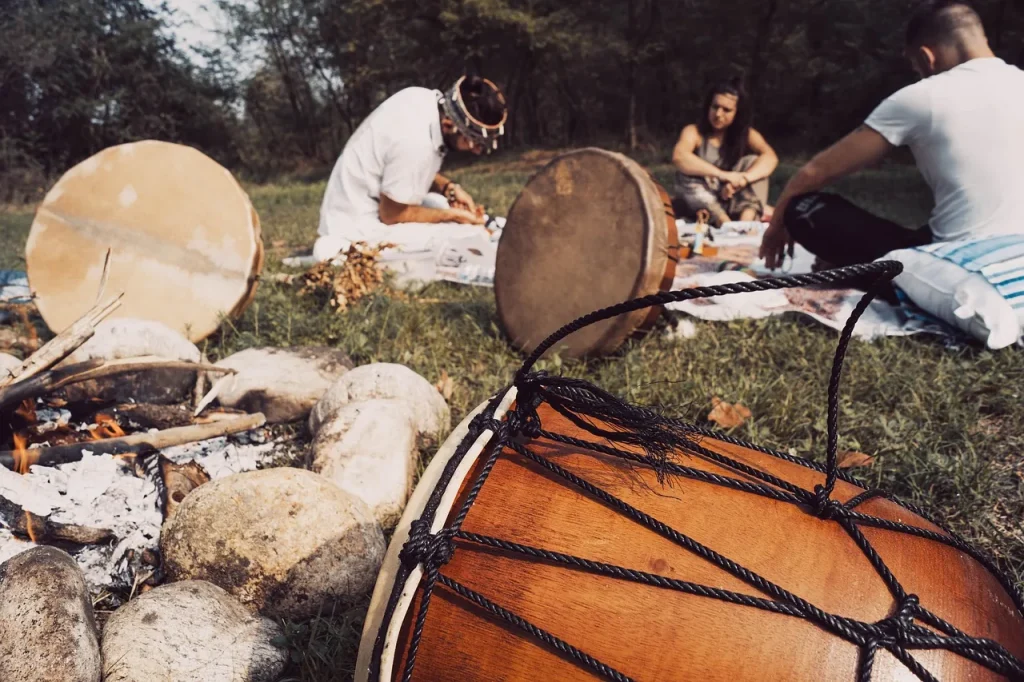
Making a djembe is a unique project that combines craftsmanship, passion, and music. This instrument, emblematic of African culture, is often handmade. This allows each maker to personalize their djembe. By making your own djembe, you can explore various materials to find the best sound.
In this djembe-making guide, we will take you through the process step by step. You will learn how to choose wood, such as mahogany or iroko, as well as goatskin for the drumhead. Following this djembe-making tutorial will help you create a unique instrument. To get started, see the detailed instructions at this link.
Introduction to Djembe Making
Djembe making is a centuries-old tradition connected to African culture. Created in the 13th century in the Mali Empire, this drum plays a crucial role in ceremonies and celebrations. It also embodies craftsmanship passed down from generation to generation.
Making a djembe requires specific techniques and materials. Craftspeople, or master djembefolas, choose woods such as iroko or lenke. They carefully carve the shell, which measures between 45 and 65 cm in height and between 25 and 35 cm in diameter. This work reflects the richness and diversity of the instrument.
Djembes are essential in music, both for accompaniment and solos. Their sound comes from playing techniques that produce three principal sounds: bass, tone, and slap. Understanding how they are made enriches musicians’ knowledge and helps preserve the musical tradition.
In this article, we will explore the materials and manufacturing stages. This will help us understand the art and science of the djembe. Making a djembe is a journey that bears witness to Africa’s cultural and musical heritage.
Materials Needed to Make a Djembe
Choosing the right materials is crucial to producing a high-quality djembe. Several components influence the instrument’s sound and durability. Here are the key materials needed to make a djembe.
Choosing Wood for the Shell
The choice of wood is crucial for the body of the djembe. Craftspeople often prefer hardwoods such as mahogany, iroko, or doussie. Mahogany is known for its rich tone and acoustic balance.
Iroko is robust and provides deep bass and clear high notes. Doussie, with its deep tone, is also an option, although its durability may vary. For more information, see this detailed article.
Type of Skin and Rope
The type of skin is essential to the djembe’s sound. Goatskin is the most widely used because it provides good tension and faithful sound reproduction. The quality of the skin influences the instrument’s tone.
The ropes, made from nylon or braided cord, maintain the skin’s tension. Some modern djembes have mechanical tensioning systems, such as tension rods, to make tuning easier and ensure a high-quality sound.
Essential Tools for Making the Instrument
Djembe-making tools include instruments essential to precise construction. These include chisels, a gouge, a plane, and pliers. These tools are used to shape the wood and secure the skin correctly.
Precise measurements of the shell and the diameter of the metal rings are crucial. No craftsperson can neglect this step if they want to achieve the best possible result.

How Do You Make a Djembe?
Making a djembe is exciting and requires precision and patience. To begin, gather the necessary materials. Use hardwoods such as mahogany, iroko, or doussie. These woods ensure a rich, powerful sound. To practise, use less expensive materials before moving on to a djembe-making tutorial.
After gathering the materials, begin by carving the wooden shell. Carved from a single piece, this shell resembles a mortar. Measuring its diameter is crucial for determining the size of the metal rings and the skin. The goatskin, selected for its quality, is then stretched over the shell.
Use nylon rope or braided cord to achieve proper skin tension. Some modern djembes have mechanical tensioning systems to make tuning easier. The quality of the materials and the craftsperson’s expertise influence the final result. Every detail matters when seeking an excellent sound.
The Stages of Making a Djembe
Making a djembe involves several important stages. Each one is crucial to ensuring the instrument’s sound quality and durability. Precision is needed to bring the materials and technique into harmony.
Preparing the Wooden Shell
The process begins with preparing the wooden shell. Choosing a wood such as mahogany, iroko, or doussie is essential for achieving a high-quality sound. The wood must be carved into a conical shape to improve resonance.
It is important to carve the inside of the shell to obtain better acoustic quality. A smooth inner surface is preferable.
Sanding and Finishing
Sanding the djembe is crucial after carving. It refines the inner surface to produce better resonance. Medium-grit sandpaper is recommended for this work.
Sanding must be carried out carefully. This prevents damage to the wood or changes to the instrument’s sound. Paying close attention to this stage ensures a djembe that looks and sounds excellent.

| Stage | Description | Materials Used |
|---|---|---|
| Shell preparation | Choose and carve the wood into a conical shape | Mahogany, iroko, doussie |
| Sanding | Refine the inner surface for a better sound | Medium-grit sandpaper |
Djembe Tensioning and Tuning Techniques
Mastering tensioning and tuning techniques is crucial to producing a high-quality djembe. Precision during preparation is necessary to achieve the best sound. Skin tension is essential because it affects pitch and resonance.
Rope-Tensioning Methods
There are two main methods for tensioning the skin: the lever and tension knots. A 55 cm lever applies lateral pressure. Tension knots made with nylon rope provide another option. Locking pliers can help make precise adjustments.
Craftspeople can also use mechanical systems such as tension rods. This makes tuning easier without compromising sound quality. Each method offers advantages depending on the desired sound.
The Importance of Skin Tension
Proper skin tension is crucial for preventing deformation. It is advisable to warm the skin before tuning it. This reduces the risk of tearing.
You should also make sure that the environment is stable, because temperature variations affect tension. For more information, see this article.

Tensioning and tuning techniques are also an art. They require careful practice to improve the djembe’s sound at every stage.
Conclusion
Making a djembe is a project that combines craftsmanship with a love of music. This guide has introduced you to the materials, stages, and techniques needed to make your own instrument. Whether you are a beginner or an expert, learning to play the djembe enriches your musical experience.
It is crucial to commit fully to every stage of the manufacturing process. Every djembe celebrates tradition and creativity. The choice of materials such as lenke or djalla wood, as well as animal skins, plays a decisive role in its sound. To learn more, discover the cultural impact of the djembe here.
Practising the djembe improves your mastery of tensioning and tuning. By making a djembe, you create an instrument and pass your passion on to others.