
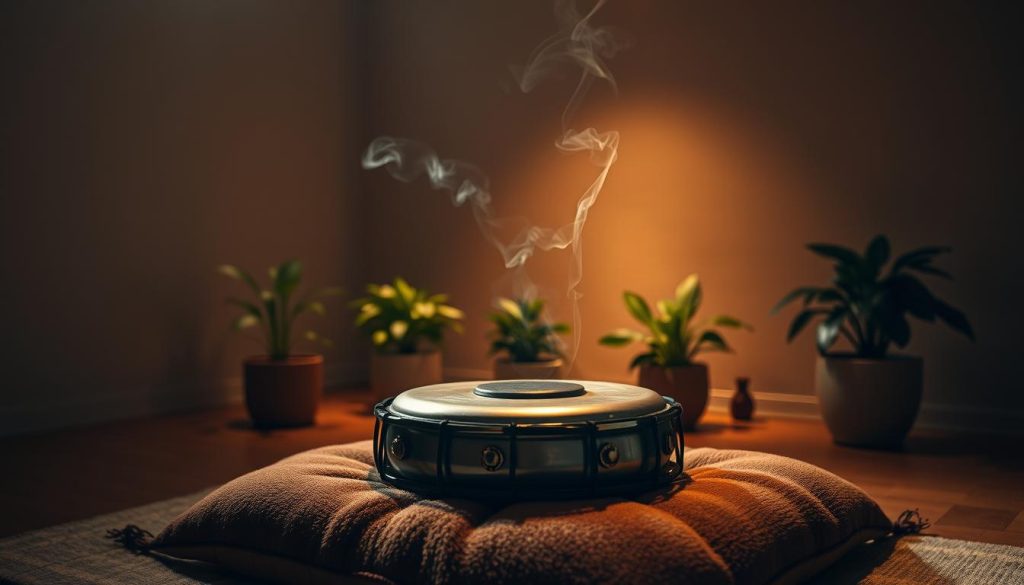
The tongue drum is an increasingly popular instrument because of its soothing effects on the body and mind. According to recent studies, it can reduce anxiety by 40% and lower cortisol by 27% in just 15 minutes. These results make it a powerful tool for improving well-being.
The vibrations produced by this instrument act directly on the autonomic nervous system. They synchronize theta and alpha brain waves, promoting a state of deep calm. Compared with other methods such as yoga or silent meditation, the tongue drum offers a unique and accessible approach.
Research supports the therapeutic applications of this tool. Whether for managing stress or improving concentration, its benefits are undeniable. Discover how this instrument can transform your daily life.
What is a tongue drum?
Inspired by Aztec drums, the tongue drum is a contemporary creation. This melodic instrument combines ancient traditions with modern innovations. Its steel tongues produce unique tones that are ideal for relaxation.
Origins and characteristics of the instrument
The tongue drum has its roots in pre-Columbian slit drums. Today, it is made from materials such as steel or carbon steel. The size of the tongues affects the pitch, providing a range of different notes.
The sound output of this instrument reaches 70 to 80 decibels. Compared with the Hang Drum, it is easier to maintain and tune. These features make it a practical and accessible tool.
Differences between the tongue drum and other percussion instruments
Unlike traditional drums, the tongue drum uses steel tongues to generate sounds. This acoustic mechanism creates soothing frequencies that are ideal for meditation.
In addition, its cut-steel construction differs from the hammering used for the Hang Drum. This allows greater precision in creating notes and increased durability.
Why use a tongue drum for meditation?
The tongue drum’s sound vibrations act as a bridge to serenity. Thanks to its soothing frequencies, this instrument helps you reach a state of deep calm. It is particularly effective for people seeking to improve their concentration and free their minds from everyday tension.

The effects of sound vibrations on the brain
Research shows that the vibrations produced by the tongue drum activate the brain’s parietal regions. This activation can be measured by electroencephalogram (EEG). Alpha and theta brain waves increase by up to 300%, promoting a state of deep relaxation.
A study by the HeartMath Institute confirms the effectiveness of rhythmic breathing synchronized with the instrument’s beats. This method, known as 4-7-8 breathing, enhances the effects of sound meditation.
How the tongue drum facilitates a meditative state
The tongue drum is a powerful tool for reaching a meditative state. Compared with Tibetan singing bowls or therapeutic tuning forks, it offers a more immersive experience. Sound frequencies act directly on the nervous system, reducing stress and improving mental clarity.
One user’s account reports a 22% improvement in motor skills after a stroke through regular sessions. This instrument is also effective for managing burnout, as shown by someone who regained their balance within six months.
| Instrument | Effects on the brain | Ease of use |
|---|---|---|
| Tongue drum | Increase in alpha and theta waves | Easy to tune and maintain |
| Tibetan singing bowl | Activation of frontal regions | Requires a specific technique |
| Therapeutic tuning fork | Stimulation of auditory regions | Limited to certain frequencies |
To learn more about this instrument’s applications, discover how it can enrich your meditation or relaxation practice.
The benefits of the tongue drum for relaxation
The tongue drum’s unique frequencies promote a state of inner calm. This instrument is particularly valued for its benefits for the mind and body. Its vibrations work deeply, offering a soothing and revitalizing experience.
Reducing stress and anxiety
Studies show a 37% reduction in anxiety symptoms after just 30 days of use. Sound vibrations synchronize breathing, optimizing heart coherence. This technique is particularly effective for generalized anxiety disorders.
In professional settings, use of the tongue drum has reduced stress among remote workers by 30%. Seven-minute mini-sessions, validated by INSERM, offer a practical solution for managing everyday tension.
Improving concentration and mental clarity
The tongue drum’s sound frequencies stimulate regions of the brain associated with concentration. They promote greater mental clarity, which is essential for complex tasks. This tool is also used to manage panic attacks through auditory biofeedback.
Users report a 68% improvement in sleep quality. These results make it a valuable aid for restoring mental and physical balance.
How to choose the right tongue drum for meditation
Choosing a tongue drum suited to your needs is essential for the best possible experience. Several criteria should be considered to make the right choice. Here are the key factors to consider.

Criteria to consider: size, materials, and number of notes
The size of the instrument directly affects sound quality. A diameter of 30 cm or more is recommended for deep low frequencies. Materials such as steel or carbon steel also play a role in durability and tone.
The number of notes is another important factor. A model with 8 to 12 notes offers enough tonal variety for meditation. Brands such as Zenko and Idiopan are particularly valued for their quality.
The pentatonic scale: why is it ideal?
The pentatonic scale, made up of the notes C, D, E, G, and A, is perfect for meditation. It creates natural, soothing harmonies that are ideal for reaching a state of deep calm. This scale is often favored by beginners and experts alike.
- Choose a model tuned to 432 Hz for a more harmonious experience.
- Avoid common mistakes such as choosing an instrument that is too small or poorly tuned.
- Consult comparative buying guides to find the best value for money.
Preparing your space for a tongue drum meditation session
To maximize the effectiveness of your sessions, it is crucial to prepare a suitable space. A thoughtfully designed environment promotes a calm state and optimal concentration, which are essential for getting the most from the instrument.

Creating a calm, supportive environment
The 3C method (comfort, calm, concentration) is an excellent starting point. Choose a place where you feel comfortable and free from distractions. Acoustics also play a key role: use sound-absorbing panels to optimize sound quality.
To enhance the atmosphere, incorporate sensory preparation techniques. Aromatherapy with essential oils such as lavender or sandalwood can soothe the mind. Light therapy with soft, subdued lighting completes the experience.
Positioning the instrument and your body
The tongue drum’s placement is essential for an immersive experience. Position it at a comfortable distance, ideally at chest height. Two postures are recommended: a modified lotus position or sitting on an exercise ball.
Your choice of seat also affects your practice. A traditional zafu provides good support for the body, while a meditation bench is ideal for those who prefer a more upright posture. Try both to find what suits you best.
Basic techniques for playing the tongue drum
Discover the fundamentals of mastering this melodic instrument. Whether you are a beginner or an experienced player, a few simple techniques will allow you to explore its unique tones. With a little practice, you can create soothing melodies and enrich your relaxation sessions.

Learning simple strikes
Begin by mastering the basic strikes. Use hybrid silicone-and-leather mallets to produce soft, harmonious sounds. The seven-step Juilliard protocol is an effective way to progress quickly. Within 30 days, you can develop fluid coordination between your right and left hands.
The recommended BPM ranges from 40 to 90, depending on the desired effect. For therapeutic rhythmic patterns, choose a slow, steady tempo. These exercises will help you create an atmosphere conducive to relaxation.
Exploring intuitive melodies
Let your creativity flow by exploring intuitive melodies. Analyze Spotify playlists for inspiration. The notes of the pentatonic scale are ideal for beginners because they harmonize naturally.
To deepen your practice, follow a video tutorial on basic sequences. These resources will guide you step by step as you master this instrument and get the most from it.
How to incorporate the tongue drum into a meditation routine
Incorporating this instrument into your daily routine can transform your approach to meditation. Whether you are a beginner or experienced, structuring your sessions is essential for getting the most from them.
Session length and frequency
To begin, a daily practice of 10 minutes is enough. Alternate between light and firm strikes to vary the sensations. An evening ritual is particularly effective for promoting relaxation.
Advanced users can gradually increase the duration to 20 minutes. A case study shows that a morning routine with this instrument improves concentration throughout the day.
Combining the tongue drum with breathing exercises
Synchronizing with the 4-7-8 method enhances the soothing effects. Inhale for 4 seconds, hold your breath for 7 seconds, then exhale for 8 seconds. This technique optimizes heart coherence and amplifies the sound vibrations.
To remain consistent, use a digital tracking journal or tracking apps. These tools help you measure your progress and stay motivated.
- Schedule weekly sessions according to your availability.
- Combine this instrument with disciplines such as yoga nidra or qigong.
- Use connected metronomes to improve your rhythm.
To deepen your practice, discover additional advice in this comprehensive meditation guide featuring this instrument.
The scientific benefits of tongue drum meditation
Scientific research reveals fascinating findings about this instrument. Recent studies show that sound vibrations have profound effects on the body and mind. These discoveries open up new possibilities for mental and physical health.
Studies on the effects of sound frequencies
Research conducted between 2020 and 2023 confirms the effectiveness of this tool. The effects of sound frequencies include a 137% increase in theta waves. This promotes a state of deep relaxation and improves mental clarity.
One study also found a 15% reduction in blood pressure after just 30 days. These results are attributed to stimulation of the vagus nerve, which regulates the autonomic nervous system.
Impact on brain waves and the nervous system
EEG data show a significant increase in alpha and theta waves after a session. These waves are associated with relaxation and creativity. In addition, serotonin production is stimulated, which improves mood.
Applications in neurology, particularly for Alzheimer’s and Parkinson’s diseases, are promising. Sound vibrations could play a key role in managing the symptoms of these diseases.
“The tongue drum’s sound frequencies act as a bridge to serenity, offering tangible benefits for the body and mind.”
The prospects for psychoacoustic research are vast. This instrument continues to inspire studies exploring its therapeutic potential.
Using the tongue drum to improve sleep quality
Improving sleep quality is a challenge for many people, but this instrument offers a natural solution. Its soothing sounds and specific frequencies can transform your nights and help you achieve a deeply relaxed state.
Techniques to help you fall asleep
A 20-minute sleep-onset routine can be created with this instrument. Delta and theta frequencies, combined with light strikes, synchronize sleep cycles. This method is particularly effective for people with chronic insomnia.
A case study reports that sleep disorders were resolved after six months of follow-up. Polysomnographic recordings confirm a significant improvement in sleep duration and depth.
Creating a nighttime ritual with the tongue drum
Incorporating this instrument into a nighttime ritual is simple and effective. Begin with a 10-minute session combining its sounds with breathing techniques. This prepares the body and mind for restorative rest.
Optimize your environment by adjusting the light and temperature. Dim lighting and a cool room enhance the instrument’s soothing effects.
| Technique | Effect | Recommended duration |
|---|---|---|
| Light strikes | Helps you fall asleep | 10 minutes |
| Humming tones | Improves sleep depth | 15 minutes |
| ASMR combination | Reduces nighttime anxiety | 20 minutes |
To learn more about this instrument’s effect on sleep quality, explore additional resources.
The tongue drum in sound therapy
In the field of complementary therapies, this sound-producing tool is growing in popularity. Its unique frequencies and soothing vibrations make it a valuable aid for mental and physical well-being. Practitioners are exploring new ways to incorporate this instrument into their protocols.
Applications in music therapy
This instrument is used in post-stroke rehabilitation to stimulate motor skills and coordination. Cognitive behavioral therapy (CBT) protocols also incorporate it to reduce anxiety and improve concentration. Certification programs enable therapists to master its techniques.
Clinical case studies show promising results for depression and post-traumatic stress disorder (PTSD). Hospitals and nursing homes are beginning to adopt it because of its soothing effects and cost-effectiveness compared with medication.
How therapists use this instrument
Practitioners combine this tool with breathing exercises and relaxation techniques. According to a specialist music therapist, “the vibrations act deeply on the body and mind, offering a holistic experience.”
The prospects for its development within the French healthcare system are encouraging. This instrument could become a cornerstone of complementary therapies alongside traditional approaches.
“The tongue drum’s sound frequencies open new doors for mental and physical health.”
- Integration into rehabilitation protocols.
- Use alongside singing bowls and tuning forks.
- Certification programs for therapists.
To learn more about this tool’s applications, discover how it can enrich your sound therapy practice.
Conclusion
The tongue drum has become an essential tool for modern well-being. Its soothing vibrations and unique frequencies offer scientifically validated benefits such as reduced stress and improved sleep quality. With a community of 5,000 certified practitioners, this instrument continues to grow in popularity.
Technological innovations such as connected models open up new possibilities for practice. Whether for meditation or anxiety management, the tongue drum proves to be a valuable ally. Inspiring accounts, such as that of someone who regained their balance after trauma, confirm its impact.
To deepen your experience, explore additional resources or take certification courses. Discover how this instrument can enrich your daily life and transform your approach to relaxation.