
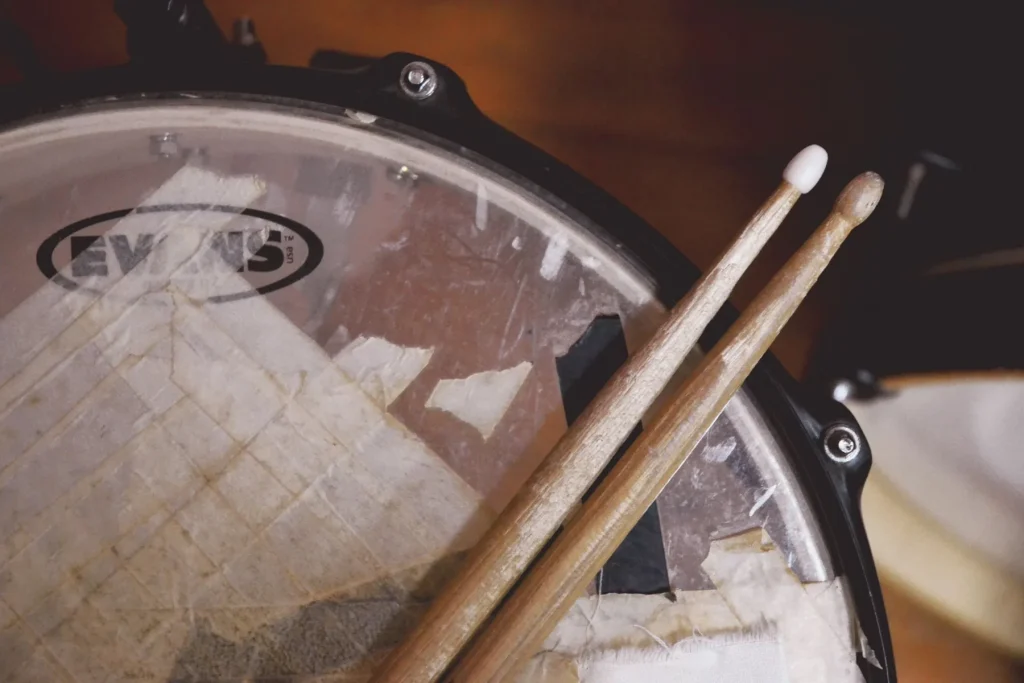
Choosing the right drum kit is crucial for any beginner drummer. It can seem difficult, given the many options available on the market. Several factors must be considered to find the drum kit that best suits your needs and budget. In this section, we will examine the different drum kits for beginners available on the market and the criteria to consider when purchasing your first kit.
It is important to choose a drum kit suited to your skill level. If you are a beginner, there are options designed specifically for beginners, such as electronic or acoustic drum kits. Electronic drum kits are ideal for beginner drummers who have limited space or do not want to disturb their neighbors with the sound of drums. Acoustic drum kits, meanwhile, are more traditional and offer a more authentic playing experience. Both types of drum kits have advantages and disadvantages, and the choice will depend on your personal preferences and budget.
When choosing a drum kit for a beginner, it is important to consider several factors, such as sound quality, build quality, durability, ease of use, and cost. It is also important to consider how much space you have for setting up the kit, as well as the noise level you are willing to tolerate. It is advisable to favor well-known brands that offer quality drum kits for beginners.
Ultimately, your choice of drum kit will depend on your needs and personal preferences. However, by considering these factors, you will be able to choose the kit that best suits your skill level and goals as a beginner drummer.
The Different Types of Drum Kits for Beginners
One of the first choices beginners must make when looking for a drum kit is whether they want an acoustic or electronic kit. Acoustic drum kits provide a more traditional sound, while electronic drum kits offer more modern and customizable options. Acoustic drum kits generally have a higher price than electronic drum kits.
Beginners looking for an acoustic drum kit should consider the following brands:
| Brand | Average Price |
|---|---|
| Pearl Roadshow | €400 |
| Tama Imperialstar | €500 |
| Gretsch Energy | €600 |
Beginners looking for an electronic drum kit should consider the following brands:
| Brand | Average Price |
|---|---|
| Alesis Nitro Mesh Kit | €350 |
| Yamaha DTX402K | €450 |
| Roland TD-1K | €500 |
These brands offer reasonable prices and quality options for beginners. However, it is important to note that the choice of drum kit will depend on each beginner drummer’s personal preferences.

Criteria for Choosing a Beginner Drum Kit
To choose a beginner drum kit that meets your needs, it is essential to consider several criteria. Here are a few tips to help you make the right choice:
- Budget: Determine how much you are willing to spend on your beginner drum kit. Prices can vary considerably depending on the instrument’s quality, the accessories included, and the type of kit selected.
- Available space: If you have limited space at home, you may need to opt for an electronic drum kit, which takes up less room than an acoustic kit. Also consider where you can store your kit when it is not in use.
- Noise level: If you live in an apartment or a neighborhood where noise is regulated, an electronic drum kit is generally quieter than an acoustic kit. However, if you choose an acoustic kit, you can use accessories such as practice pads to reduce the noise.
- Personal preferences: Choosing a drum kit that suits your musical style and skill level can be an important factor in your decision. For example, a kit with fewer pieces may be easier for beginners to use, while one with more pieces offers greater customization possibilities.
For additional help, consult online drum tutorials for beginners to gain a better understanding of your options.

Essential Accessories for a Beginner Drum Kit
Choosing the right beginner drum kit is crucial to start playing music enjoyably and effectively. However, it is also important to consider the accessories needed for a complete experience. Here are the essential accessories to have:
| Accessory | Advice |
|---|---|
| Drumsticks | Wooden drumsticks are recommended for beginners because they provide better control and feel when striking. Sizes 5A and 5B are the most common for beginners. |
| Drum throne | A comfortable drum throne is important for maintaining good posture and playing for long periods. It is advisable to choose a height-adjustable model to accommodate players of all sizes. |
| Bass drum pedal | The bass drum pedal is an essential part of the drum kit. To begin, it is advisable to choose a single-chain pedal, which provides a better feel and allows for more natural ankle movement. |
| Cymbals | Cymbals are important parts of the drum kit, but there is no need to purchase a complete set when starting out. A good option would be to buy a pair of crash/ride cymbals to begin with. |

It is important to choose quality accessories to get the most from the drum kit. However, there is no need to buy the most expensive accessories when starting out. Quality options are available at affordable prices for beginners.
With the right accessories, beginners can start playing the drums confidently and comfortably. This will also help extend the life of the drum kit, as quality accessories require less replacement or maintenance.
Resources for Learning to Play the Drums
If you are new to drumming, it is important to find appropriate resources to help you learn properly. Many options are available online, including drum tutorials and lessons, which can help you progress quickly.
YouTube videos are an excellent resource for beginner drummers because they offer practical advice and visual demonstrations. You can search for popular drumming channels such as “Drumeo” and “DrumLessons.com” to find quality tutorials.
There are also many websites devoted to drumming, such as “Drumming System” and “FreeDrumLessons.com,” which offer online courses and detailed instruction for beginners. You can also find drumming apps for your smartphone or tablet, such as “Drum Guru” and “Drum School,” which provide interactive tutorials to improve your skills.

Finally, do not underestimate the importance of an experienced drum teacher. A drum teacher can guide you in real time, correct your mistakes, and give you personalized advice to improve your playing. Find a drum teacher in your area or online to begin learning.
Tips for Maintaining a Beginner Drum Kit
To ensure a long life and optimal performance for your beginner drum kit, it is important to take care of your instrument. Here are some practical tips to follow:
Store the Drum Kit in a Suitable Place
It is important to store your drum kit in a dry, safe place to prevent damage or warping caused by moisture or heat. Make sure the room is well ventilated to prevent dust from accumulating.
Clean the Drum Kit Regularly
Cleaning your drum kit regularly will help preserve its sound quality and prevent dirt and dust from accumulating. Use a soft cloth to clean the shells and cymbals. Avoid using harsh chemicals that could damage the kit’s surfaces.
Tune the Drums Regularly
Tuning the drums regularly ensures optimal sound quality. Make sure the drums are tuned evenly by using a drum tuner or hiring a professional.
Replace Worn Drumheads
Drumheads have a limited lifespan, especially if you play regularly. If you notice signs of wear, it is important to replace them promptly to avoid compromising your drum kit’s sound quality.
Use Suitable Drumsticks
Choose drumsticks that suit your playing style and skill level. Unsuitable drumsticks can damage the surface of your drums and compromise their sound quality.
By following these simple tips, you can take care of your beginner drum kit and enjoy optimal performance for years to come.

Conclusion
To sum up, choosing the right beginner drum kit is essential for starting to learn on a solid foundation. The most important criteria to consider are budget, available space, noise level, and personal preferences. There are many types of drum kits for beginners, ranging from acoustic to electronic models, and it is important to choose the one that best suits your needs.
In addition, it is important to have essential accessories such as drumsticks, a drum throne, a bass drum pedal, and cymbals. There are also many online resources for learning to play the drums, and seeking help and advice from experienced drummers is recommended.
Finally, to ensure the durability and performance of a beginner drum kit, it is important to care for it by cleaning it regularly, tuning it properly, and storing it under suitable conditions.
In short, now is the time to take the necessary steps to purchase the perfect drum kit and begin an exciting musical journey.