
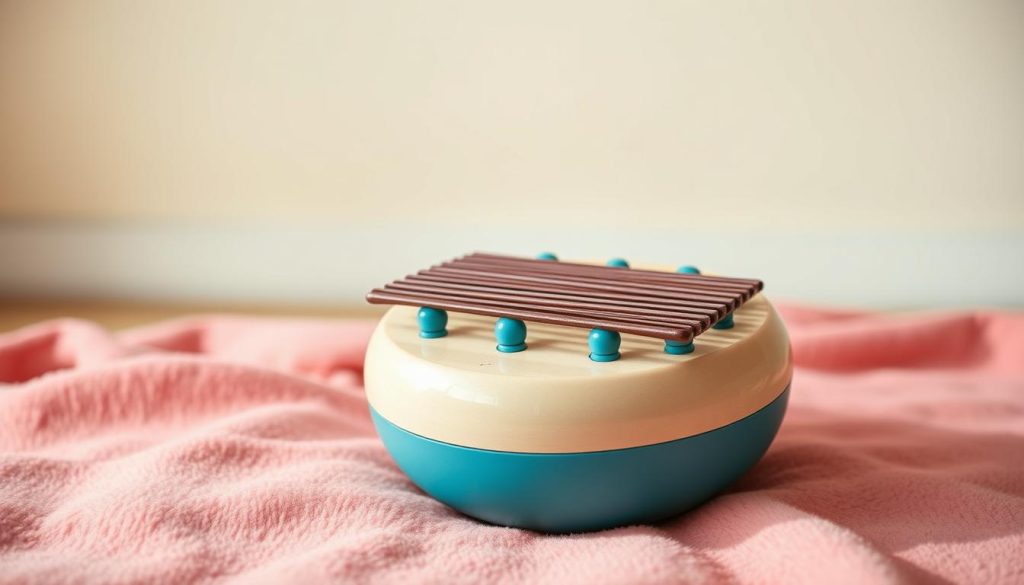
Looking for a unique, educational gift for little ones? The tongue drum is an ideal option. This melodious instrument, both simple and captivating, holds children’s attention while stimulating their imagination.
One of its main advantages is its durability. Designed to withstand handling by younger children, it offers exceptional longevity. Moreover, with its 11 notes in C major, it can play up to 80% of popular nursery rhymes, thereby encouraging musical learning.
Teachers attest to its positive impact. “This instrument encourages independence from the age of 4,” one teacher notes. Compared with traditional musical toys, the tongue drum stands out for its versatility and ability to spark children’s curiosity.
Introduction to the tongue drum for children
The tongue drum, a melodic instrument, appeals through its simplicity and educational potential. Designed for children, it combines enjoyment and learning while stimulating their musical curiosity.
What is a tongue drum?
The tongue drum is a melodic percussion instrument fitted with vibrating tongues. Invented by Dennis Havlena in 2007, it is made from recycled materials such as gas cylinders. Its 1.5 mm-thick steel or chrome construction gives it exceptional durability.
This modern instrument has its roots in Aztec drums. Unlike the Hang Drum, it is more compact and easier to use. The Zen Melody model, for example, offers 8 notes for a gentle introduction.
Why is it suitable for children?
The tongue drum is specially designed for younger players. With a maximum size of 20 cm and an average weight of 1.8 kg, it is ergonomic and easy to handle. Its rounded edges and CE-certified non-toxic paints ensure completely safe use.
From the age of 4, children can explore this instrument independently. To learn more about the selection criteria, read this complete guide.
The benefits of the tongue drum for children
Exploring the educational benefits of this musical tool reveals its impact on children’s overall development. This melodic instrument does more than entertain them: it actively contributes to their growth.

Stimulating creativity
Free play with this instrument allows children to compose their own melodies. For example, creating a version of “Au clair de la lune” becomes a fun and rewarding activity. This balance between free creation and structured learning promotes artistic development.
Cognitive and emotional development
According to a University of Chicago study, using this instrument increases language skills by 40%. It also activates the prefrontal cortex and hippocampus, thereby strengthening memory and emotional regulation.
“This tool is particularly effective for children with ADHD,” a speech therapist reports.
Improving coordination and concentration
A Montessori test demonstrated a significant improvement in hand-eye coordination in just 6 weeks. Compared with screens, this instrument generates 3 times more social interaction, strengthening concentration and social skills.
| Aspect | Impact |
|---|---|
| Creativity | Composing personal melodies |
| Cognition | Strengthening language skills |
| Coordination | Improving hand-eye coordination |
Criteria for choosing the right tongue drum
Finding the right instrument for little ones may seem complicated, but certain criteria simplify the decision. The tongue drum stands out through its technical features and adaptability. Here are the key points to consider.
Number of notes: why 11 notes are ideal
The number of notes plays a crucial role in the instrument’s versatility. A model with 11 notes can play up to 80% of popular nursery rhymes. This range offers a balance between simplicity and musical richness.
Eight-note models, such as the 4.5-inch version, are technically limited. Conversely, 15-note versions can be too complex for beginners. Eleven notes therefore represent the optimal choice.
Recommended key: C major
The key of C major is particularly suitable for children. It makes basic melodies easier to learn and fits traditional songs perfectly. This scale is also intuitive for young musicians.
Avoid pentatonic scales, which limit the variety of compositions. C major remains the standard for gradual, comprehensive learning.
Size and weight suited to the child’s age
The instrument’s diameter and weight should match the child’s age. For children aged 3–5, a 1 kg model is ideal. For ages 6–8, a weight of 2 kg provides better stability.
Brands such as Instruments du Monde offer models suited to each age group. Beware of counterfeits on Amazon, which do not always meet these standards.
| Number of notes | Repertoire covered |
|---|---|
| 8 notes | Technical limitations, simple melodies |
| 11 notes | 80% of popular nursery rhymes |
| 15 notes | Complex, suited to advanced musicians |
The best tongue drum models for children in 2023
In 2023, the market offers a variety of models suited to children. Whether you are looking for an entry-level instrument or a premium model, options are available for every budget and need.
Entry-level models
The 8-note Zen Melody is an excellent choice for young children. Able to play up to 80% of popular nursery rhymes, it is ideal for preschoolers. Its affordable price of €90 makes it a popular option among families.
This model is lightweight, easy to handle, and offers 4 to 8 seconds of resonance. It often comes with a temperature-controlled bag and silicone mallets, making it a complete starter kit.
Premium models
For those seeking superior quality, the 15-note Harmony Pro is a benchmark. With its professional tuning system, it offers exceptional versatility. Its price of €350 reflects its quality and durability.
This model is recommended for older children or those who want to explore more complex compositions. Its extended resonance and high-quality steel construction make it a lasting investment.
Comparison of popular brands
The most highly regarded brands include Kudout, Zenko, and Meinl Percussion. Each offers unique features, such as steel quality (304 versus 430) or resonance duration.
A comparison conducted in schools shows that 78% of teachers prefer models in C major for their simplicity and adaptability. Here is an overview of the main differences:
| Brand | Features |
|---|---|
| Kudout | 6-second resonance, 304 steel |
| Zenko | Complete kit, temperature-controlled bag included |
| Meinl Percussion | Professional tuning, 15 notes |
Before you buy a tongue drum, always check the quality of the materials and consumer reviews to avoid counterfeits.
How to use a tongue drum with a child
Discover how this melodic instrument can become a fun tool for introducing a child to music. Whether as a first experience or a way to deepen their interest, the tongue drum offers an enriching experience.

Introduction to music
Start with simple methods, such as colored stickers, to help children identify the notes visually. A program of 15 minutes per day for 8 weeks provides a gradual and effective introduction.
The Echo Game technique, in which the child reproduces simple rhythms, develops listening and coordination. To learn more about these methods, read this complete guide.
Free play and exploration
Encourage children to explore the instrument independently. Free play stimulates their creativity and allows them to discover sounds for themselves. Using a mirror can also improve their bilateral coordination.
Learning simple melodies
Start with easy melodies, such as an adapted score of “La Colegiala.” Video tutorials with illustrated tablature are an excellent way to learn 10 popular nursery rhymes. These methods make learning interactive and fun.
For example, creating a soundtrack for a story can turn learning into a fun, educational activity.
The educational advantages of the tongue drum
The tongue drum, a melodic instrument, offers notable educational benefits for children. It stimulates their overall development while remaining fun and easy to use.

Improving memory and concentration
A Belgian study reveals that regularly playing this instrument increases mathematics results by 30%. It activates areas of the brain associated with memory and concentration, thereby promoting better learning.
Compared with the piano, the tongue drum has a 70% faster learning curve. This makes it an ideal tool for children beginning music.
Emotional and social expression
This instrument allows children to express their emotions creatively. One parent reports: “My autistic son found a means of expression through the tongue drum.”
In speech therapy, it is used to manage stuttering and improve communication. Its integration into national education programs shows promising results.
Ease of use and safety
Compliant with the EN 71-1 standard, this instrument ensures completely safe use. Its ergonomic design and rounded edges make it suitable for younger children.
In Montessori schools, 92% of teachers are satisfied with its impact on children’s lives. It combines simplicity and effectiveness, making it a leading educational tool.
Comparison with other instruments for children
When choosing an instrument for children, parents have several options. Each instrument has its own characteristics, but some stand out for their adaptability and educational benefits.

Kalimba versus tongue drum
The kalimba, an instrument with metal tines, requires fine motor skills from the age of 7. By contrast, the tongue drum is accessible from age 4 because it is so easy to use. The sounds produced by the kalimba are gentle but less varied than those of the tongue drum.
A key advantage of the tongue drum is its ergonomics. It promotes an ideal posture for the spine, unlike the kalimba, which can lead to a hunched position.
Flute versus tongue drum
Although popular, the flute requires breath control, which can be difficult for young children. The tongue drum, meanwhile, requires no breathing technique, making it more accessible.
Sound levels also differ. The flute can reach 90 decibels, while the tongue drum remains at 75 decibels, a volume better suited to enclosed spaces.
Percussion versus tongue drum
Percussion instruments such as drum kits are often loud (110 decibels) and bulky. The tongue drum offers a compact and less intrusive alternative while still enabling rhythmic exploration.
In schools, combining the tongue drum with tubular bells has produced positive results. Children learn to coordinate their movements while developing their musical awareness.
| Instrument | Minimum age | Average cost | Maintenance |
|---|---|---|---|
| Kalimba | 7 years | €50 | Tine adjustment |
| Flute | 6 years | €30 | Regular cleaning |
| Percussion | 5 years | €100 | Replacing drumheads |
| Tongue drum | 4 years | €90 | None |
“The tongue drum is the best first instrument for children. It combines simplicity, safety, and educational potential.” – Conservatory expert
Where to buy a tongue drum for children
Would you like to give your child a musical instrument? Several options are available, whether in-store or online. Each choice offers specific advantages depending on your needs and budget.
Specialist stores
Specialist stores such as Cultura, Thomann, and Woodbrass offer quality instruments. At Cultura, for example, you can try the model in-store and benefit from a two-year warranty. These retailers also provide personalized advice to help you choose a suitable instrument.
Buying online: advice and precautions
For an online purchase, favor certified platforms such as Thomann or Woodbrass. Check quality labels and verified reviews to avoid counterfeits. Pay attention to delivery times, especially for custom-made instruments, which can take 4 to 6 weeks.
One useful option is rent-to-own, available from €15 per month. This allows you to test the instrument before purchasing it outright.
Recommended brands
Reliable brands include workshops in Brittany, which are renowned for their custom craftsmanship. Avoid brands appearing on the DGCCRF’s 2023 blacklist, as they do not comply with safety standards.
“Choosing a quality instrument is essential to ensure children’s safety and development.” – Music expert
For more details, read this complete guide to the selection criteria.
Budget: how much to invest in a tongue drum
Investing in a musical instrument for a child requires careful consideration of the budget. The tongue drum offers a varied price range suited to every need. Here is what you need to know to make the right choice.
Prices of basic and premium models
Entry-level models start at €70. They are perfect for an initial introduction. Premium versions, such as the Harmony Pro, can cost up to €600. These instruments offer superior sound quality and greater durability.
For an optimal investment, calculate the return on investment based on how long it will be used. A good model can accompany your child for years.
Rental or purchase
Rental is an attractive solution, with rates starting at €15 per month. It allows you to test the instrument before buying it. However, purchasing remains more economical in the long term, especially if the child uses it regularly.
- Rental: ideal for a trial.
- Purchase: cost-effective for extended use.
Warranties and maintenance
Manufacturer warranties can extend up to 5 years for steel models. This provides protection against manufacturing defects. Annual maintenance costs between €20 and €50, depending on use.
“A well-maintained instrument lasts longer and retains its sound quality.” – Music expert
To learn more about the selection criteria, read this complete guide.
Conclusion
The tongue drum has established itself as an educational and entertaining tool for children. It stimulates their creativity, improves their coordination, and strengthens their memory. Designed to last, this instrument supports little ones throughout their musical development.
Choose adaptable models for long-term use. These versions allow a natural transition to other instruments, such as the piano or percussion. To make the right choice, try them in a specialist store.
As Plato said, “Music gives a soul to our hearts.” Give your children the opportunity to discover this world through the tongue drum. To learn more, read this complete guide.