
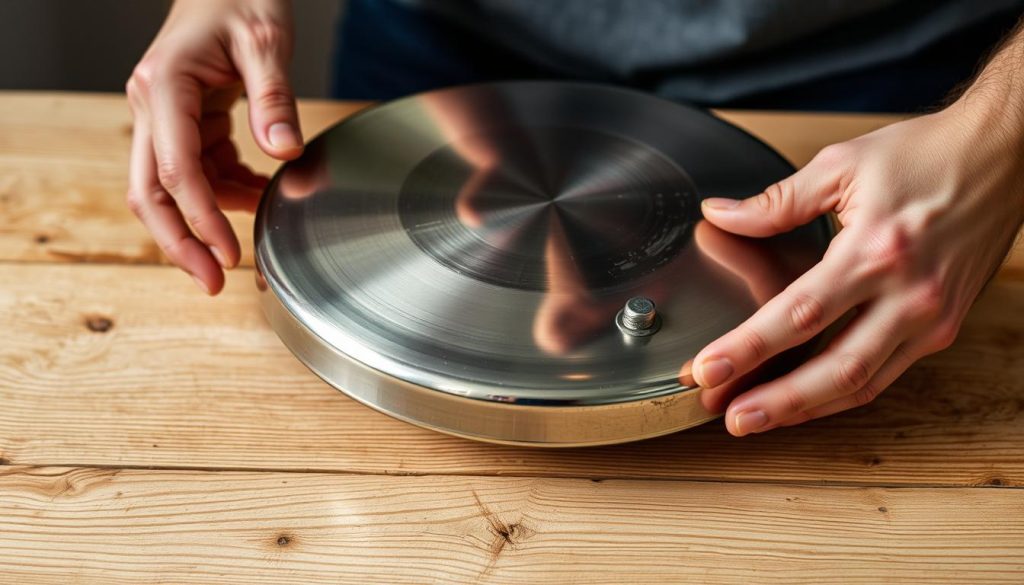
Taking care of your instrument is essential to ensure its sound quality and extend its service life. Regular maintenance not only preserves the beauty of the object but also prevents problems such as corrosion and scratches.
In this guide, we present the key steps for keeping your instrument in perfect condition. These tips include cleaning it with a soft cloth, protecting it from moisture, and preventing rust. Each step is simple and effective.
Did you know that proper maintenance can reduce corrosion problems by 50%? Furthermore, the differences between standard and stainless steel affect the required maintenance methods. For quality accessories, brands such as Phoenix Oil and Handpan-Musique.com are recommended.
Why caring for your tongue drum is essential
Regular maintenance of your instrument ensures an optimal musical experience. The materials used, such as steel, are sensitive to changes in temperature and humidity. These factors can impair sound quality and shorten the instrument’s service life.
The impact of humidity and temperature
The ideal relative humidity for a tongue drum is between 40% and 60%. Prolonged exposure to a marine environment can cause corrosion in just 48 hours. Moreover, a sudden 35°C temperature change can deform the materials, thereby affecting the harmonics.
The consequences of neglect
Failing to maintain your instrument can have costly consequences. For example, one musician lost three notes on their model after a damp winter. Professional repairs can cost between €150 and €300. With proper maintenance, the instrument’s service life can exceed 10 years, compared with only two to three years without maintenance.
To learn more about maintenance best practices, consult this complete guide.
Clean your tongue drum regularly
Regular cleaning preserves your instrument’s sound quality and appearance. It removes dust and residue that can accumulate after each use. Here are the key steps for effective maintenance.

Use a soft, dry cloth
For daily cleaning, use a dry soft cloth. Gently wipe the surface to avoid scratches. This method is ideal for removing fingerprints and dust.
Deep-clean with lukewarm water
For more thorough cleaning, use a slightly damp cloth with lukewarm water. Follow Felix Rohner’s technique: use a damp sponge and make circular motions. Dry the instrument immediately to prevent corrosion.
“Regular maintenance is the key to preserving the beauty and performance of your instrument.”
Here are a few additional tips:
- Avoid harsh chemicals such as alcohol or acetone.
- Use gentle products such as Miracle Cloth for stubborn stains.
- Prepare a homemade solution with 500 ml of water and 10 ml of Marseille soap.
For more detailed maintenance techniques, consult this complete guide.
Protect your tongue drum from moisture
Protecting your instrument from moisture is crucial to its longevity. An excessively humid environment can damage the materials and impair sound quality. Here is how to maintain an optimal humidity level and use effective solutions.
Maintain an optimal humidity level
The ideal humidity level for your instrument is between 40% and 60%. Excessive humidity can cause corrosion, while a level that is too low can dry out the materials. Use a hygrometer to monitor humidity regularly.
Use dehumidifiers or silica-gel packets
Electric dehumidifiers and silica-gel packets are practical solutions. Silica gel can absorb up to 40% of its weight in moisture. Place these products near your instrument for optimal protection.
“Controlling humidity is essential to preserving the quality and durability of your instrument.”
Here is a comparison of humidity-control systems:
| System | Advantages | Disadvantages |
|---|---|---|
| Electric dehumidifier | Effective in large spaces | High energy cost |
| Silica gel | Economical and reusable | Limited absorption capacity |
| Natural absorbent (uncooked rice) | Environmentally friendly and inexpensive | Less effective in very humid climates |
To learn more about protection techniques, consult this complete guide.
Avoid scratches and physical damage
Protecting your instrument from scratches and physical damage is crucial to maintaining its performance. Paying particular attention to its placement and transportation can preserve its sound quality and appearance.

Place the instrument on soft surfaces
To prevent scratches, always place your instrument on a soft surface. Avoid contact with sharp or metallic objects. A simple towel or mat may be enough to prevent damage.
Use a protective case during transportation
A protective case is essential during transportation. Hard cases, such as those made by StormCase or Gator Cases, provide excellent protection. For a limited budget, a homemade case made with closed-cell PE foam is an effective solution.
“Proper protection during transportation can extend your instrument’s service life and preserve its sound quality.”
Here are a few additional tips:
- Regularly inspect the edges and seams for possible hairline cracks.
- Use a soft cloth to wipe the instrument before storing it.
- For more details, consult this complete maintenance guide.
Managing rust: prevention and treatment
Managing rust is a crucial aspect of preserving your instrument’s quality. Untreated corrosion can damage its structure and alter its sound. Here are effective methods for preventing and treating this problem.

Apply a protective oil
Regular application of a protective oil is essential. The Phoenix Oil protocol recommends applying it after every 150 hours of playing. Use a microfiber cloth to spread the oil in ultrathin layers.
Here is a comparison of commonly used oils:
- Coconut oil: natural and easy to apply.
- Linseed oil: provides long-lasting protection.
- Synthetic oil: resistant to extreme conditions.
“Regular oil application prevents corrosion and maintains the instrument’s sound quality.”
Treat signs of rust immediately
If signs of rust appear, act quickly. Diluted white vinegar is effective for removing surface rust. Use a brass scraper or a soft-bristled brush for hard-to-reach areas.
In the event of marine corrosion, follow this emergency procedure:
- Clean the area with a gentle product.
- Apply an anti-rust solution.
- Dry it thoroughly to prevent the rust from returning.
Take care not to over-oil the instrument, as this can impair its performance.
Tune your tongue drum periodically
Regular tuning of your instrument is essential to maintaining its performance. Proper tuning ensures an optimal musical experience and extends the instrument’s service life. For moderate use, checking the tuning every two years is recommended.

Here are a few tips for checking and maintaining the sound quality of your instrument:
- Use an app such as Tunable to perform a quick self-check.
- Watch for signs that it is out of tune, such as a loss of sustain.
- Mark adjustments with a UV pen to ensure accurate tracking.
Check the sound quality
Regularly checking the sound quality helps detect problems in time. If you notice variations in the notes, it is time to have the instrument readjusted. This step is crucial to preserving the pitch accuracy of your instrument.
Consult a professional for readjustment
For complete retuning, it is best to consult a professional. The average cost ranges from €80 to €120, but this service ensures optimal accuracy. You can find certified workshops in France to perform the work.
“A well-tuned instrument is the key to a successful musical experience.”
To learn more about maintenance and tuning techniques, consult this complete guide.
Conclusion
Maintaining the performance of your instrument requires regular attention. Proper maintenance preserves its sound quality and extends its useful life. Here is a summary of the key points:
Use a soft cloth for cleaning, protect your instrument from moisture, and check its tuning regularly. These simple tips will help you keep it in perfect condition for years.
One user reports: “My 2015 model still looks brand new thanks to these practices.” To expand your knowledge, attend the maintenance workshops organized by Handpan-Musique.com.
Finally, remember that manufacturers’ warranties are often conditional on regular maintenance. To discover advanced techniques, register for our free maintenance webinar.