

The tongue drum is a fascinating musical instrument, valued for its soothing, versatile tones. If you would like to explore this musical world, this guide is for you. With more than five years of experience and around fifty arrangements to my name, I offer practical advice to help you master this instrument.
This guide will help you understand the basics, including numerical and alphabetical notation, as well as note duration. You will then be able to play your favorite melodies and even create your own compositions. Whether you are a beginner or an experienced player, you will find useful resources here to help you improve.
To learn more about models suited to your needs, read our complete guide. You will find advice on choosing the right number of notes and the ideal diameter for your instrument.
Introduction to the tongue drum and the D minor scale
Explore the history and acoustic characteristics of the steel tongue drum. Also known as the Hank Drum or Tank Drum, this instrument originated from recycled tanks. Today, it is appreciated for its soothing tones and versatility.
The D minor scale is particularly popular for its melancholy atmosphere. At a frequency of 432 Hz, it offers a depth of sound that touches the soul. This scale is reportedly used by 60% of musicians for its emotional qualities.
On a tongue drum, the notes are arranged across 9 to 15 tongues, depending on the model. For example, the 17-note Moozica is a popular choice. Tuning is crucial for ensuring melodic harmony. A well-tuned instrument makes it possible to play fluid, expressive compositions.
Compared with other scales, such as C major, the D minor scale stands out for its depth of character. To learn more about basic techniques, read this tongue drum lesson.
Why learn to read tongue drum sheet music?
Knowing how to decipher sheet music is an essential skill for any player. It allows you to explore a varied musical repertoire and play complex melodies accurately. According to a CNRS study, this practice also stimulates cognitive functions, improving memory and coordination.
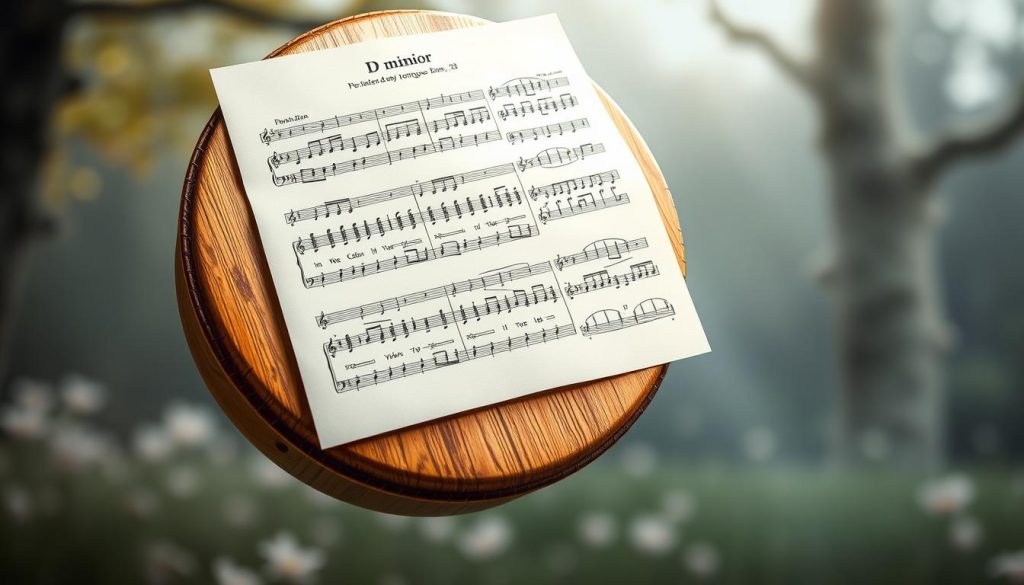
Reading sheet music provides unlimited access to works online and to music communities. It reduces mistakes during concerts because the visual reference guides your playing. It also develops your visual memory and hand-eye coordination.
Another benefit is faster learning. With this skill, you can master new pieces more quickly. One musician says: “Reading sheet music helped me overcome stage fright and become more confident.”
Finally, this practice enriches your experience with the steel tongue, a versatile instrument. Whether you are a beginner or an experienced player, reading sheet music is a key step toward improving and exploring new melodies.
The basics of reading tongue drum sheet music
Mastering sheet music for this unique instrument opens the door to limitless creativity. Whether you are a beginner or an experienced player, understanding its symbols and structures is essential for playing accurately.
Understanding the numbers and letters in sheet music
The NMCA system is a practical tool for matching numbers to notes. For example, the number 1 corresponds to C, while 7 represents B. This method makes reading easier, especially for beginners.
Symbols such as octave dots or parentheses indicate important nuances. For example, a dot after a note means that it should be played for longer. These details enrich your interpretation.
How to read tongue drum sheet music
Horizontal reading is a key technique. It involves following the measures from left to right while observing the indicated beats. This ensures a smooth performance of each piece.
Here is a practical example using the song “Happy Birthday”:
| Measure | Notes | Beats |
|---|---|---|
| 1 | C, C, D | 1, 2, 3 |
| 2 | C, F, E | 1, 2, 3 |
By following this structure, you can play complex melodies with ease. One musician confirms: “Reading sheet music has helped me become more confident and accurate.”
Essential D minor chords for the tongue drum
Exploring D minor chords on a steel tongue drum lets you create deep, moving melodies. This scale is ideal for anyone seeking to express intense emotions through music.
Here are some key elements for mastering D minor chords:
- Fundamental triads: Dm, Gm, A. These basic chords form the foundation of many harmonic progressions.
- Arpeggio techniques: adapt these techniques to the metal tongues to obtain a smooth, harmonious sound.
- Chord-sequence exercise: practice the Dm-F-C-G sequence to improve your agility and understanding of transitions.
- Using deep bass notes: add low notes to enrich the harmony and give your playing more body.
- Rhythm tip: emphasize the beat with block chords for a dynamic performance.
These techniques will help you develop a richer, more expressive practice. Whether you are a beginner or an experienced player, these tips will help you improve quickly.
Playing techniques for the tongue drum
Discover the essential techniques for mastering your playing on this unique instrument. Whether you use your fingers or mallets, each method offers specific advantages. These approaches will help you produce high-quality sounds and improve your accuracy.
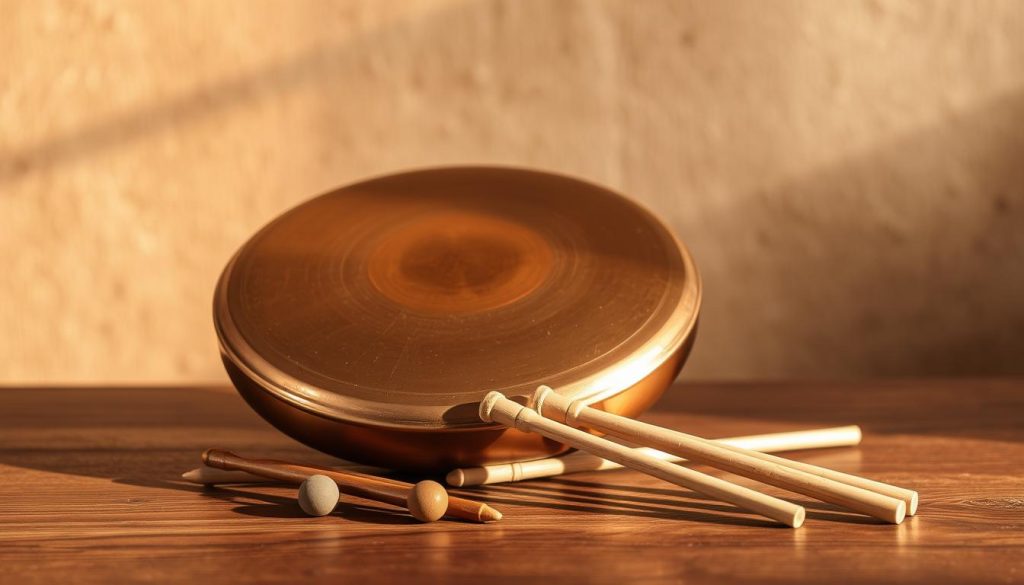
Playing with your fingers or mallets
Using your fingers provides great sensitivity and precise control over the sounds. This method is ideal for soft, delicate melodies. For more dynamic rhythms, however, silicone mallets offer greater power and endurance.
Special gloves can also be an interesting alternative. They protect your fingers while maintaining good accuracy. Compared with mallets, they provide better contact with the instrument.
Improving fluidity and accuracy
To develop your playing, practice speed exercises, such as eighth-note scales with a metronome. This strengthens your agility and coordination.
The rebound technique is also effective for fast rolls. It involves allowing the mallet to rebound naturally from the metal tongues, creating a continuous flow of sounds.
Finally, adopt an optimal posture to maximize your endurance. Keep your shoulders relaxed and your arms aligned to prevent fatigue.
To assess your progress, record your practice sessions. This lets you identify areas for improvement and track your development.
Where can you find D minor tongue drum sheet music?
If you are looking for resources to expand your repertoire, here are several avenues to explore. Finding sheet music for your steel tongue can seem difficult, but several platforms offer suitable solutions.

The free Instruments du Monde library offers more than 50 varied scores. These resources are ideal for beginners and experienced players alike. There you will discover melodies suited to different skill levels.
For those who prefer video tutorials, the ZenaPan YouTube channel is an excellent option. It offers lessons synchronized with sheet-music booklets, making learning easier.
Facebook communities devoted to sharing sheet music are also a gold mine. These groups allow members to share resources and receive personalized advice.
Finally, to adapt piano or guitar sheet music, read this practical guide. It will help you turn classic pieces into compositions suited to your model.
By using these resources, you can explore new melodies and improve the quality of your playing. Feel free to combine several methods to maximize your results.
Tips for making rapid progress on the tongue drum
Here are some effective methods for accelerating your progress with this instrument. Whether you are a beginner or an experienced player, these tips will help you improve your practice and gain confidence.
The 20-minute daily method is an excellent starting point. This approach helps you stay focused and make the most of your playing time. Here is an example routine:
| Step | Duration | Goal |
|---|---|---|
| Warm-up | 5 minutes | Prepare the muscles and improve accuracy |
| Technical practice | 10 minutes | Work on specific exercises |
| Improvisation | 5 minutes | Unleash creativity |
Here are some other tips for optimizing your learning:
- Warm-up routine: begin with striking exercises to activate your muscles and improve your accuracy.
- Breaking scores into sections: divide pieces into sections to make them easier to memorize and master.
- Notation apps: use tools such as MuseScore to annotate and personalize your scores.
- Online jam sessions: take part in virtual sessions to connect with other musicians and enrich your experience.
- Kinesthetic memorization: associate notes with spatial positions for better retention.
By following these tips, you will develop a solid foundation and progress quickly. One musician says: “These techniques have enabled me to play with greater fluidity and confidence.”
Protecting your fingers and caring for your tongue drum
Caring for your instrument and your fingers is essential for the best possible musical experience. Proper maintenance ensures the quality of the sounds and extends the life of your equipment.
To protect your fingers, you can use protective creams or bandages. Creams provide light, immediate protection, while bandages offer longer-lasting coverage. Choose according to your playing time and personal preferences.
Maintaining your instrument is just as important. After each use, carefully clean the recessed areas to prevent dust or residue from accumulating. This preserves the clarity of the sounds and maintains the instrument’s acoustic quality.
To prevent oxidation, control the humidity in the environment where you store your instrument. Use dustproof storage solutions, such as covers or cases, to protect it from external elements.
Finally, annual calibration by a professional is recommended to maintain the tuning. This ensures that your instrument remains accurate and ready to play at all times.
Conclusion
You now have the tools you need to explore this musical world fully. Thanks to this guide, you have acquired essential skills, such as reading sheet music and mastering playing techniques. This knowledge will help you play with greater fluidity and accuracy.
Feel free to share your creations with other enthusiasts. Exchanging ideas is an excellent way to improve and find inspiration. You might even consider composing your own melodies by exploring new harmonies and rhythms.
To go further, consult our additional resource. You will find sheet music suited to your level, along with advice for enriching your musical experience.
The tongue drum is an instrument that opens the door to a unique sonic world. So, get your sheet music ready, and play!