
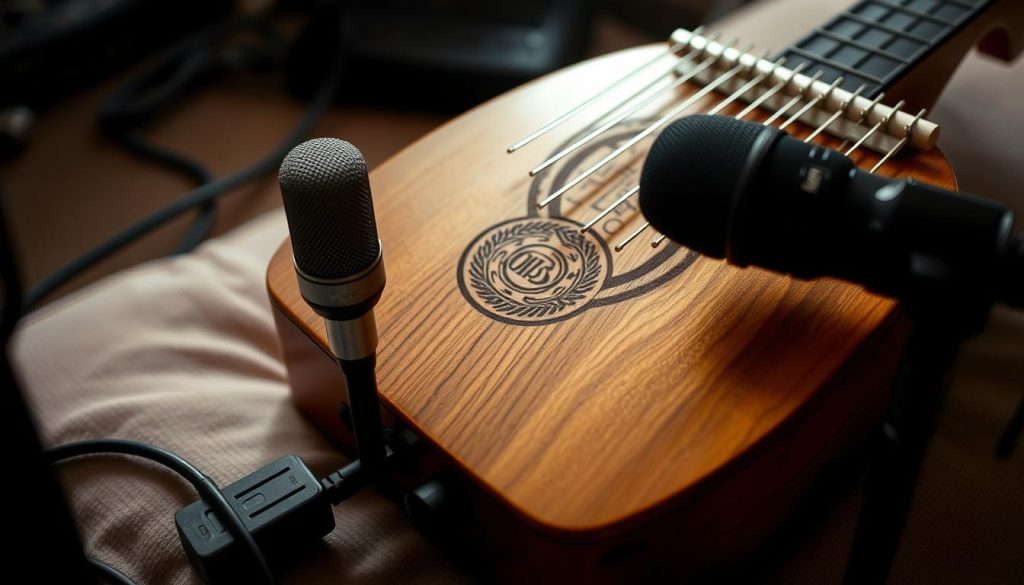
The steel tongue drum is a unique melodic instrument that anyone can play, whether you are a beginner or an experienced musician. Its soothing, harmonious sounds make it ideal for relaxation, meditation, or creating music. This article explains how to capture these sounds at home, with methods suited to every skill level.
To achieve professional results, acoustics and equipment selection are essential. Whether you use a mobile phone, an external microphone, or multitrack recording software, each technique has its advantages. We will explore three key methods to help you capture the sonic beauty of your instrument.
Learn how to optimize your space and equipment to produce high-quality sounds. To find out more, read our guides to recording a tongue drum and creating music.
Introduction to the tongue drum and recording
Discover the captivating world of the tongue drum, an instrument that combines melody and relaxation. Its unique tones make it ideal for music, meditation, or simply the pleasure of playing. But why should you record these sounds, and how can you do it?
What is a tongue drum?
A tongue drum is a melodic steel instrument made up of slits, or “tongues,” that produce notes when struck. Easy to play, it is prized for its soothing tones and versatility. Whether you are a beginner or an experienced musician, this instrument is suitable for every skill level.
Why record your tongue drum?
Recording your instrument offers many benefits. Here are some key reasons:
- Preserve your improvisations: keep a record of your spontaneous creations so you can reuse or improve them.
- Collaborate with other artists: create musical foundations for group compositions.
- Analyze your playing: identify your strengths and the areas you need to refine.
- Share your creations: 78% of users share their recordings on social media.
- Document your progress: track how your playing develops over time.
In addition, recording can serve a professional purpose, particularly when incorporating your sounds into soundtracks or albums. To learn more about playing techniques, see our complete guide to free sheet music.
Recording techniques for your tongue drum
Several techniques are available for making high-quality recordings. Whether you are a beginner or an experienced player, there are methods suited to every skill level. Here are three approaches for capturing the richness of your instrument’s sound.
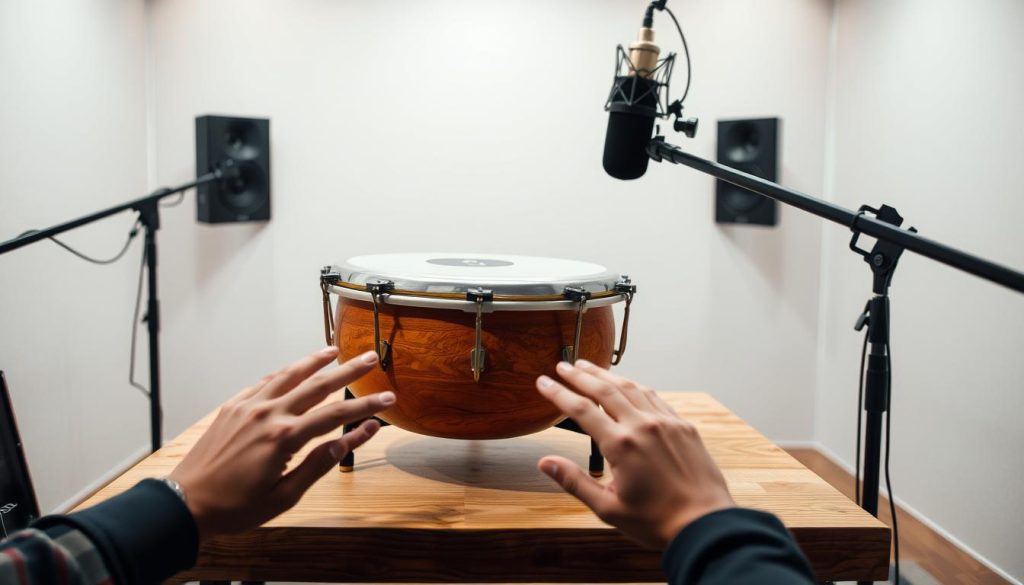
Using a mobile phone
A mobile phone is a simple, accessible solution. Recent models have high-quality microphones that can produce satisfactory results. Place the device at an optimal distance to prevent distortion.
To improve quality, use dedicated apps. They allow you to control sound levels and add simple effects. This method is ideal for quick, spontaneous recordings.
Choosing an external microphone
An external microphone provides a noticeable improvement in sound quality. Condenser models are particularly well suited to capturing the nuances of your instrument. Position the microphone about 30 cm away to achieve the perfect balance.
For professional results, use an audio interface such as the Focusrite 18i20. It lets you connect several microphones and adjust the settings precisely.
Exploring multitrack recording
Multitrack recording is ideal for complex compositions. This method involves recording each track separately—whether melody, harmonics, or percussion—so they can be mixed later.
Use software such as Ableton Live or Pro Tools to organize your tracks. Plugins such as Waves SSL E-Channel and Valhalla VintageVerb add a professional touch to your creations.
This approach allows you to synchronize MIDI elements with drum machines and apply overdubbing techniques in ambitious projects.
Choosing the right recording equipment
Choosing the right equipment is essential for capturing the richness of your instrument’s sound. Suitable gear ensures professional results, whether you are a beginner or an experienced musician. Here are the key elements to consider.
Recommended microphone types
Your choice of microphone directly affects recording quality. Condenser microphones are ideal for capturing the nuances of your instrument. They offer an accurate frequency response and high sensitivity.
For more ambitious projects, dynamic microphones such as the Shure SM57 are also an excellent option. They are rugged and suitable for noisy environments.
Setting up the recording space
The acoustics of your space play a crucial role. Use acoustic panels to prevent echoes and unwanted noise. Place your instrument in the center of the room to achieve optimal sonic balance.
If you are working in a small space, heavy curtains or rugs can help reduce sound reflections. A properly configured environment improves the clarity of your recordings.
DAW software for mixing and editing
DAW software is essential for mixing and editing. Ableton Live is ideal for creating music, while Pro Tools excels at mixing. These tools provide an optimized workflow for acoustic instruments.
For a professional touch, use plugins such as Klanghelm MJUC for compression. These tools allow you to automate parameters and make creative use of effects buses.
Finally, remember to adapt your mastering for streaming platforms. Tools such as iZotope Ozone help you optimize your files for high-quality distribution.
Conclusion: optimize your recording experience
To optimize your experience, explore methods suited to your budget and needs. Whether you use a mobile phone or professional equipment, each approach offers unique results. Experimentation and perseverance are essential for making progress.
Consider joining dedicated forums or Facebook groups. These community resources are ideal for exchanging advice and discovering new techniques. The world of recording is evolving rapidly, particularly through advances such as AI-assisted mastering.
Finally, share your compositions with the community using the hashtag #TongueDrumFrance. Your creativity can inspire other enthusiasts and enrich this unique musical practice.