
The tongue drum is a fascinating instrument, appreciated for its soothing sounds and ease of use. For beginners, learning to play this instrument may seem intimidating, but with the right resources, it becomes accessible to everyone.
This comprehensive guide offers a simple method for mastering the basic notes. It includes a free downloadable resource designed especially for beginners. It will help you progress quickly and develop your musical independence.
According to a CNRS study, reading sheet music improves visual memory by more than 40%. It is a valuable skill, not only for playing the tongue drum but also for enriching your musical experience.
An expert with five years of experience and more than 50 arrangements to their name shares advice to help you get started. With this guide, you will be ready to explore the world of music with confidence.
Introduction to the tongue drum and its benefits
Discover a unique instrument with soothing tones: the tongue drum. This melodic instrument, made up of six tuned steel tongues, is appreciated for its simplicity and relaxing melodies. Whether you are a beginner or an experienced musician, it offers an accessible and rewarding musical experience.
What is a tongue drum?
The tongue drum, also known as a steel tongue drum, is a steel percussion instrument. When struck, its metal tongues produce harmonious sound vibrations. This instrument is often used for meditation, relaxation, and even music therapy.
Why choose a 6-note tongue drum?
A six-tongue model is ideal for beginners. Its predefined tuning, usually based on a pentatonic scale, makes it easy to create pleasant sounds. Here are its main advantages:
- Simplicity: fewer notes to master, making it ideal for getting started.
- Portability: compact and easy to carry.
- Versatility: perfect for meditation, therapy, or learning music.
According to an INSERM study, this instrument is also used to reduce stress and improve well-being. In particular, it is used in music therapy for autistic children because of its soothing, structured sounds.
To learn more about the different models and their uses, see this complete guide to tongue drums.
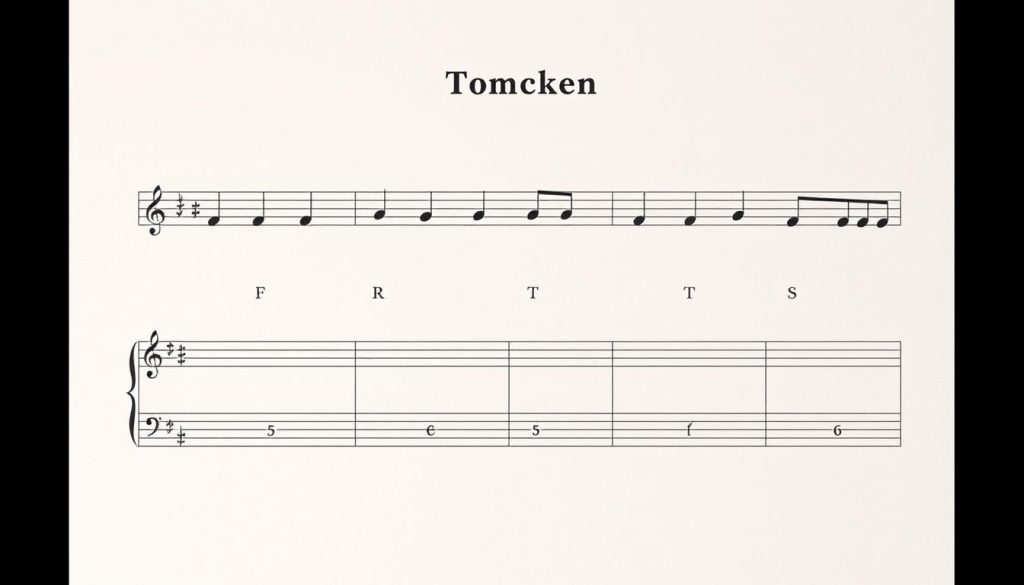
The basics of reading tongue drum sheet music
Mastering sheet music helps you play accurately and smoothly. To learn to read sheet music, it is essential to understand the notation and symbols used. This will help you interpret each note and observe the timing of every melody.
Understanding numbered notation
The NMCA system is a simple method for reading sheet music. Each number corresponds to a note: 1 for C, 2 for D, and so on through 7 for B. A dot (°) indicates a higher octave, allowing you to vary the pitch.
For example, the melody “Happy Birthday” can be written using NMCA notation. This makes it easier to learn, even for beginners. Use a metronome to count the beats and improve your rhythm.
Symbols and their meanings
Sheet music includes symbols that indicate note duration. A dash (-) doubles the duration, while a line beneath a number shortens the beat. The ZenaPan method uses 0 to represent rests, which helps structure melodies.
One visual tip is to use color coding to identify measures. This makes reading more intuitive and helps you better understand each note.
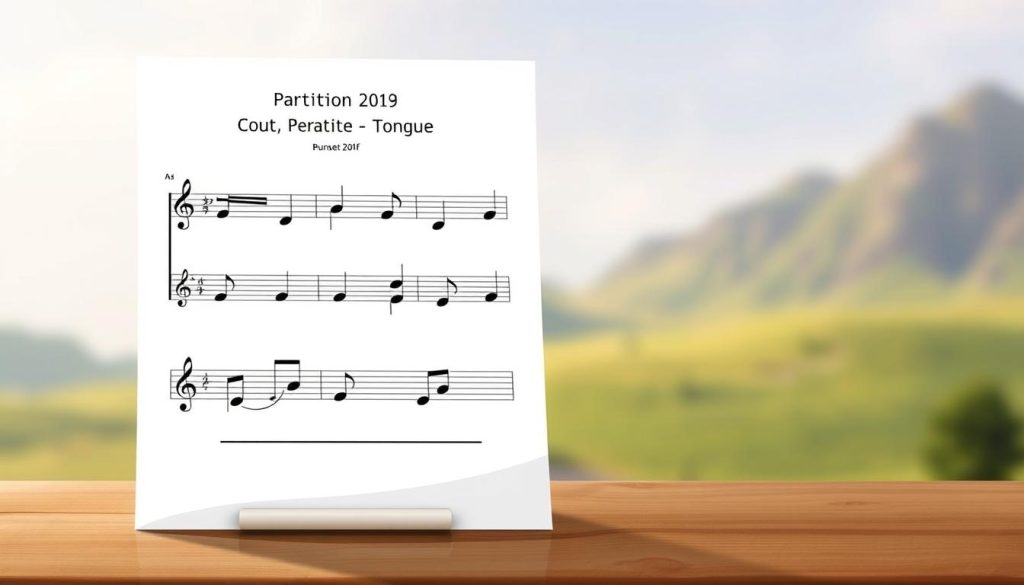
Download the easy 6-note tongue drum sheet music PDF
Access to high-quality musical resources is essential for making progress. Whether you are a beginner or an experienced player, finding suitable sheet music can make learning much easier. With the right resources, you can explore the world of music with confidence.
Where can you find the sheet music?
Several online platforms offer free tongue drum sheet music. Among them, Instruments du Monde is a reliable source offering more than 50 verified arrangements. These resources are ideal for getting started and exploring new melodies.
How to download and print the sheet music
The process is simple:
- Download the PDF file from a secure source.
- Use the recommended print settings (A4 paper in landscape orientation, 14-point font).
- Keep your sheet music in a sturdy binder for greater durability.
For an environmentally friendly option, you can also use a tablet with a dedicated app. This gives you access to your sheet music anywhere without using paper.
Step-by-step guide to reading the sheet music
To master sheet-music reading, it is essential to understand the key steps. This guide supports your learning by showing you how to identify notes and follow the rhythm accurately.
Identify the notes on the instrument
The first step is to locate the notes on your instrument. Use the stickers supplied with the original manual to label each tongue. One simple mnemonic technique is to associate each note with a color or keyword.
Here is a practical exercise:
- Place your left hand over the low notes and your right hand over the high notes.
- Strike each tongue at a 45° angle for optimal resonance.
- Repeat the exercise until you have memorized the positions.
Follow the rhythm and note durations
Rhythm is crucial when interpreting sheet music. Use an app such as Soundbrenner to help you maintain the tempo. Here are a few tips:
- Count the measures aloud to internalize the rhythm.
- Observe the duration of each note by following the symbols on the sheet music.
- Avoid confusing C-sharp with D-flat by checking your instrument’s tuning.
| Material | Resonance duration |
|---|---|
| Steel | 3 to 5 seconds |
| Titanium | 5 to 7 seconds |
This table helps you understand how the material affects resonance. Choose the one that suits your playing style.
Play your first melodies
Exploring your first melodies on an instrument is an exciting step. It allows you to put what you have learned into practice and experience the satisfaction of creating music. Start with simple tunes to build your confidence and technique.

Practical example: “Happy Birthday”
The “Happy Birthday” melody is an excellent starting point. It is simple, familiar, and ideal for practicing the basic notes. Here is how to break it down:
- Start with the notes C, D, and E, then return to C.
- Use your fingertips to produce a soft sound or your fingernails for a clearer tone.
- Repeat each phrase five times at three different tempos to master the rhythm.
Tips for improving your playing
To make rapid progress, here are some practical tips:
- Analyze the melody by identifying its dominant frequencies to better understand its structure.
- Record yourself with Audacity to assess your progress and adjust your technique.
- Use silicone finger guards, such as the ProDrum model, to protect your fingers during long sessions.
A 30-day training program with daily goals can also help you stay motivated and achieve tangible results.
| Technique | Result |
|---|---|
| Fingertips | Soft, warm sound |
| Fingernails | Clear, percussive tone |
This table helps you choose the technique that suits your playing style. Experiment with both to discover which one works best for you.
Common mistakes to avoid
Learning to play a percussion instrument such as the tongue drum may seem simple, but beginners often make certain mistakes. Identifying these pitfalls will help you progress more quickly and reach a higher level of proficiency.
Confusing the notes
One of the most common mistakes is confusing the notes. This can happen when you are starting out and have not yet memorized the positions of the tongues. To avoid it, use colored stickers to label each note on your instrument.
One effective technique is to practice recognizing intervals by ear. This will help you distinguish the sounds and reduce confusion. Repeat this exercise several times to strengthen your auditory memory.
Failing to keep the tempo
According to one study, 68% of beginners lose the tempo before the fourth measure. To stabilize your rhythm, try keeping a continuous beat with your foot. This will help you maintain a steady tempo and avoid synchronization errors.
The “Slow-Fast-Slow” method is also useful. Start slowly, speed up gradually, and then slow down again. This approach helps you control your rhythm and play more accurately.
Finally, avoid applying excessive pressure to the tongues. This can alter the sound quality and make your playing less fluid. Instead, use a mental-visualization technique to focus on keeping your movements light.
Additional resources for making progress
Making rapid progress with the tongue drum requires suitable tools and effective methods. To help you on your journey, here is a selection of additional resources, ranging from free sheet music to video tutorials.
Free sheet music online
The TongueDrumAcademy platform offers more than 150 progressive exercises suitable for all levels. This sheet music is designed to guide you step by step, with an emphasis on technique and musicality.
Here are a few tips for getting the most from it:
- Use a progress-tracking chart.
- Explore a variety of melodies to expand your repertoire.
- Take part in community exchange programs to share your creations.

Recommended video tutorials
A dedicated YouTube channel offers song analyses and advanced techniques. These videos are ideal for seeing the movements and understanding the nuances of each note.
To go further, here are a few suggestions:
- Attend monthly webinars with certified music therapists.
- Invest in the ZenaPan beginner kit, which includes a booklet and premium access.
- Compare the best learning apps to find the one that suits you.
By combining these resources, you can attain a high level of proficiency and explore new musical dimensions. Feel free to experiment and personalize your approach to maximize your progress.
Conclusion
In eight weeks, you have developed solid musical skills. This experience has allowed you to develop your creativity and self-confidence. Like Marie, who composed her first melody after only six months, you are ready to explore new horizons.
To continue progressing, consider moving up to a nine-tongue model. This will give you a greater number of musical possibilities. Join our private Facebook community to connect with other enthusiasts and share your creations.
Finally, take advantage of our exclusive offer: a pack of 10 advanced scores to deepen your practice. To learn more, see this complete guide and continue enriching your musical experience.