

The tongue drum is a unique instrument that offers a captivating musical experience. To get the most from it, you need suitable additional equipment. These items not only protect the instrument but also improve its performance.
Whether you are a beginner or an experienced musician, choosing the right accessories can make all the difference. They help extend the instrument’s lifespan and enhance your practice. This guide will help you make informed choices based on your needs and budget.
Discover how suitable accessories can transform your approach to music. Protect your instrument and enrich your musical experience with quality equipment.
Introduction to the tongue drum and its accessories
Explore the origins of the tongue drum and its musical evolution. Inspired by handpans, this melodic instrument has won over music enthusiasts thanks to its simplicity and tonal variety. Since its beginnings, it has evolved to offer a unique and captivating experience.
Accessories play a key role in caring for this instrument and expanding its musical expression. They protect it, improve its sound quality, and make it more comfortable to play. Choosing the right equipment can transform your practice and extend your instrument’s lifespan.
Here is an overview of the main accessory categories:
| Category | Function |
|---|---|
| Mallets | Influence sound and accuracy |
| Cases | Protect against damage |
| Stands | Provide stability and comfort |
| Tuners | Ensure perfect pitch |
Whether you are a beginner or an experienced musician, it is essential to tailor your choices to your level. Beginners will favor simple, versatile accessories, while experienced players may opt for specialized equipment.
Investing in the right accessories improves the musical experience and helps you get the most from this unique instrument. Discover how each item can enrich your practice and protect your instrument.
Mallets: an essential tool for playing the tongue drum
Mallets play a key role in the sound quality and accuracy of your playing. The choice of material directly influences the sounds produced, from soothing melodies to striking notes. Each type of mallet offers specific advantages suited to different playing styles and musical needs.
Wooden mallets: a warm, natural sound
Wooden mallets are valued for their warm, natural sound. They are ideal for creating gentle, soothing melodies. Their light weight enables smooth, precise playing, making them perfect for beginners and experienced musicians alike.
Plastic mallets: strength and durability
Plastic mallets offer exceptional strength and greater durability. They produce harmonically rich sounds that are ideal for more dynamic musical styles. Their resilience makes them a practical choice for intensive use.
Rubber mallets: softness and protection
Rubber mallets are perfect for long sessions or delicate instruments. Their softness protects the instrument’s surface while producing round, warm sounds. They are recommended for musicians seeking a gentle touch.
To get the most from your mallets, it is essential to use the right amount of pressure. Excessive pressure can damage the instrument, while pressure that is too light may impair sound quality. Clean the mallet heads regularly and store them in a dry place to extend their lifespan.
Recommended brands include Meinl and Zenko, which offer quality mallets at affordable prices, generally between €15 and €30. To learn more about suitable accessories, see this complete guide.
Protective cases: safeguarding your instrument
Protecting your instrument is essential to ensuring its longevity and performance. Protective cases play a key role in this, whether for transport or storage. They provide a barrier against impacts, moisture, and temperature fluctuations.
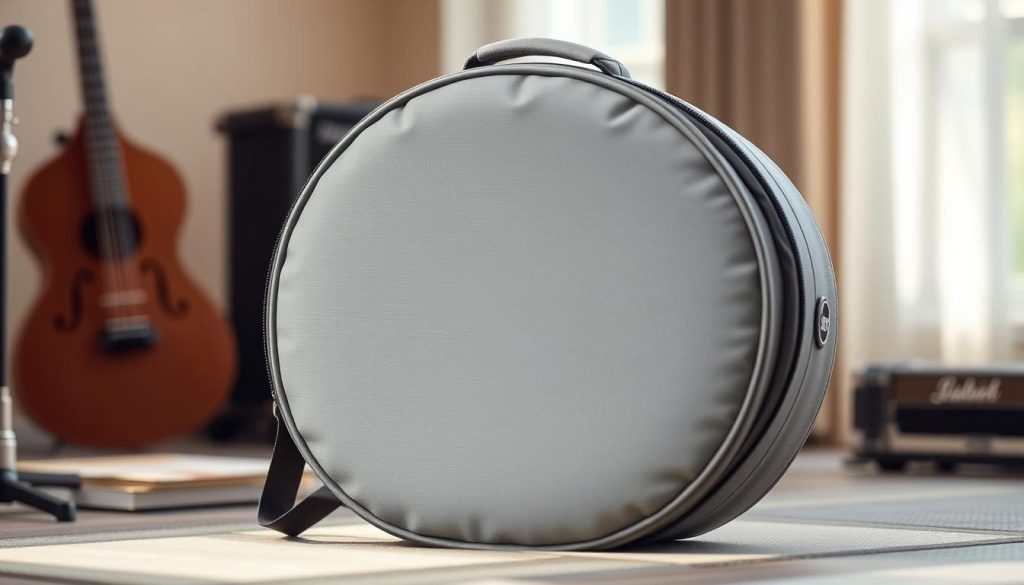
Hard cases: maximum protection
Hard cases are designed to provide maximum protection. They are ideal for frequent travel or high-risk environments. With thick padding and a solid structure, they absorb impacts and protect the instrument from damage.
These cases generally weigh between 2 and 3 kg, making them somewhat heavy but highly effective. They often include built-in pockets for storing accessories such as mallets or tuners.
Soft cases: light and practical
Soft cases, by contrast, are lightweight and easy to carry. Weighing between 500 g and 1 kg, they are perfect for occasional travel. Although they offer less protection than hard cases, they remain a practical option for everyday use.
They are often made from moisture-resistant materials, making them suitable for different environments. Some brands, such as Gator Cases, offer customizable options, including adding your name or choosing the colors.
To check whether a case is watertight, make sure it fits your instrument properly and does not let water through during simple tests.
The choice between a hard case and a soft case depends on your specific needs. If you travel often, a hard case is recommended. For everyday use, a soft case may be sufficient. Finally, remember to check that the case size is compatible with the instrument before buying.
To learn more about caring for and protecting your instrument, see this complete guide.
Supports and stands: stability and playing comfort
Supports and stands are essential for improving your musical practice. They provide vital stability and greater comfort during use. Whether you play in a studio or at home, choosing the right stand can transform your experience.
Fixed stands: permanent setup
Fixed stands are ideal for a permanent setup. Made from stainless steel, they provide the strength needed for intensive use. Their stability is perfect for studio recording, thanks to integrated vibration-damping systems.
Folding stands: portability and convenience
Folding stands, such as the Standtastic ST-525, are designed for easy transport. With a setup time of under 2 minutes, they are convenient when traveling. Their light weight, thanks to aluminum construction, makes them a popular choice.
These stands also offer angle adjustments, allowing you to adapt the playing position to your preferences. Their price ranges from €50 to €150, depending on the complexity of the model.
A good adjustable stand can reduce muscle fatigue and improve the accuracy of your playing.
To learn more about stands suited to your level, see this complete guide.
Electronic tuners: accuracy and sound quality
To achieve perfect notes, an electronic tuner is an essential tool. It ensures optimal sound quality and makes tuning easier, even for beginners. Equipped with advanced features, these devices detect minute deviations with accuracy of better than ±1 cent.

Chromatic tuners: versatility and ease of use
Chromatic tuners, such as the Korg TM60, are versatile and suitable for various instruments. They offer an intuitive interface and fast results, making them ideal for musicians of all levels. Their ability to detect every note makes them a popular choice.
Dedicated tongue drum tuners: optimal accuracy
Specialized tuners, such as those from Overtune Labs, are designed specifically for tongue drums. They offer optimal accuracy and settings tailored to the instrument’s tonal range. These models are perfect for demanding professionals.
Here are some options to consider:
- General-purpose tuners: priced between €20 and €50, such as the Snark ST-8.
- Specialized tuners: priced between €100 and €200, such as the Peterson StroboPlus.
- Mobile apps: economical solutions, but with variable accuracy (2–5%).
An electronic tuner remains the most reliable solution for tuning a tongue drum, with a margin of error below 0.5%.
Professionals can also use manual tuning methods, but these require greater expertise. Finally, remember to check that the tuner is compatible with your instrument before buying.
Learning methods and sheet music: progressing quickly
Mastering the tongue drum requires a structured approach and suitable resources. Whether you are a beginner or an experienced player, learning tools and sheet music play an essential role in your progress. They help you develop your technique and explore new musical styles.

Books and guides: structuring the learning process
Books and guides are valuable resources for beginners. They provide a clear, progressive method, often accompanied by CDs for an immersive listening experience. For example, “Tongue Drum Basics” by David Charrier is an excellent choice for self-taught players.
These books include practical exercises and advice for improving your playing. They are available at affordable prices, generally between €15 and €40, making them an accessible investment.
Digital and printed sheet music: easy, varied access
Sheet music is available in both digital and printed formats, offering considerable flexibility. Online platforms such as TongueDrumSheetMusic.com provide freely accessible resources. Interactive formats with variable-tempo options and practice loops are particularly useful.
Online communities also allow users to exchange customized sheet music, enriching your repertoire. Digital subscriptions generally cost between €5 and €15 per month, an economical way to access a vast library.
Using resources suited to your level is essential for progressing quickly and effectively.
By combining books, guides, and sheet music, you can structure your learning and explore new musical possibilities. These tools are designed to meet the needs of beginners and experienced players alike.
Bundles and sets: a practical, economical solution
Ready-to-use sets are a practical and economical option for musicians. They bring together essential accessories, saving time and money. Whether you are a beginner or an experienced player, these kits provide a complete solution tailored to your needs.

Beginner bundles: everything you need to get started
Beginner bundles include everything you need to begin. Generally consisting of mallets, a protective case, and a learning method, they are designed to simplify your introduction to the instrument. For example, the €299 Rav Vast Starter Kit is a popular choice because of its excellent value for money.
These kits offer average savings of 20% compared with purchasing the accessories separately. They also come with standard two-year warranties, providing additional peace of mind.
Advanced bundles: additional accessories for experienced players
For experienced musicians, advanced bundles include additional accessories such as piezo contact microphones. These exclusive components improve sound quality and offer new creative possibilities. Selection criteria include compatibility with your instrument model and extended-warranty options.
| Kit | Contents | Price |
|---|---|---|
| Rav Vast Starter Kit | Mallets, case, learning method | €299 |
| Zenko Pro Pack | Mallets, hard case, microphone | €450 |
| Meinl Beginner Set | Mallets, soft case, tuner | €350 |
Bundles are an ideal way to save money while benefiting from quality accessories.
By choosing a kit suited to your level, you improve your practice and protect your investment. Beginners will appreciate the simplicity of all-in-one bundles, while experienced players will find specialized options to enrich their experience.
Conclusion
Investing in the right equipment improves sound quality and extends the lifespan of your instrument. Suitable accessories transform your daily practice by providing optimal protection and greater comfort.
Start with basic equipment, then upgrade as your level develops. French brands such as Idiopan offer reliable solutions to meet your needs. Consult additional guides to deepen your knowledge of maintenance and optimize your musical experience.
Finally, before buying, try accessories in a store whenever possible to find the ones that suit you best. A carefully considered selection ensures a harmonious and rewarding practice.