
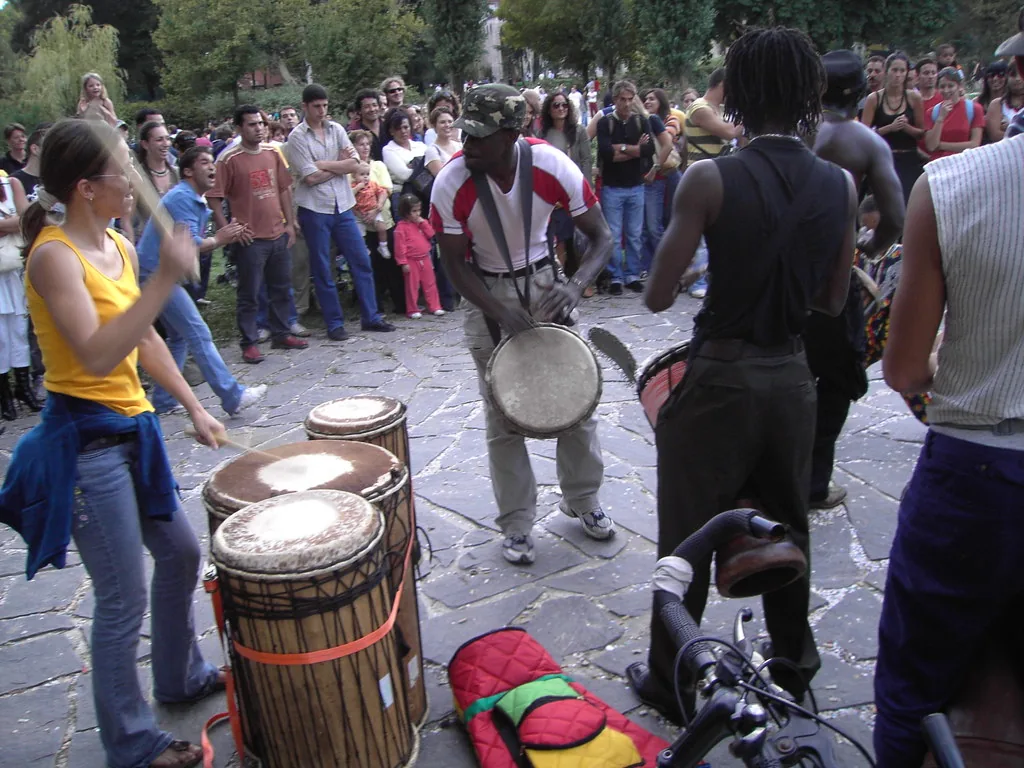
Tightening a djembe is crucial for achieving a high-quality sound and extending its lifespan. How to tighten a djembe is therefore an important question for musicians. We will look at the steps for tightening a djembe. We will use tools such as locking pliers, screwdrivers, and levers.
The djembe must be tightened properly so that it lasts a long time. A well-maintained skin lasts about a year. However, excessive tension can damage the instrument. Before tuning it, you need to prepare it carefully.
Assembling a djembe is complex and requires precision.
Introduction to Djembe Tensioning
Learning how to tighten a djembe properly is crucial when playing this Manding instrument. The correct skin tension affects the sound quality and the instrument’s durability. You need to apply even pressure to achieve a good tone and avoid tearing the skin.
Animal skin has tension limits. Knowing these limits is essential for tuning the djembe properly. A well-tensioned skin produces a better sound and lasts longer, but it may require adjustments.
Quebec craftspeople began making djembes in the 1970s. Their expertise has been passed down from generation to generation. Studies, such as the one on djembe making, show how musical techniques have evolved. They also highlight the instrument’s technical and social aspects.
The djembe is more than just an instrument. It evokes emotions, improves one’s sense of rhythm, and demonstrates the importance of choosing a suitable instrument. Senegalese djembes, for example, are heavy, which affects their sound and playing comfort.
Understanding these aspects is crucial for an enriching playing experience. Percussion lessons help students understand these nuances more fully. Students demonstrate their engagement and express positive emotions.
Preparing the Instrument Before Tuning
Preparing the djembe is essential before tuning it. A properly prepared djembe offers better sound quality. Make sure it is securely positioned on a stable support.
Examine the condition of the skin and ropes. Regular maintenance preserves its durability and performance.
Warming the djembe skin is crucial for tuning. Play lightly on the skin to loosen the fibers. This makes tuning easier.
Inspect the ropes to prevent tears that could affect the sound.
A warm, draft-free space is ideal for warming it. Following these djembe tuning tips makes tuning more effective and ensures better performance.
| Key Steps | Required Actions | Benefits |
|---|---|---|
| Checking the support | Make sure the instrument is stable | Stability during warming and tuning |
| Inspecting the components | Examine the skin and ropes | Prevent failures while playing |
| Warming the skin | Play gently | Make tension adjustment easier |
| Controlling the environment | Eliminate drafts | Preserve the skin’s shape |
Methods for Tensioning a Djembe Skin
To tighten the djembe and achieve a high-quality sound, you need to use appropriate tensioning methods. There are two main techniques: the pivot-lever technique and the fulcrum-lever technique. Each method requires specific tools to tighten the skin properly.
The first method, the pivot-lever technique, involves placing a lever under the ropes and rotating it. A lever 55 cm long and 4 cm in diameter is ideal. A well-chosen lever ensures even tension. Tools such as locking pliers and a hammer are recommended.
The second method, the fulcrum-lever technique, involves pulling the ropes from the joint between the bowl and the foot. A lever 90 cm to 1 meter long and 3 cm in diameter is ideal. This technique improves tension and sound. A rope tensioner is useful for greater precision.
Before starting, it is a good idea to warm the skin by playing gently. This loosens the fibers, prevents deformation, and ensures better tuning.

| Method | Lever Length | Lever Diameter | Required Tools |
|---|---|---|---|
| Pivot lever | 55 cm | 4 cm | Locking pliers, flathead screwdriver, hammer |
| Fulcrum lever | 90 cm to 1 m | 3 cm | Locking pliers, flathead screwdriver, hammer, rope tensioner |
By choosing the right methods, you can achieve excellent tension and a rich, nuanced sound.
How to Tighten a Djembe?
Tightening a djembe requires precise methods and careful attention. There are two main techniques for achieving optimal skin tension. Each method has its advantages.
Pivot-Lever Technique
The pivot-lever technique is effective for increasing skin tension. Insert a wooden lever under the rope and pull to adjust the tension. You need to control the lever and use pliers to hold the rope in place.
This method requires a round handle 55 cm long and 4 cm in diameter. This ensures easy handling and even tension.
Fulcrum-Lever Technique
The fulcrum-lever technique uses a longer lever, measuring 90 cm to 1 meter. This lever provides a favorable pulling angle. This makes it easier to distribute force across the skin.
You need to remain attentive to avoid tearing the skin or breaking the rope. This demonstrates the importance of djembe tuning techniques.
Using these techniques correctly can extend the lifespan of the djembe skin. With proper maintenance, it lasts about a year. Precise tension adjustment ensures a clear, balanced sound, which is crucial for performances.
Creating Tension Knots to Adjust the Skin
After setting the djembe skin’s basic tension, you need to create djembe tension knots. These knots are formed by interweaving the vertical ropes. They increase pressure on the playing surface. This is crucial for consistent tuning and high-quality sound.
Creating tension knots involves a few simple steps. Begin by making them as low as possible on the djembe. This optimizes their effectiveness and ensures precise skin adjustment. This method provides greater control over the sound’s resonance.

- Proper preparation: Warm the skin thoroughly to prevent deformation.
- Using strong ropes: Choose nylon rope or braided cord to achieve good tension.
- Precision: Make tight, even knots to secure the adjustments.
By mastering these techniques, you will achieve optimal sound and extend your instrument’s lifespan.
How to Make a Tensioning Tool for Your Djembe
To make a djembe tensioning tool, it is crucial to choose suitable materials. A hardwood stick 60 centimeters long and 3 to 5 centimeters in diameter is ideal. It allows you to apply adequate pressure without damaging the skin. Polishing the end is recommended so that it can be inserted easily under the rope.
There are two methods for tightening the djembe skin: the lever technique and the tension-knot technique. For the pivot-lever technique, the handle should be 55 centimeters long and 4 centimeters in diameter. The fulcrum-lever technique requires a longer lever, from 90 centimeters to 1 meter, with a 3-centimeter handle.

In addition to simple tools, other equipment may be necessary. For the fulcrum-lever technique, a rope tensioner and a rope ring are essential. Tension knots are added when the tension decreases after a few days, weeks, or months. A good djembe rope-tensioning tool extends the instrument’s lifespan—to as much as a year with regular maintenance.
Tips for Avoiding Common Tuning Mistakes
Tuning a djembe can be complicated. Common djembe tuning mistakes can affect sound quality. To avoid them, follow these simple djembe adjustment tips. Start by warming the skin before pulling the ropes. This helps loosen the fibers and prevents deformation.
- Use non-slip gloves to protect your hands from friction.
- Proceed step by step to avoid placing excessive tension on the skin.
- Take regular breaks to avoid overstressing your instrument.
Do not increase the tension too much at once. This could damage your djembe. Adjust it gradually to achieve a better tone. These tips will improve your experience and extend your djembe’s lifespan.

For more information on tuning, read this article about the kalimba.
Conclusion
Mastering skin tension is essential for achieving the perfect sound and ensuring your djembe’s longevity. The importance of tuning your instrument properly cannot be overlooked, especially by beginners. With the right techniques and tools, adjusting your djembe becomes straightforward.
Watching videos can help you understand how to adjust the tension. The two-strand method and rope weaving are essential for achieving proper tension. After each adjustment, test the skin by striking it to check that the tension is even. This will make your djembe sound clearer and more resonant.
Taking care of your djembe is crucial. Pay attention to its skin and the quality of its wood, and check the tension knots regularly. By devoting time to this care, you will keep your djembe in excellent condition.