
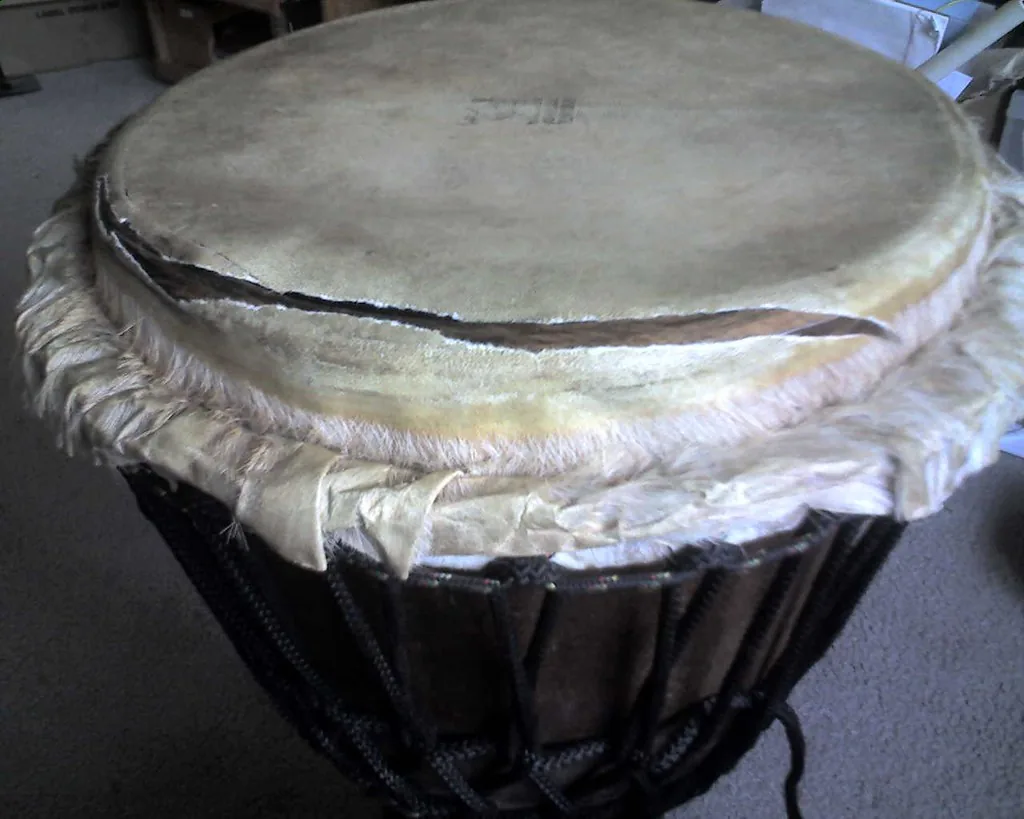
Choosing the right skin for a djembe is crucial for African music enthusiasts. The skin affects the sound, resonance, and playing experience. Knowing which type of skin to choose improves the instrument’s sound and versatility.
We will examine the different animal-skin and synthetic options. They influence the sound of the djembe. Goatskins are known for their warmth and depth. Synthetic alternatives suit modern percussionists. For more details, read this article.
Why choosing the right djembe skin matters
Choosing a djembe skin is essential to its sound quality. Different skins alter the tone, allowing musicians to personalize their playing. Each skin, such as goat, cow, deer, or antelope, has its own characteristics.
These characteristics influence the tone. The resonance and power of the djembe also vary depending on the chosen skin. This changes both the playing experience and the listener’s experience.
Impact on the djembe’s tone
The thickness and type of skin determine the djembe’s tone. A goatskin produces a warm, deep sound. A cowhide produces brighter sounds.
Thin skins can create high-pitched sounds, but they wear out quickly. Careful selection is needed to achieve the best musical experience.
Influence on resonance and power
The sound’s resonance and power also depend on the skin. A well-tuned djembe fitted with a suitable skin produces loud, captivating sounds. Thin skins require forceful strikes, which can tire the musician.
The choice of skin should match the musician’s playing style and preferences. This ensures a rich, powerful sound.
The different animal skins used for djembes
Choosing a djembe skin is crucial. Animal skins influence the instrument’s sound, lifespan, and playability. Let us examine the main options.
Goatskin: a warm, deep sound
Goatskin produces a warm, deep sound. It offers great harmonic richness, creating warm tones. Goatskins vary in thickness, making it possible to personalize the sound.
Cowhide: durability and sound projection
Cowhide is robust and produces a deep sound. It is ideal for outdoor performances because it resists damage. It is perfect for players seeking a low, powerful sound.
Deerskin: a clear, bright sound
Deerskin is bright and produces clear, crisp sounds. It responds well to subtle playing techniques and offers a wide variety of nuances. It is ideal for players seeking a bright tone.
Antelope skin: rich and expressive sound
Antelope skin is perfect for achieving a rich, expressive sound. It allows nuanced, dynamic playing and offers great musical expressiveness. This skin adds unique harmonics to the djembe.
For more details about choosing the skin for your djembe, read this detailed article.
Which skin for a djembe?
Choosing the right skin for a djembe requires careful thought. The instrument’s sound quality and response depend on the skin. It is crucial to understand skin thicknesses and their effect on the sound.
Criteria to consider when choosing
When choosing your skin, consider several skin-selection criteria:
- Type of music played
- Musician’s experience level
- Climate conditions in which the djembe will be played
- Personal tone preferences
Choosing a quality djembe skin suited to your musical style is essential. It improves note projection and clarity.
Different skin thicknesses and their uses
Skin thicknesses have a strong influence on the djembe’s sound. The following table presents the thicknesses and their uses:
| Skin thickness | Sound characteristics | Recommended use |
|---|---|---|
| Very thin | Bright, high-pitched sound | Small diameters, fast styles |
| Thin | Balance between clarity and depth | Various styles, acoustic concerts |
| Thick | Deep, powerful sound | Large diameters, intense music |
| Very thick | Rich, complex resonance | Expressive styles, nuanced melodies |
Each thickness changes the texture of the sound and enriches your playing. For more information on choosing a beginner drum kit, read this article.
Natural or synthetic skin
The choice between a natural skin and a synthetic head is debated among musicians. Each option offers unique advantages that influence the instrument’s sound and durability. It is crucial to understand the advantages of natural skins and the advantages of synthetic heads to make an informed choice.
Advantages and disadvantages of natural skins
Natural skins, such as goat and cow, are valued for their authentic sound. The advantages of natural skins are as follows:
- They offer a warm, rich sound that is ideal for traditional styles.
- They offer a variety of tones suited to the playing style.
- They produce unique harmonics, especially goatskin.
Natural skins are sensitive to humidity. This can alter the sound and make performances unpredictable.
Characteristics of synthetic heads
Synthetic heads are increasingly popular because of their characteristics. The advantages of synthetic heads are as follows:
- They are highly durable and withstand a variety of environments.
- Their sound is less affected by the climate.
- They are easy to maintain, which is useful for touring musicians.
Critics believe that synthetic heads lack warmth and nuance. This can alter the musician’s listening experience.

Tips for choosing the right skin for your djembe
Choosing the right skin for your djembe is crucial to your musical experience. Start by assessing your musical needs and desired playing style. Goatskins are valued for their warm sound, which is ideal for African rhythms.
Assess your musical needs
Before you choose the right skin, think about your musical goals. Do you prefer a bright sound or a warm tone? This reflection will guide your choice and shape your performances.
Test different skins
It is wise to test several skins before making your choice. This gives you a rich sound palette and helps you understand the nuances of each skin. Do not forget maintenance: monitoring humidity and protecting the skin from sunlight are essential.
Consider your playing style
Your playing style influences your choice of skin, particularly its thickness and material. Tuning techniques, such as tuning by tapping, affect the sound. For more information, read this article dedicated to the subject.