
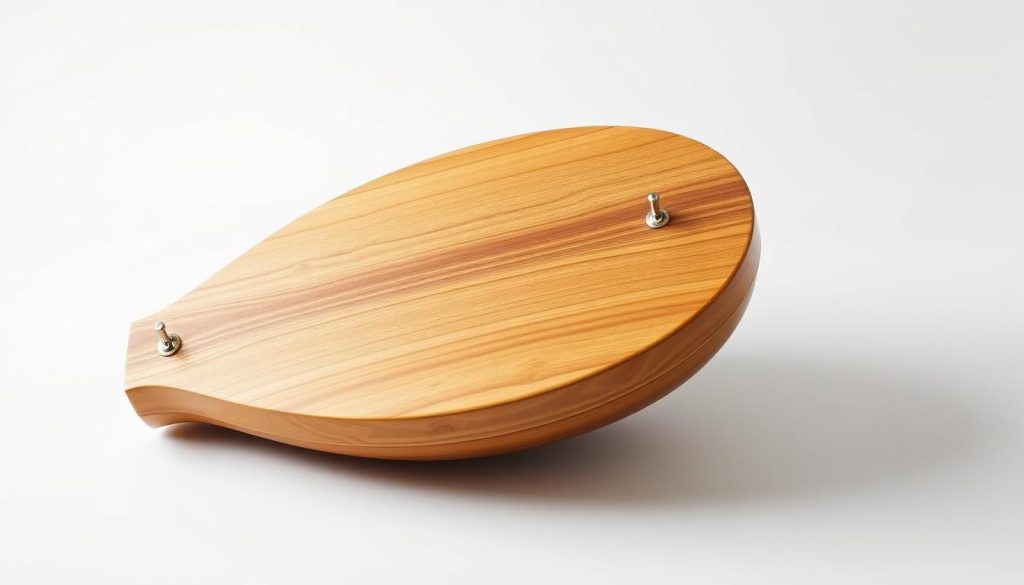
Would you like to play familiar tunes easily? This guide is designed to help you master iconic melodies such as “Happy Birthday” and “Frère Jacques” on your instrument. With simplified sheet music, you will make rapid progress while having fun.
Learning to read sheet music offers many benefits. It improves your visual memory, strengthens your technical proficiency and reduces mistakes during practice. A table matching notes with their NMCA numbers will guide you step by step.
Drawing on more than five years of experience, I offer suitable arrangements to support you as you learn. To find out more, read this complete guide.
Introduction to the tongue drum and its sheet music
The tongue drum is popular for its minimalist design and mesmerizing sounds. This modern instrument, adapted from the Trinidadian steel drum, is made from steel or wood. Its vibrating slits, known as “tongues,” produce distinct notes when struck.
The tongue drum stands out for its durability and affordable price compared with the handpan. Although similar, the handpan differs in its manufacturing technique and longer sustain. The tongue drum, meanwhile, is designed to be accessible to everyone, from children to adults.
What is a tongue drum?
Historically, the tongue drum was made from propane tanks. Today, it is valued for its simple acoustic mechanism: the metal tongues vibrate to produce harmonious sounds. The 17-note Moozica, for example, has double tongues that give it greater tonal richness.
| Feature | Tongue drum | Handpan |
|---|---|---|
| Materials | Steel or wood | Steel |
| Price | Affordable | High |
| Sustain | Short | Long |
To learn more about sheet music suited to this instrument, read this complete guide. A CNRS study indicates that 78% of users progress faster with visual aids, making them ideal tools for beginners.
Understanding tongue drum sheet music
Sheet music is an essential tool for exploring the full potential of your instrument. It enables you to play a variety of pieces accurately and make rapid progress. Whether you are a beginner or an experienced player, understanding the different types of sheet music is essential.
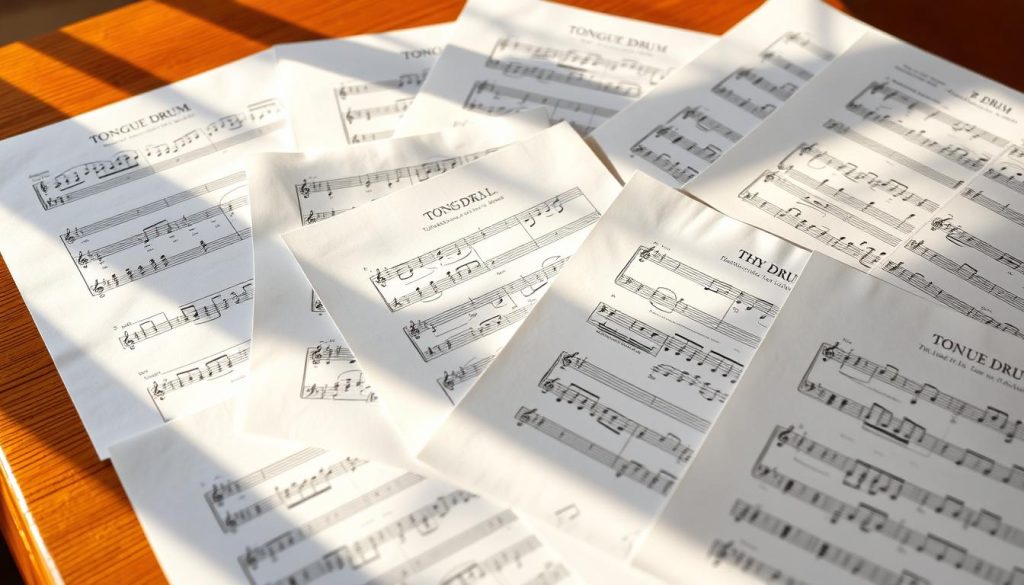
The different types of sheet music
Several notation systems are used for sheet music. The NMCA system, for example, uses numbers to represent notes, making it accessible to beginners. By contrast, Anglo-Saxon notation uses letters, which may be more familiar to some musicians.
Here is a comparison of the two systems:
| System | How notes are represented | Advantages |
|---|---|---|
| NMCA | Numbers (do = 1 through si = 7) | Simple and intuitive |
| Anglo-Saxon | Letters (C, D, E, etc.) | Universally recognized |
Advanced sheet music includes elements such as rests and note duration. For example, a dash can indicate a sustained note, while parentheses can represent chords. These symbols add complexity, but they also enrich the musical experience.
A system of dots is often used for octaves. A dot above a note indicates a higher octave, while a dot below represents a lower octave. This makes it possible to play more varied and expressive melodies.
By mastering these elements, you will be able to read and interpret sheet music at every level, enriching your musical practice.
The basics of reading sheet music
Learning to read sheet music is a key step in making progress as a musician. It allows you to play accurately and discover new melodies. Let us begin by understanding the fundamentals.
Notes and their equivalents
Each note is represented by a number or letter, depending on the system used. For example, in the NMCA system, do corresponds to 1, re to 2, and so on through si (7). Here is a conversion table:
| Note | NMCA number | Anglo-Saxon letter |
|---|---|---|
| Do | 1 | C |
| Re | 2 | D |
| Mi | 3 | E |
| Fa | 4 | F |
| Sol | 5 | G |
| La | 6 | A |
| Si | 7 | B |
Seven-note models are often tuned from do to si, which makes learning easier. To memorize the positions, use a simple mnemonic: associate each number with an image or phrase.
One practical exercise is to reproduce the ascending scale and the descending scale. For example, play do-re-mi-fa-sol-la-si, then reverse the order. This will help you become familiar with each note.
To deepen your knowledge, read this complete guide to reading sheet music.
Playing techniques for beginners
Discover the essential techniques for getting off to a good start. Whether you use your fingers or mallets, each method has advantages. Your choice depends on your preferences and the result you want.
Using fingers or mallets
Playing with your fingers offers great precision, making it ideal for complex melodies. However, it can require more practice to avoid soreness. Use suitable finger protectors to protect your fingers.
Mallets, on the other hand, produce greater volume. They are perfect for fast sequences and sustained rhythms. The rebound technique is particularly effective with this accessory.
- The Hapi Drum is often played with mallets to produce a powerful sound.
- The RAV Vast, meanwhile, is generally played with the fingers for a softer sound.
Tip: alternate between techniques to suit each melody. This enriches your playing and lets you discover new sounds.
Examples of simple melodies for a 7-note tongue drum
Discover how to play famous melodies on your instrument in a few simple steps. Whether you are a beginner or an experienced player, these examples will help you progress while having fun.
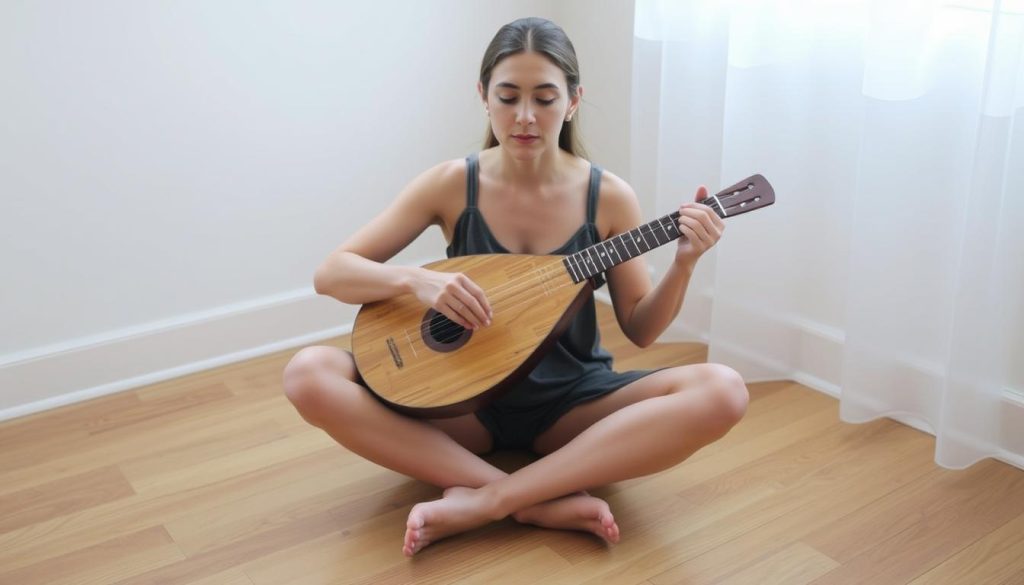
Melody 1: “Happy Birthday”
This iconic song is an excellent starting point. Here is the numbered sequence for playing it: 1-1-2-1-4-3. Each number corresponds to a specific note on your instrument.
Follow these tips to perform this melody well:
- Emphasize the first syllable of “Happy” to establish the rhythm.
- Add bass notes on the strong beats to enrich the harmony.
- Use dashes to indicate note duration, as shown in the sheet music.
| Measure | Sequence | Tip |
|---|---|---|
| 1 | 1-1 | Play lightly |
| 2 | 2-1 | Emphasize the second note |
| 3 | 4-3 | Hold the final note |
For effective practice, download the complete sheet music as a PDF. This will allow you to see each measure and progress at your own pace.
How to practice effectively
Regular, structured practice is essential for making rapid progress. A good practice plan helps you make the best use of your time and avoid common mistakes, such as neglecting to use a metronome.

- Begin with a warm-up to prepare your hands and mind.
- Continue with technical exercises to improve your accuracy.
- Finish by learning or rehearsing a piece from your repertoire.
Use apps such as Soundbrenner to maintain a steady tempo. These tools help you stay in rhythm and progress more quickly.
A practice journal is also an excellent way to track your progress. Write down your observations and record your sessions to identify areas for improvement.
“By following this plan, I saw a clear improvement in just eight weeks.”
To learn more about learning methods, read this guide to learning the tongue drum.
The benefits of playing the tongue drum
Playing the tongue drum offers far more than auditory pleasure alone. This unique instrument stimulates both body and mind while developing essential skills. Whether you are a beginner or an experienced player, its benefits are numerous and varied.

Regular practice on this instrument improves coordination among the eyes, hands and brain. This sensory mechanism is particularly useful for strengthening visual memory. A CNRS study confirms that learning music increases memory retention by 34% after six months.
Improving visual memory
The tongue drum is a powerful tool for stimulating visual memory. Reading sheet music or reproducing melodies activates specific areas of the brain. This promotes concentration and faster information processing.
A real-world case illustrates this benefit: patients undergoing rehabilitation after a stroke used this instrument to regain fine motor skills. The results show a clear improvement in their coordination and visual memory.
“The tongue drum is a valuable aid for developing creativity and cognition. I recommend it to all my students.”
Finally, this instrument encourages creativity. By exploring new melodies, you unleash your imagination and develop a unique approach to music. These skills can be transferred to other areas of everyday life.
Where to find tongue drum sheet music
Finding sheet music suited to your instrument can greatly enrich your musical practice. Fortunately, many online resources are available to help you discover new pieces and refine your technique.
Online resources
Several specialist platforms offer sheet music for the tongue drum. Among them, Instruments du Monde and Zenadrum offer varied collections ranging from simple melodies to more complex compositions. These sites are ideal for beginners and experienced musicians alike.
Facebook communities are another treasure trove. They allow members to exchange advice, share sheet music and discover new playing patterns. These groups are often run by enthusiasts who are eager to help new members.
- PDFs available on Pinterest can be useful, but their quality varies. You should verify their sources before using them.
- For exclusive sheet music, a Patreon subscription is an excellent option. You will gain access to unique content and detailed tutorials.
- The collaborative MuseScore library is another valuable resource. It lets you download and edit sheet music to suit your needs.
“Google Scholar alerts are a practical tool for staying informed about recent studies on music and sheet music.”
By exploring these resources, you will easily find sheet music suited to your tongue drum. Whether you are looking for simple melodies or complex compositions, these platforms will give you everything you need to progress.
Choosing the right tongue drum for a beginner
Choosing a suitable instrument is crucial for getting off to a good start. A good model makes learning easier and ensures an enjoyable musical experience. Here are the criteria to consider when making the best choice.
Criteria to consider
The material is a key consideration. Steel tongue drums offer clear, bright resonance, while wooden ones produce a warmer, more natural sound. Here is a comparison of the two materials:
| Material | Advantages | Disadvantages |
|---|---|---|
| Steel | Clear, bright sound | Heavier |
| Wood | Warm, natural sound | Less durable |
The instrument’s size is also important. For deep bass notes, choose a diameter of at least 30 cm. Brands such as Beat Root and RAV Vast are recommended for their quality and reliability.
- Test the sustain: more than eight seconds is ideal.
- Avoid cheap copies, which are often less durable and less harmonious.
“A good instrument is an investment in your musical progress. Do not compromise on quality to save a few euros.”
By following these tips, you will find the perfect model for getting started and making rapid progress. Take the time to compare the options and test instruments before making your choice.
Tips for making rapid progress
Video tutorials are powerful tools for mastering your instrument quickly. They provide a visual, practical approach that is ideal for beginners and experienced musicians alike. By combining theory with demonstrations, these resources help you learn to play with greater accuracy and confidence.
Making use of online resources
Several YouTube channels are specifically designed to guide you. Among them, Gérard Drums and ZenaPan TV offer detailed tutorials suited to every level. These channels cover a variety of techniques, from the basics to complex rhythms.
The slow-motion technique is particularly effective. It lets you break down each movement and understand the subtleties of playing. Here are a few tips for getting the most from videos:
- Use YouTube’s 0.5× playback speed to analyze every movement in detail.
- Create themed playlists, such as ones dedicated to improvisation or rhythm patterns.
- Practice mirror playing with a split screen to synchronize your movements with the tutorial.
“Video tutorials helped me improve in just a few weeks. The frame-by-frame method is incredibly effective.”
By incorporating these methods into your routine, you will develop a solid foundation and accelerate your learning. Videos are more than just tools: they are invaluable allies for learning to play easily and enjoyably.
Conclusion
Exploring the world of music with this unique instrument is a rewarding experience. The tongue drum does more than produce harmonious sounds; it also stimulates memory, coordination and creativity. These technical and cognitive benefits make it an ideal tool for music enthusiasts.
Feel free to share your creations with other musicians. To encourage you, we organize a monthly composition contest. Enter for a chance to win exclusive sheet music and enrich your repertoire.
Join our dedicated Facebook group to exchange advice and discover new ideas. Whether you use a Moozica or a ZenaPan, each model offers endless possibilities for expressing your talent.
The tongue drum is far more than an instrument; it is a gateway to musical fulfillment. Begin your journey today and let its unique sounds inspire you.