
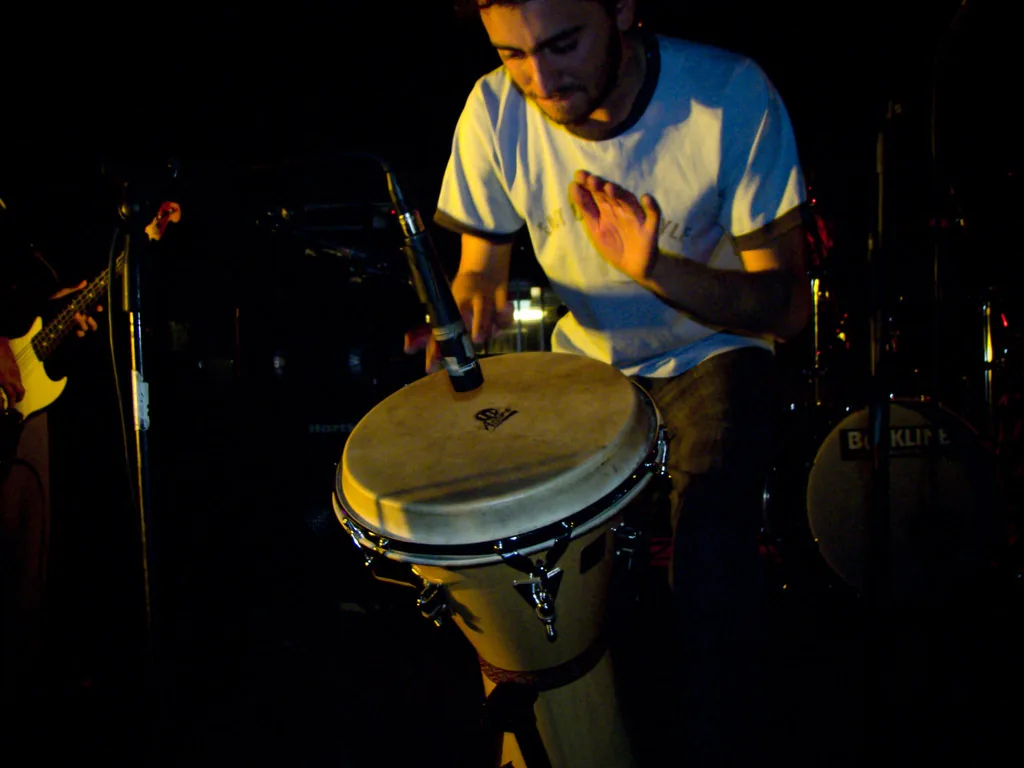
Learning the djembe is an exciting and rewarding adventure. You can choose to take djembe lessons with a teacher or teach yourself. Establishing solid foundations is crucial, as the djembe has three main sounds: the tone, bass and slap.
Online djembe tutorials are perfect for those who prefer to learn at their own pace. You can find videos, forums and virtual lessons to help you. It is important to choose a method that suits you. Regular practice and clear goals will help you master African rhythms and improve your musical skills.
Djembe fundamentals
Learning the djembe requires an understanding of its sounds and percussion techniques. You must first learn the fundamentals to make steady progress. This provides a strong foundation for future development.
The three main sounds
The djembe has three important sounds for percussionists. Each is played in a particular way:
- Tone: this stroke is played at the edge and produces a clear sound. It is often used to mark the rhythm.
- Bass: produced at the center, this sound is deeper. It adds depth to a piece.
- Slap: this is also played at the edge and produces a high-pitched sound. It is perfect for accents.
The importance of percussion techniques
Percussion techniques are essential for playing the djembe well. They let you vary the sounds and create different moods. Listening and practicing regularly help greatly.
Setting specific goals helps you progress. Combining these three sounds with technical exercises is crucial to becoming a good percussionist.
| Sound type | Striking technique | Characteristics |
|---|---|---|
| Tone | Edge of the drumhead | Clear sound, ideal for marking the rhythm |
| Bass | Center of the drumhead | Deep, resonant sound that enriches the piece |
| Slap | Edge of the drumhead | High, piercing sound, useful for accents |
How do you learn the djembe?
Learning the djembe is a rewarding adventure, whether you choose to study with an in-person teacher or use online resources. The right choice often depends on your learning style and how close you are to specialist institutions. Each method has its own advantages, and understanding the different options is essential for making effective progress.
Learning with a teacher
The traditional method is to learn the djembe with a teacher. This approach provides personalized guidance. Many music schools and community centers offer djembe lessons. Teachers such as those who work with the Koradjembe workshop, as well as Patrice Effoudou through Easy-djembe, provide in-person and online lessons suited to beginners and experienced players alike. Drawing on a professional’s expertise helps you acquire basic techniques and develop more advanced skills.
Options for self-taught players
For those who prefer an independent learning path, many options for self-taught players are available. Online tutorials on YouTube provide a vast library of videos at different levels, suitable for beginners and more experienced percussionists alike. Platforms such as Pratiquetv and Bala Land offer video lessons, articles and practical advice that make it easier to learn at your own pace. Support from online communities and regular practice are crucial for progress, especially if you choose to learn without a teacher.

| Learning method | Advantages | Disadvantages |
|---|---|---|
| With a teacher | Personalized guidance, direct feedback | Potential cost, limited availability |
| Self-taught | Flexibility, wide range of resources | Lack of supervision, motivation required |
Choosing the right djembe
Choosing a djembe is crucial for percussion enthusiasts. Its size and material affect comfort and sound quality. Beginners need to make the right choice to enjoy a good learning experience.
Size and material considerations
The size and material of the djembe are essential considerations when learning. Djembes range from 58 to 65 cm in height. A diameter of 28 to 32 cm produces high-pitched sounds, while a larger diameter produces lower sounds.
Choosing a djembe made from solid wood, such as lenke, acacia or balafon wood, is recommended for better sound. A high-quality, flawless finish is important.
Accessories needed for learning
Certain djembe accessories are indispensable when learning. A stable stand, replacement drumheads and a carrying case are essential. They make learning easier and extend the djembe’s lifespan.
For musicians who want to practice at home, many online resources provide video lessons and tutorials.
African rhythms and playing techniques
Learning African rhythms is crucial when starting the djembe. These repetitive, cyclical rhythms require a sound understanding if they are to be played effectively.
Essential rhythms to master
The main African rhythms include “Kuku” and “Djembe.” They are essential for beginners and experts alike. By practicing them, musicians improve their ear and sense of rhythm.
Practical exercises for making progress
Exercises for making progress are indispensable when learning djembe playing techniques. Practicing regularly and varying the exercises improve retention and fluency. Here are a few tips:
- Play repetitive patterns at different tempos to improve your memory of the rhythms.
- Record your practice sessions to assess your progress and identify areas for improvement.
- Take part in group playing sessions to enrich your musical experience and encourage rhythmic exchanges.

By doing these exercises regularly, a percussionist can improve their technique. Patience and consistency are essential for mastering djembe playing techniques and African rhythms.
Djembe lessons and online resources
Online djembe lessons allow percussion enthusiasts to learn at their own pace from home. Platforms offer numerous resources for all levels. This encourages people to practice the djembe throughout the world.
Platforms offering online lessons
In France, 273 djembe teachers are available on Superprof. Their rates range from €20 to €30, with options starting at €9 per hour. The first lesson is often free. These platforms provide flexible learning through motivating content.
Users can access applications on iOS, Android and Orange TV.
Tutorials and percussionist communities
Djembe tutorials on YouTube and other websites enrich the learning experience. There are 618 percussion lesson videos for beginners and advanced players. Participating in online communities makes it possible to exchange advice.
These interactions help people improve their skills and discover new rhythms. They also allow them to connect with other passionate musicians.

| Platform | Cost per lesson | First lesson free | Number of videos available |
|---|---|---|---|
| Superprof | €20–€30 (€9 possible) | Yes | – |
| YouTube | Free | – | 618 |
| Mobile app (iOS/Android) | Varies by subscription | – | – |
Djembe workshops and introductory courses
Djembe workshops are perfect for those who want to improve their skills. They are organized over several days and cover various themes. Beginners can get started without any prior knowledge.
These workshops emphasize memorizing rhythms. They also include exercises to embody the movements.
Workshops for beginners
Beginner workshops last five days. Each day offers an opportunity to explore a different theme. Participants can immerse themselves in African percussion.
A large portion of the time is devoted to learning the djembe’s five main sounds. Participants also discover polyrhythms and songs in Malinke or Bambara. This enriching program teaches the fundamentals of the djembe.
Experiencing group playing
The group provides a unique social and musical experience. Interacting with other musicians makes learning more enjoyable. Improvisation is essential and makes the learning process varied and captivating.
Group playing improves technique and rhythmic communication. This collective experience is unforgettable and leaves a lasting impression.

Conclusion
Learning the djembe is a rewarding journey that combines theory and practice. Whether you choose online lessons, in-person classes or workshops, remain determined and consistent. The key is to repeat and apply different techniques.
Originating in Africa, the djembe offers many ways to express yourself. To begin, choose a good-quality, medium-sized instrument. Participating in percussion groups and group lessons will help you progress and meet other enthusiasts.
To improve, explore online resources such as video tutorials and music apps. Daily practice will help you progress quickly. Remember: music is a journey. Every small step brings you closer to your goal of excellence on the djembe.