

The tongue drum is a fascinating instrument, loved for its soothing, versatile sounds. Whether you are a beginner or an experienced player, choosing the right melodies can greatly improve your technique and creativity.
Adapting pieces to your level and goals is essential. Beginners can focus on simple scales, such as the pentatonic scale, to play harmonious notes effortlessly. Sheet music and free apps are valuable resources for making rapid progress.
If you would like to deepen your practice, discover how the tongue drum can enhance your meditation or yoga sessions. Explore different scales and rhythms to unleash your creativity and fully enjoy this unique instrument.
Introduction to the tongue drum and the importance of a playlist
Discover an instrument that resonates around the world: the tongue drum. This modern musical instrument, created in 2007 by Dennis Havlena, quickly won over fans of soothing sounds. Its contemporary origins make it a unique tool suitable for every skill level.
What is a tongue drum?
The tongue drum, also known as a steel tongue drum, is an instrument made of steel tongues that produce meditative or energetic sounds, depending on the model. Its distinctive resonance makes it an ideal choice for relaxation sessions or musical creation.
Why is a playlist essential for practice?
Structuring your learning with playlists and sheet music helps you avoid mistakes and progress quickly. According to an expert with five years of experience, “sheet music is an indispensable tool for memorizing music visually and playing accurately.”
Statistics show that 50 songs can be arranged by reading sheet music. This demonstrates the importance of choosing the right resources to play the tongue drum effectively.
| Model | Features | Use |
|---|---|---|
| Model A | Meditative sound, 8 tongues | Relaxation, meditation |
| Model B | Energetic sound, 12 tongues | Musical creation, performances |
The basics of getting started with the tongue drum
To get off to a good start with this instrument, it is essential to master a few fundamentals. From understanding notes to choosing mallets, every detail matters when it comes to making effective progress.
Understanding notes and scales
Notes are the cornerstone of every instrument. Two notation systems are used for the tongue drum: the number system (1 = C, 2 = D, etc.) and letter notation (C, D, E). The stickers supplied with the instrument can help you identify them easily.
The pentatonic scale is ideal for beginners because it makes it easy to play harmonious melodies. Explore different scales to expand your repertoire and stimulate your creativity.
Choosing the right mallets
Mallets have a major influence on your tone and playing accuracy. Rubber models produce a soft sound, while metal ones offer brighter resonance. Medium-diameter beaters are recommended for beginners to provide better control.
Avoid gripping the mallets too tightly, as this can restrict your fluidity. A relaxed grip and the right striking angle are essential for producing a clear, harmonious sound.
How to create an effective tongue drum playlist
The key to successful practice lies in choosing the right melodies. A well-structured selection helps you progress quickly while stimulating your creativity. Here are a few tips to guide you.

Selecting pieces suited to your level
Beginners should start with simple melodies, such as “Happy Birthday” in NMCA notation. These slow-tempo pieces help you become familiar with sheet music and basic techniques.
Gradually increase the complexity. For example, progress from pentatonic scales to more elaborate chords. This will help you develop accuracy and confidence.
Varying musical styles to enrich your practice
Include different genres, such as classical music, world music, or pop. This adds variety to your repertoire and stimulates your creativity.
Use free resources, such as those offered by Instruments du Monde, to explore new sheet music. These tools allow you to adapt pieces to your level and style.
By varying genres, you will also discover how to adjust the tempo and rhythms for each piece. This makes your practice more dynamic and rewarding.
Techniques for practicing with your playlist
Mastering playing techniques with an appropriate music selection is essential for making progress. Whether you are a beginner or an experienced player, these methods will help improve your accuracy and expand your repertoire.
Using sheet music to improve your accuracy
Sheet music is a valuable tool for developing your playing. It lets you visualize notes, rhythms, and nuances. Here are a few tips for using it effectively:
- Learn to read numbered and letter-based sheet music at the same time. This strengthens your understanding of measures.
- Practice exercises that synchronize your right and left hands to improve your coordination.
- Manage rests (represented by the number 0) and dynamics to make your playing more expressive.
Record your sessions to analyze your progress and identify areas for improvement.
Practicing rhythms and melodies
Mastering rhythms and melodies is crucial for fluid playing. Use a digital metronome with an adjustable BPM setting to work on your accuracy.
Experiment with the “wah-wah” technique by manipulating the resonance opening. This adds a unique dimension to your playing.
| Technique | Benefits | Application |
|---|---|---|
| Reading sheet music | Improves accuracy and coordination | Learning melodies |
| “Wah-wah” technique | Adds expressiveness | Musical creation |
“Regular practice with sheet music and metronomes is the key to mastering rhythms and melodies.”
The benefits of practicing with a playlist
Exploring the benefits of structured practice can transform your musical experience. A selection of pieces suited to your level and goals offers a unique opportunity to progress while developing your memory and creativity.
Improving your musical memory
According to CNRS studies, structured repetition strengthens neural connections, thereby improving musical memory. Practicing varied melodies helps you memorize notes and rhythms more effectively. Players who use suitable playlists progress up to 40% faster.
Guided practice offers significant benefits compared with free practice. It allows you to focus on specific techniques while avoiding common mistakes. To learn more about structured learning methods, see this complete guide.
Developing your creativity
A varied playlist stimulates creativity by exposing the instrument to different styles and rhythms. Improvising over simple chord progressions allows you to explore new sounds and expand your repertoire. According to testimonials, this approach frees artistic expression and makes practice more enjoyable.
Personalizing melodies also adds an emotional dimension to your experience. To discover how technology can enhance your music listening, follow this link.
| Advantage | Benefit | Application |
|---|---|---|
| Musical memory | Strengthens neural connections | Learning melodies |
| Creativity | Stimulates artistic expression | Improvisation and exploration |
Resources for finding sheet music and pieces
Finding the right resources for playing an instrument can make learning much easier. Whether you are looking for free sheet music or detailed guides, several options are available.
Recommended websites and apps
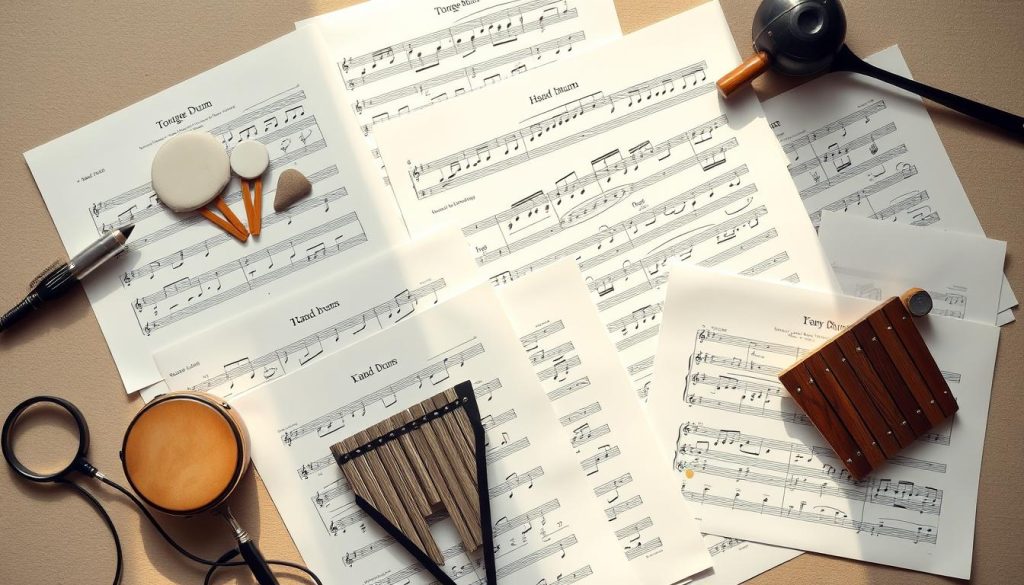
Several online platforms offer sheet music suited to different skill levels. Pinterest and YouTube are excellent sources for discovering tutorials and visual tablature. These resources are ideal for beginners.
Mobile apps such as Notepan offer tools for composing sheet music for handpan or steel tongue drum. They are convenient and intuitive, although some may have limitations in terms of quality or features.
Books and guides for beginners
Books about pentatonic scales are available for those who prefer written methods. These guides are designed for beginners and include progressive exercises.
The free Instruments du Monde PDF catalogue is another valuable resource. It offers varied sheet music and advice for improving your technique. To learn more, see this complete guide.
| Resource | Benefits | Level |
|---|---|---|
| Visual tablature, tutorials | Beginner | |
| Notepan | Sheet music composition | Intermediate |
| Books about scales | Progressive exercises | Beginner |
Tips for progressing quickly with the tongue drum
To accelerate your progress with this instrument, adopt a structured, methodical approach. Here are some practical tips for optimizing your learning and making the most of your practice time.
Practicing regularly and patiently
Consistency is the key to mastering the tongue drum. A 20-minute daily practice schedule is ideal for progressing without overloading yourself. Organizing your sessions into three stages can help:
- Warm-up: begin with simple exercises to prepare your hands and mind.
- Technical exercises: work on specific scales or rhythms to improve your accuracy.
- Repertoire: play pieces you enjoy to apply your new skills.
The SMART method (specific, measurable, achievable, realistic, time-bound) is an excellent tool for setting attainable goals. For example, learn a new piece in two weeks or master a scale in one month.
Recording and listening to your practice sessions
Recording your sessions allows you to analyze your experience and identify areas for improvement. Use spectral analysis software to spot wrong notes and adjust your technique.
One musician says: “In six months, I mastered 30 pieces by recording and listening back to my sessions. It helped me correct my mistakes and progress quickly.”
To stay motivated, use tools such as progress charts or reward yourself after achieving each goal. Managing discouragement is essential for maintaining regular practice.
| Tip | Benefit | Application |
|---|---|---|
| Daily practice | Improves coordination and memory | 20 minutes a day |
| Recording sessions | Helps analyze and correct mistakes | Using analysis software |
To learn more about effective learning methods, see this complete guide. These tips will help you transform your musical experience in a meaningful way.
Protecting your instrument and accessories
Taking care of your instrument and its accessories is essential for preserving its sound and lifespan. Regular maintenance and suitable protection ensure the best possible musical experience.
Maintaining your tongue drum
Regular cleaning is essential for maintaining your instrument’s quality. Use isopropyl alcohol to remove dust and grease marks. Avoid abrasive products that could damage the surface.
Here is a simple cleaning routine:
- Clean the instrument once a week with a soft cloth.
- Apply isopropyl alcohol sparingly to avoid residue buildup.
- Check how humidity affects the tuning, especially when weather conditions change.
Choosing finger protectors
Silicone anti-chafing protectors are ideal for protecting your fingers during long playing sessions. They provide optimal comfort while improving the accuracy of your movements.
Here are a few recommended brands:
- SiliconGuard: known for its durability and perfect fit.
- FingerEase: provides lightweight protection without reducing sensitivity.
By choosing high-quality protectors, you also shield your hand from repeated friction.
| Type of protection | Benefits | Recommended brand |
|---|---|---|
| Silicone protectors | Comfort and durability | SiliconGuard |
| Lightweight protectors | Preserved sensitivity | FingerEase |
Finally, when purchasing a model, check the manufacturer’s warranties. They may include protection against manufacturing defects or accidental damage.
Conclusion
Your journey with the tongue drum is a unique musical adventure. By choosing the right melodies and caring for your instrument, you enrich every stage of your practice.
Feel free to share your creations on social media. This allows you to connect with other enthusiasts and receive constructive feedback. Remember that the free resources mentioned in this article are there to guide you.
To deepen your experience, explore the supplementary guides available online. They will help you discover new techniques and expand your repertoire.
Finally, remember that every note you play is a step on your musical journey. Let yourself be inspired and continue exploring the endless possibilities of this fascinating instrument.